Minor Arcana — Swords
Five of Swords
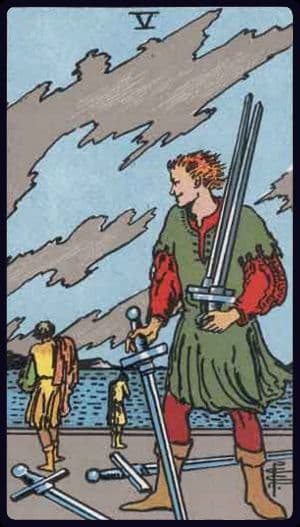
The Five of Swords is the card of damaged victory — when being right costs more than it gives.
Upright
Reversed
Five of Swords Meaning
Upright
The Five of Swords points to conflict, disagreement, and the kind of competition that leaves a bitter atmosphere behind it. It often appears when winning at all costs has become the hidden rule, even if no one would admit to it directly. This card is less about open warfare than the corrosion that follows contempt, point-scoring, or defeat handled badly. Someone may have prevailed, but the result does not feel clean. What matters here is not only who was right. It is what the struggle has done to trust, dignity, or the possibility of staying in relation afterward.
Reversed
Reversed, the Five of Swords often points toward reconciliation, making amends, or the slow release of past resentment. The conflict may not be fully over, but the appetite for continuing it has weakened. Sometimes this card suggests that apology is possible; other times that the real work is letting go of the need to keep replaying the injury. It does not erase what was said or done. It asks whether the fight is still protecting something real, or only preserving an old version of yourself that cannot imagine peace without losing face.
Five of Swords as a Daily Card
The Five of Swords asks about the cost of winning. Today, consider whether your victory is worth the relationship damage.
Lean toward
The cost of needing to win.
Watch for
Calling damage a victory.
Is there a conflict where being right matters less than being kind?
Recurring appearance
What does it mean when Five of Swords keeps appearing?
Conflict keeps leaving a residue. Winning can cost more than it first appears.
Spreads that work well with Five of Swords
Decision
3 cardsNot a binary answer. Three cards to illuminate what each choice carries — energy, cost, and consequence.
View spread →Horseshoe
7 cardsA broad arc covering past, present, and future with attention to hidden influences, your attitude, and external forces at play.
View spread →The Fog
4 cardsFor moments when the path ahead is unclear and the old answers no longer hold. This spread doesn't offer direction — it offers orientation.
View spread →Begin your practice
Draw Five of Swords in a reading
Context transforms a card's meaning. A full reading weaves your question, your spread, and your cards into a coherent reflection.