Minor Arcana — Cups
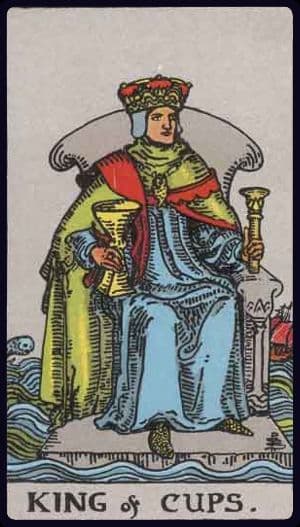
King of Cups
The King of Cups is the card of emotional authority — feeling guided by restraint, compassion, and judgment.
Upright
Reversed
King of Cups Meaning
Upright
The King of Cups points to emotional balance that does not require detachment. He is compassionate and diplomatic, able to stay steady in situations that would pull other people into reaction. This card often appears when maturity means neither suppression nor overflow, but measured expression. It can describe a person, a standard, or a way of handling yourself under pressure. The strength here is composure with feeling still intact. What matters is not only what you feel, but whether you can carry it without letting it run the whole exchange.
Reversed
Reversed, the King of Cups can suggest moodiness, inner feelings that are poorly understood, or a version of emotional control that slips into manipulation. Sometimes this card asks for self-compassion where harsh self-management has replaced honesty; other times it offers a lens for examining a mismatch between calm presentation and observed behavior. The card cannot establish concealed volatility or a private intention. The difficulty is not emotion itself, but what happens when it is managed for effect rather than faced directly. This card asks whether restraint is serving integrity, or merely helping someone maintain power while remaining unreadable.
King of Cups as a Daily Card
Today calls for emotional leadership. The King of Cups stays calm in the storm, offering steady presence to those around him.
Lean toward
Care that holds its shape under pressure.
Watch for
Managing the tone instead of the truth.
Who in your life needs your steady, compassionate presence right now?
In Different Situations
Relationships
A calm relationship can feel safe, but calm alone does not tell you whether difficult feelings are being shared. The King of Cups represents the ability to stay present during an uncomfortable exchange without turning emotion into a contest. He holds feeling and judgment together rather than choosing one over the other. His harder side is restraint used to stay unreadable or maintain control.
This card cannot tell you what another person secretly feels. It offers a clearer standard for what you can observe: whether honesty survives disagreement, and whether composure makes room for both people.
Career
When work gets tense, the King of Cups is concerned with how authority behaves under pressure. Can someone disagree without punishing disagreement? Can you acknowledge frustration and still give a fair answer? His steadiness is not indifference; it is judgment that stays intact while feelings run high.
In a career reading, this may describe the kind of leadership you want to exercise or expect from others. The difficult expression is polished calm that conceals control, resentment, or a refusal to engage. Professional maturity is visible in how hard conversations are handled, not simply in how little emotion appears on the surface.
Decisions
Strong feelings do not make a decision unsound. The King of Cups asks what happens when they are held long enough for judgment to catch up. Anger can identify a crossed line; fear can mark a real risk; neither has to decide the whole matter on its own. This card values an answer you can stand behind after the immediate intensity has passed. It also warns against mistaking a composed appearance for a considered choice. You might be keeping your voice even while avoiding what the decision means. Emotional steadiness matters most when it permits honesty, not when it keeps discomfort out of sight.
Burnout
You may be praised for handling everything calmly while privately using enormous effort to remain that way. The King of Cups holds a steady cup on unsettled water; the image makes room for what composure costs. Keeping your judgment intact in a difficult period is a skill. Having to appear untroubled at all times can turn that skill into another burden.
The card's harder face is emotional control so tight that it hides the need for support, even from yourself. There is a difference between being dependable and having no visible limit. The latter can make unsustainable demands look normal. People may come to rely on your steadiness without realizing the effort required to provide it.
Feeling Stuck
Nothing is visibly falling apart, yet nothing feels alive either. The King of Cups can help examine a particular kind of standstill: composure that has become so practiced that it also contains curiosity, anger and longing. Keeping an even keel can be useful, especially after a difficult stretch, but it may no longer show you what matters. The question is less about forcing movement than noticing what your restraint has made difficult to admit. A steady surface is not proof of either peace or avoidance. The difference lies in whether feeling is still allowed to inform your direction.
New Beginnings
A new role, connection or phase of life can bring emotions you would rather manage privately until you feel established. The King of Cups offers a different measure of readiness: the capacity to respond thoughtfully while still admitting that the change matters to you. Confidence does not have to mean appearing untouched.
His difficult side is overcontrol, where staying composed becomes more important than learning from uncertainty. Early steadiness is useful when it leaves room to adjust, acknowledge a mistake and hear what others are saying. The card speaks to how a beginning is carried, not whether it will succeed.
Grief and Loss
The King of Cups may matter when grief is being carried behind a steady expression. Practical decisions still need making; other people may need attention; the day continues even when something fundamental has changed. Composure can help you move through those moments. It does not measure the depth of what was lost. This card also recognizes the cost of always being the calm person in the room. Feeling does not become less real because it is private, nor more real because it spills out. There is no required way to hold the loss.
Recurring appearance
What does it mean when King of Cups keeps appearing?
Control can look steady while emotion stays close underneath. A calm surface may be carrying more than it shows.
Spreads that work well with King of Cups
Past, Present, Future
3 cardsThe classic three-card arc. Where you've been, where you are, and where the energy is heading.
View spread →Relationship
5 cardsFor any relationship — romantic, familial, professional. Explores the dynamic between you and another person.
View spread →The Circle
5 cardsFor reflecting on a friendship or connection — what holds it together, what's being tested, and what it asks of you.
View spread →Begin your practice
Draw King of Cups in a reading
Context transforms a card's meaning. A full reading weaves your question, your spread, and your cards into a coherent reflection.