The Magician & Wheel of Fortune
What The Magician and Wheel of Fortune Mean Together
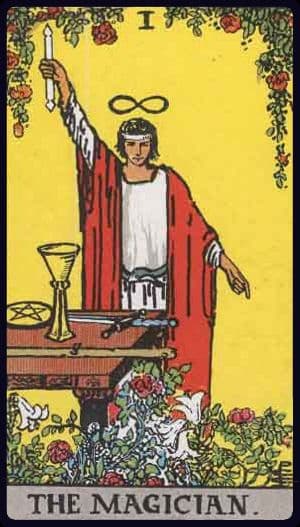
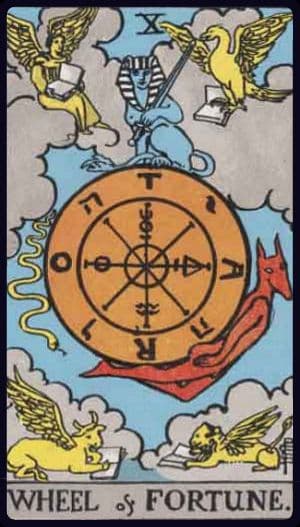
Some moments reward preparation because timing suddenly opens. The Magician gives you agency, competence, and the ability to act; Wheel of Fortune introduces the larger turn of events that no one fully controls. Together, they often reflect a period where personal skill meets shifting circumstances — an opening at work, a chance encounter, a project gaining momentum because the environment is finally ready for it. The tension is real: how much is your doing, and how much is the fact that the door happened to open now.
What This Pair Reflects
You may be trying to understand whether this moment is something to seize or simply something to watch. This combination invites you to notice where good timing still requires deliberate action, and where action alone cannot manufacture the turn.
Begin your practice
Your readings, notes, and questions in one private place.
Start a readingIn Different Situations
Relationships
A connection can feel promising at exactly the moment circumstances make it difficult to define. The Magician speaks to the part you can shape: reaching out, showing up, saying something clearly. Wheel of Fortune brings the timing, changes and chance encounters that no amount of effort can command. Together they resist both extremes, that everything depends on you and that you have no say at all. You can act with care without treating another person's response as proof of your skill, or an inconvenient turn as proof the connection was never real.
Career
You can prepare carefully and still watch the conditions around your work change without warning. The Magician is what you bring: competence, initiative and the ability to respond. Wheel of Fortune is what moves around you: openings, timing, changing priorities and other people's decisions. Together they describe opportunity without pretending it can be engineered on demand. A sudden chance is easier to use when your skills are ready; a stalled plan is not automatically evidence that your skills are lacking. The real distinction is between improving what you control and taking responsibility for every turn of events.
Decisions
There is a particular unease in choosing when circumstances might change again tomorrow. The Magician offers agency: you can gather information, prepare and make a deliberate move. Wheel of Fortune insists that some timing and consequences remain outside your control. Together they make neither perfect planning nor passive waiting especially convincing. A good decision may still meet bad timing, and an unexpected opening may still need judgment. The useful question is what you can responsibly choose with what is known now, without demanding that your choice guarantee the whole future.
Burnout
Being capable can become exhausting when the conditions keep changing. The Magician is the part of you that can improvise, solve problems and make something work; Wheel of Fortune is the changing ground beneath that effort. Each new turn can seem to call for another display of resourcefulness, until your skill is mistaken for unlimited capacity. Feeling depleted here doesn't necessarily mean you've lost your ability or commitment. It may reflect the strain of constantly adjusting to things you did not set in motion. There is a difference between responding well to change and having to absorb every change yourself.
Feeling Stuck
You can keep trying different things and still feel as though you're arriving at the same place. The Magician gives you initiative and the means to experiment, while Wheel of Fortune brings cycles and changes that don't answer directly to effort. That can make every quiet period feel like evidence you've done something wrong, or every small shift feel like a breakthrough you must capitalize on. Neither reading is necessary. There may be useful movement in how you respond even while the larger pattern remains unsettled. Not every turn can be made to happen, and not every pause cancels your agency.
New Beginnings
A beginning can arrive before you feel completely ready for it. Wheel of Fortune brings the sense of a larger change already underway, while The Magician reminds you that your response still has shape and consequence. There may be excitement in having useful skills at the right moment, alongside unease about how much remains unsettled. This isn't a promise that timing will stay favorable, or a demand to make the most of every opening. Preparation gives you something to work with; it cannot freeze the circumstances around you. You can participate in a new chapter without pretending to direct every turn.
Grief and Loss
Loss can leave you trying to restore a sense of order while everything keeps changing around it. The Magician is the part that can handle practical matters, make arrangements and find words; Wheel of Fortune holds the unwelcome fact that not every turn can be anticipated or undone. Being resourceful may help you through a day without making the loss feel smaller. And a day that unsettles you again isn't evidence that your earlier efforts failed. There is dignity in what you can still shape, without putting the changing weight of grief on your list of things to control.
Reversed Variations
Both reversed
Effort and timing stop cooperating. You may be pushing hard against bad conditions or blaming circumstances for problems that also involve execution.
The Magician reversed
The Magician reversed makes the opening harder to use well. The wheel may be turning, but uncertainty, poor judgment, or scattered effort interferes with your ability to respond.
Wheel of Fortune reversed
Wheel of Fortune reversed makes timing feel awkward or resistant. You still have agency, but the path may involve delays, repetition, or the sense of working against the current.