Wheel of Fortune & The Tower
What Wheel of Fortune and The Tower Mean Together
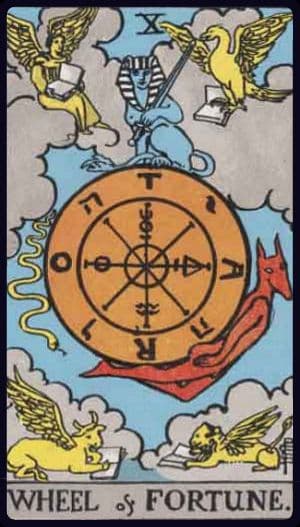
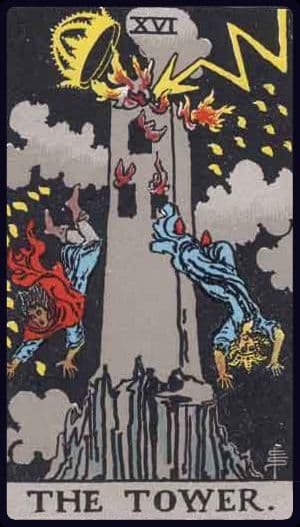
Some turning points do not arrive as gentle pivots. They arrive as breaks. Wheel of Fortune signals the larger shift in the pattern; The Tower signals the rupture that makes the shift undeniable, often by tearing down the structure that could not survive the turn. Together, they can provide a symbolic lens on abrupt changes you have already observed. They do not forecast a layoff, breakup, burnout, or revelation. A change does not need an assigned hidden purpose to be worth examining.
What This Pair Reflects
You may be in the middle of change that is not asking to be managed neatly so much as survived truthfully. This combination invites you to notice what has actually changed, which assumptions no longer fit, and what remains uncertain.
Begin your practice
Your readings, notes, and questions in one private place.
Start a readingIn Different Situations
Relationships
When a relationship changes abruptly, it can be hard to tell which part hurts more: what happened, or the loss of the future you had pictured. The Tower brings the break into view; Wheel of Fortune places it inside a larger change in how the relationship has been unfolding. This pair does not mean a breakup is inevitable, or that the disruption was meant to happen. It asks what no longer holds up between you and what has actually shifted. Repair may be possible, but returning to the old pattern is a different question from staying connected.
Career
Work can change so quickly that your plans stop fitting before you have had time to reconsider them. The Tower points to a structure or expectation that has broken; Wheel of Fortune draws attention to changing conditions beyond any one person's control. That might involve a role, a team or simply the way you understood your place at work. The pair does not foretell losing a job, and it does not make disruption automatically beneficial. It helps distinguish what is already untenable from what is only uncertain. You may have less control over the turn than over what you build from the facts now in front of you.
Decisions
When something unexpected happens, the pressure to make a decision immediately can be almost as unsettling as the event itself. The Tower shows that an assumption has been broken; Wheel of Fortune shows that the surrounding circumstances are still moving. Together, they can make the old choice seem irrelevant without making the new one obvious. This is not a sign that a dramatic action is destined or necessary. It may help to distinguish the facts that have changed from the fear that everything is now unstable. A decision made from that distinction has firmer ground than one made only to end the shock.
Burnout
You may be tired from holding together something that no longer feels able to hold you. The Tower reflects the strain in a structure or expectation that has already cracked; Wheel of Fortune adds the difficulty of changing conditions around it. The combination does not predict a collapse or claim that exhaustion must lead to a dramatic break. It makes a quieter point: managing each new demand cannot always compensate for a foundation that has stopped working. The fatigue may have as much to do with what you are maintaining as with how hard you work.
Feeling Stuck
The sense of being stuck may come from living inside a pattern you no longer believe in. The Tower marks a crack in the old structure; Wheel of Fortune shows how circumstances keep circling or shifting while that crack remains. You might be repeating familiar steps because they are the only ones that still make sense on paper. Nothing here requires a dramatic exit, and the cards do not promise a breakthrough. They help name why returning to the same routine feels different once its assumptions have stopped convincing you.
New Beginnings
You may be beginning again because something familiar has already come apart, not because you were looking for a fresh start. The Tower gives that rupture its full weight; Wheel of Fortune reflects the wider change in circumstances that follows or surrounds it. It would be too easy to call the disruption a hidden gift. You can be curious about what comes next and still resent what brought you here. This combination holds both truths without promising that the new phase will justify the loss of the old one.
Grief and Loss
A loss can break more than the thing you lost. It can disturb the habits, assumptions, and ordinary future you had built around it. The Tower gives that break its force; Wheel of Fortune reflects a world that continues to change even when you would rather it hold still. There is no need to turn the upheaval into a lesson or call it necessary. You may be grieving both the absence itself and the way familiar life no longer fits. This combination recognizes the scale of that disruption without telling you how it should resolve.
Reversed Variations
Both reversed
The shift may be delayed, contained, or unfolding in unnerving increments. You may sense the cycle turning and the structure cracking while trying hard to keep either from becoming fully visible.
Wheel of Fortune reversed
The Tower reversed slows the rupture without removing the need for it. Change is still in motion, but the collapse may come through erosion, mounting strain, or inner dread rather than one explosive event.
The Tower reversed
Wheel of Fortune reversed makes the break feel more repetitive or poorly timed. The upheaval is real, yet it may seem entangled with old cycles that have been resisted for too long.