The Best Tarot Decks for Intuitive Reading and Reflection
Looking for the best tarot deck for intuitive reading? Learn what to look for in a reflective, journal-friendly deck before you buy. Try it free.
Aurora @ Liminal Tarot
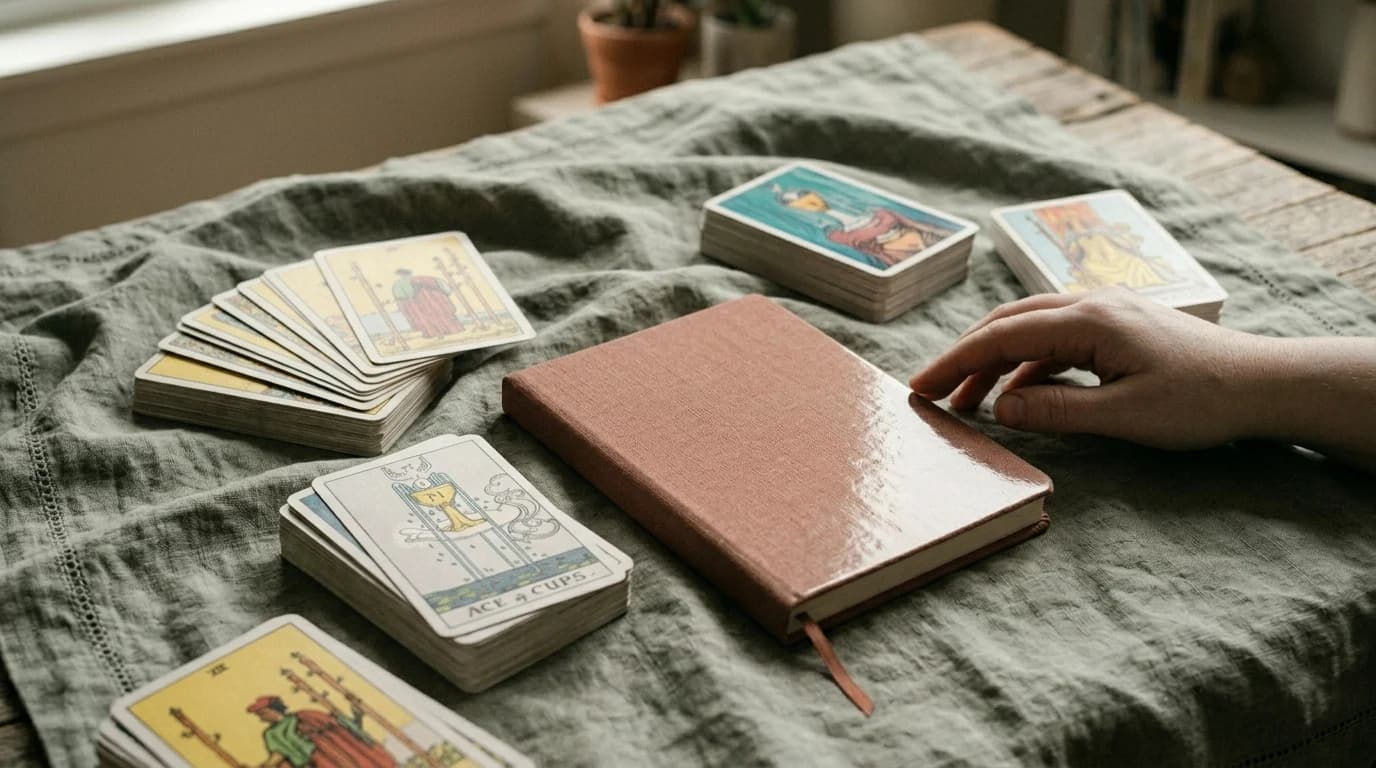
If you are looking for the best tarot deck for intuitive reading, you probably are not shopping for the same reason as a total beginner memorising card meanings or a professional reader building a client toolkit. You are usually looking for a deck that helps you feel something, notice something, or stay with a question long enough for it to open up.
For reflective practice, the right deck is not just beautiful. It needs imagery you can actually respond to, symbols that keep giving you something to work with, and a tone you will still want to sit with when you are tired or uncertain. This guide covers what to look for and how to choose without getting distracted by hype. If you want a curated place to browse options, the /decks page has practitioner-recommended decks with notes on who each one suits.
What makes a tarot deck good for intuitive reading?
A lot of deck roundups focus on aesthetics first. That matters, but for reflection work it is not enough. The best tarot deck for reflection gives you images you can enter, not just admire.
Here are the criteria that matter most:
1) The imagery creates an emotional response
You do not need to understand every symbol immediately. You do need to feel something when you look at the cards. Curiosity, discomfort, tenderness, friction, recognition — those are all useful. If a deck leaves you cold, it usually stays cold in practice too.
2) The symbolism has room to breathe
For intuitive reading, you want a deck that is not so literal that it does all the thinking for you, but not so abstract that every pull feels ungrounded. Good reflection decks leave you space to associate without becoming visually empty.
3) The guidebook supports self-inquiry
A strong companion guide matters more than many people admit. The best decks for reflection often come with guidebooks that ask better questions, not just give fixed meanings.
4) You want to keep reaching for it
This is the simplest test and often the most reliable. An intuitive deck should invite repetition. You should want to pull from it again tomorrow, not just display it on a shelf.
Try this before buying: look at a few sample cards and ask, “Would I want to journal from this deck for three months?”
The best decks for intuitive reading usually fall into a few types
You do not need a fake-objective ranked list. What helps more is knowing which kind of deck tends to suit which kind of reflective practice.
Rider-Waite-Smith based decks with strong emotional clarity
These are often the safest choice if you want intuitive access without losing symbolic structure. They suit people who want a tarot deck for journaling that is easy to revisit and compare over time.
Modern decks with softer or more contemporary imagery
Modern decks can be better for reflection when the artwork feels psychologically immediate rather than historically distant. These are often the best fit if you want a deck that feels emotionally legible and easy to bring into a daily practice.
Symbolically rich indie decks
Some intuitive readers want artwork that is layered, unusual, and capable of producing fresh associations over time. A symbol-heavy intuitive tarot deck can be excellent for deeper journaling, especially if you are drawn to slower readings and repeated pulls.
The tradeoff is that these decks can ask more of you. If the imagery is too dense or idiosyncratic, the deck may become interesting to study but tiring to actually use.
Reflection-first tarot decks
Some decks lean toward self-inquiry in tone even when they are still structurally tarot. These can be wonderful for personal practice because they encourage emotional honesty rather than performance. The risk is that a deck can become so soft that it stops challenging you.
Try this sorting question: do you want your deck to ground you, warm you, provoke you, or surprise you?
How to choose a tarot deck for journaling and reflection
If your main use case is journaling, not client work, your buying criteria should reflect that. A tarot deck for journaling has a different job from a collector’s deck or a study deck.
Choose readability over prestige
A famous deck is not automatically the right deck for you. If the artwork feels stiff, cluttered, or emotionally inaccessible, you probably will not build a practice with it.
Check whether the imagery invites actual writing
Some decks look stunning online but do not generate many thoughts beyond “pretty.” For journaling, you want cards that trigger questions, associations, memories, or bodily reactions.
Notice whether the deck feels too resolved
If every card communicates one obvious mood, the deck may stop being useful quickly. Reflection thrives on layered images. You want enough ambiguity for your inner life to meet the card halfway.
Pay attention to card size, finish, and physical feel
If a deck is awkward to shuffle, hard to hold, or physically annoying, you will use it less. For a reflective practice, the tactile part matters. It helps create the pause that reflection needs.
Try this before buying: pick three sample cards — one easy card, one difficult card, and one ambiguous card. Ask which deck makes you want to write the most about all three.
If you are still early in the process, the guide on how to choose your first tarot deck gives a broader decision framework.
Common mistakes people make when choosing an intuitive tarot deck
The first mistake is choosing only with your eyes. A deck can be gorgeous and still be useless for your actual practice.
The second mistake is buying a deck that feels impressive rather than usable. If the imagery is so abstract that every reading turns into guesswork, or so ornate that you hesitate to touch it, it may not become a living part of your routine.
The third mistake is assuming “intuitive” means “easy.” Sometimes the best tarot deck for intuitive reading is the one that productively unsettles you just enough to interrupt your standard interpretations.
The fourth mistake is expecting one perfect forever deck. Many readers eventually realise they want different tools for different chapters. That is normal.
So which deck should you buy?
If you want the simplest answer, start with a deck that is readable, emotionally resonant, and easy to return to. In most cases, that means a Rider-Waite-Smith based or adjacent deck with expressive imagery and a thoughtful guidebook.
If you already know traditional imagery does not land for you, choose a modern deck that still preserves enough symbolic structure to support layered readings. If you journal heavily, a more symbol-rich indie deck may reward you over time.
The goal is not to buy the most prestigious deck. It is to buy the one you will actually build a relationship with.
A good tarot deck for reflection should make you want to pull a card when you are unsure what you feel, not just when you want a beautiful object on your shelf. Browse the curated recommendations on /decks, then choose the deck that feels most alive to you.