Digital Deck vs. Physical Deck in a Tarot App: How to Decide
Digital vs physical tarot deck: learn when each mode works best, and how to choose the right tarot app setup for your practice. Try it free.
Aurora @ Liminal Tarot
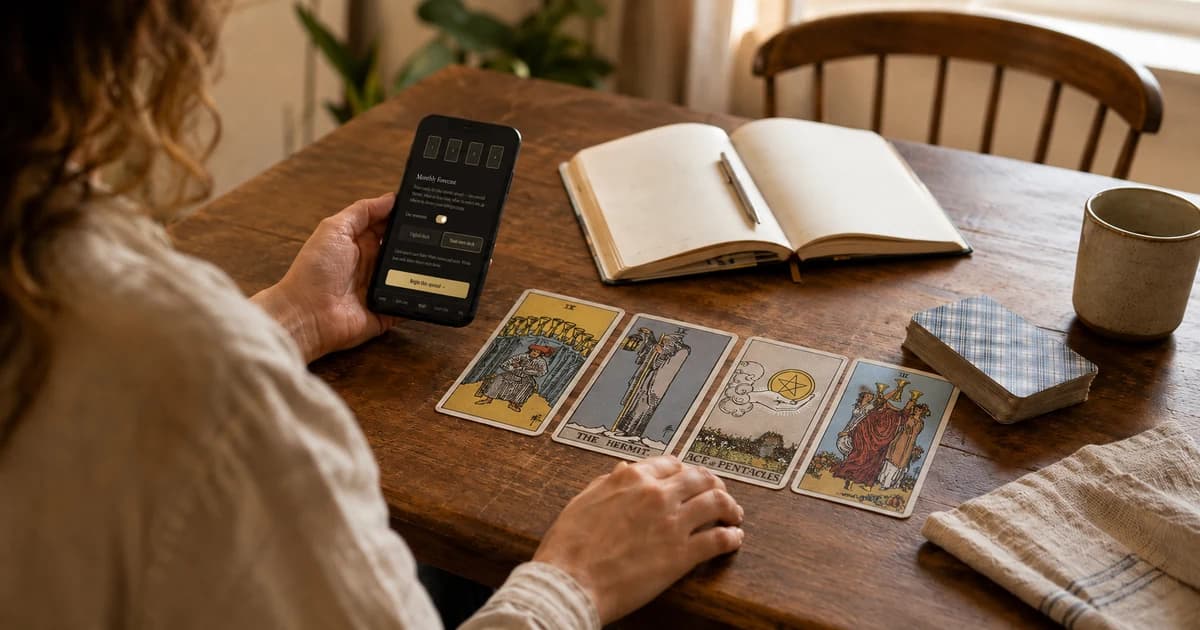
Some readings want the full ritual: your own deck, a cleared surface, a few quiet minutes, the familiar feel of cards you know well. Other readings happen on the train, between meetings, or in bed after a long day, and they only happen because they are easy to begin.
That is the real question behind digital vs physical tarot deck decisions. It is not which one is more “real.” It is which mode helps you actually show up for the reading you need.
Many readers get stuck because they assume they have to choose a side. If you have ever wondered, “should I use a digital or physical tarot deck,” the answer is usually more situational than absolute. In practice, a digital draw can support consistency, access, and low-friction reflection. A physical deck can support depth, sensory focus, and a stronger sense of ritual. This guide will help you decide when each mode makes sense, and how to move between both without making your practice feel fragmented.
Why this is not a purity test
A lot of hesitation comes from guilt. People worry that if they use digital cards, they are doing tarot the lazy way. Usually that fear says more about identity than usefulness.
What many practitioners notice is that the value of a reading often comes from the quality of attention you bring to it. The draw matters, but so do the question, the pause before interpretation, and what you record afterward. A digital reading with genuine attention can be more useful than a physical spread you rush through out of obligation.
Instead of asking which mode is more valid, ask which one reduces friction without reducing honesty.
Try this check-in before you begin:
- Do I want depth, or do I want access?
- Do I have time for a full setup?
- Am I avoiding digital because it truly is not right for this reading, or because I think it does not count?
A quick example: someone doing a morning pull before work may get more from a digital draw they actually log than from postponing a physical session that never happens. Someone processing a breakup on a quiet Sunday may benefit from laying out their own deck by hand. Both are real practice.
How to choose a digital vs physical tarot deck for the moment
The best choice is usually about context, not philosophy. Treat the mode like a tool, and the decision gets simpler.
Choose digital when access is the difference between reading and not reading
Digital mode is strongest when convenience protects consistency. That includes daily pulls, quick check-ins, late-night reflections, or moments when you want to explore a spread without unpacking a whole ritual setup.
Imagine someone spiraling during lunch and needing one card to interrupt the loop. In that moment, the fan-picker is not a lesser option. It is the bridge that lets the reflection happen now instead of “later.”
Use digital mode when:
- you are short on time
- you do not have your deck with you
- you want a low-pressure daily habit
- you want to try a spread before doing a longer session later
Small practice: For the next three days, do a one-card draw digitally and answer two prompts: “What is this card highlighting?” and “What does it invite me to do or notice today?”
If you want to keep your physical ritual while still logging readings, our guide on using your own tarot deck with an app shows how that works.
Choose physical when the tactile ritual is part of the answer
Physical mode often helps when handling the cards helps you slow down. Shuffling, cutting, and turning cards over by hand can create the kind of attention some questions need.
This is especially true when the reading is emotionally loaded or when your relationship with a specific deck matters. Some readers do not just interpret through the cards; they regulate themselves through the motions of the practice.
Picture someone setting aside an hour to work through a career crossroads. They may need the shuffle, the table layout, and the sense of deliberate time that a physical session creates.
Small practice: The next time you use your own deck, shuffle until your breathing slows. Say the question out loud once before you pull. Notice whether that changes the tone of the reading.
If you want words for why the shuffle still matters, this article on tarot shuffle ritual and meaning gives a grounded explanation.
What each tarot deck mode is good at
Different tarot deck mode choices support different strengths. The mistake is expecting one mode to do everything.
Digital mode is good at momentum
Digital readings make it easier to begin. That matters because beginning is where most reflective practices fail. When the barrier is low, you are more likely to capture the real moment instead of waiting for the perfect one.
That makes digital mode especially useful for daily pulls, disrupted routines, travel, or brief emotional check-ins.
Prompt: After a digital reading, write one sentence that starts with “The part of this I do not want to admit is…” Low-friction does not have to mean shallow.
Physical mode is good at depth and embodiment
Physical readings work well when the point is not speed but staying present long enough to hear yourself clearly. The ritual is not automatically deeper, but it often creates conditions that support depth.
That can be especially useful for longer spreads, weekly reviews, or readings tied to a specific deck relationship.
Prompt: After a physical reading, ask: “What did the pace of this session make room for that a fast reading would have missed?”
The best tarot app deck options let you switch on purpose
Strong tarot app deck options make room for both. You can use digital when access matters and physical when ritual matters, without treating one as betrayal of the other.
This is often the most realistic answer for adults whose practice changes with their season of life. Busy week? Digital may keep the thread alive. Quiet weekend? Physical may let you go deeper. That flexibility is a strength, not inconsistency.
A simple framework for deciding quickly
If you freeze every time you choose, use a short rubric.
-
How much time do I honestly have?
If the answer is three minutes, choose the mode that fits three minutes. -
What kind of question is this?
A daily “What should I pay attention to?” pull may suit digital. A layered relationship or career question may suit physical. -
What will help me stay present?
For some people that is touch. For others it is simplicity. -
What am I most likely to record afterward?
A reading you can revisit later is often more valuable than a “better” reading you never capture.
Journal prompt: “When I reach for digital, what does it make possible? When I reach for physical, what does it protect?”
That question gets to the heart of digital vs physical tarot deck decisions better than any abstract argument about authenticity.
You do not have to choose once and for all
The healthiest answer is usually flexible. And yes, a common practical question is: can a tarot app work with your own cards? It can, if the app functions as a tarot app with own cards support, letting you log a reading from your physical deck instead of forcing you into a digital-only flow. The reader who uses digital mode during the week and a physical deck on Sunday is not inconsistent. They are responding to real life.
Use digital when it helps you begin. Use physical when it helps you deepen. Let the question, your energy, and your context decide.
If your practice works better when you can move between both, Liminal Tarot supports both deck modes so you can do a quick digital pull or log a reading from your own cards without losing continuity. The point is not to prove devotion. It is to build a practice you can actually keep.