How to Log Your Physical Tarot Readings (And Why You Should)
Learn how to log physical tarot readings so your spreads stay searchable, useful, and easy to revisit later. Try this grounded workflow free.
Aurora @ Liminal Tarot
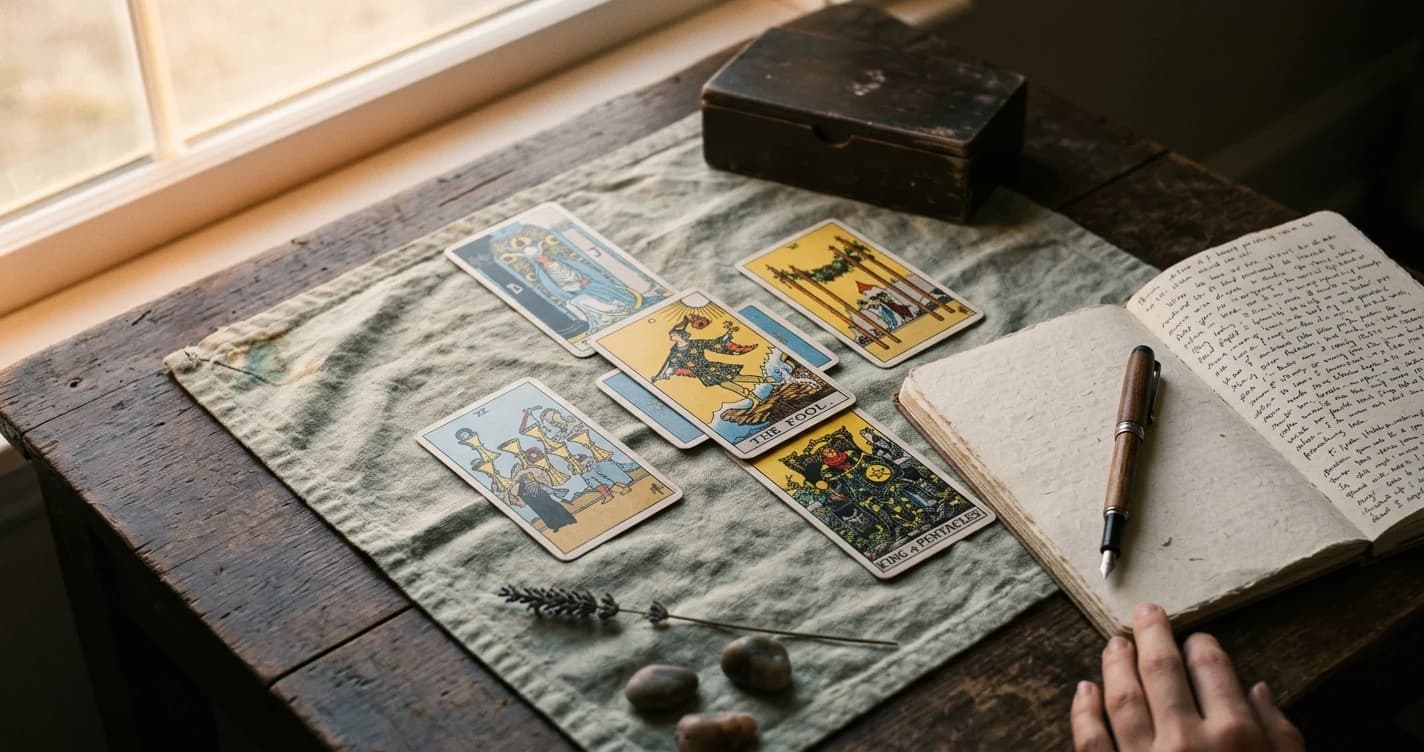
You finish a spread with your physical deck and think, that was important. Then the moment passes. By next week you remember the mood of the reading, but not the actual cards, the spread positions, or the sentence that felt painfully true. That is why people want to log physical tarot readings without turning the ritual into admin.
Paper journals are not the problem. Forgetting is. A notebook can hold beautiful fragments, but it gets hard to search, compare, or revisit when you want to understand what has been coming up over time. A good logging system keeps the texture of the reading while preserving the details your future self will care about. This guide covers what to record, how to fit it into a physical reading, and how to make your reading history genuinely useful later.
Why log physical tarot readings in the first place?
A physical reading gives you texture that digital-only draws often cannot. You shuffled. You cut the deck. You noticed which card felt charged as it landed. That part matters. But memory gets fuzzy fast, especially when the reading happened in the middle of stress, grief, or a big decision.
A tarot reading log protects context. Not just what card appeared, but where it appeared, what question you asked, and what felt alive in the room. In practice, that is often the difference between “I pulled the Seven of Cups again” and “I pull the Seven of Cups every time I ask about options I do not actually want.”
Consider a simple example. You do a three-card spread about whether to stay in your job. Three weeks later, you remember The Hermit, but not whether it was advice or obstacle. That changes the reading completely.
Try this after your next spread: write one sentence answering, “What would I most regret forgetting by next month?” Start your record there.
What to record in a tarot reading log
You do not need a transcript. The best way to track tarot spreads from a physical deck is to record a small set of details consistently.
The minimum useful record
For most readings, five items are enough:
- date
- question or intention setting
- spread name or layout
- each card by position
- one short reflection on the main takeaway
That gives you a usable tarot spread tracker without making the process heavy.
The details that become valuable later
When a reading feels important, add a little more:
- whether you used reversals
- which deck you used
- any striking card combinations
- what action you took afterward
- what changed when you revisited the reading
This is where a paper notebook often becomes limiting. You can absolutely keep one, but once you want a searchable tarot reading log by card, deck, or topic, digital structure helps.
Picture someone doing a Celtic Cross with a Thoth deck during a breakup and writing only, “intense, lots of swords.” Six months later, that note says almost nothing. If they also logged the question, spread positions, and one paragraph about the conflict between grief and relief, the reading becomes understandable again.
Try this during your next reading: use a “minimum plus one” rule. Record the five basics, then add one extra detail that would help your future self remember the emotional temperature of the spread.
How to log physical tarot readings without breaking the ritual
The trick is to build logging into the reading itself, so it feels like the closing movement, not a separate chore.
Before the reading, write the question in one clear line. “What am I avoiding in this decision?” is better than “Tell me everything.” Good intention setting makes the rest of the record easier.
During the reading, note the cards by spread positions once the layout is down. You do not need polished prose. You do need clean card entry and clear spread context. This is the heart of how to log a physical tarot reading without losing the ritual: the physical draw stays physical, while the structure becomes searchable later.
After the reading, write three to five sentences on what feels most important. Keep it plain. What tension showed up? What surprised you? What action feels honest now?
A simple workflow looks like this:
- Write the question.
- Draw with your own deck as usual.
- Enter each card by position.
- Add a short reflection.
- Tag the reading by life context if useful.
That is enough to track tarot readings in a way that stays usable. If you want a cleaner version of this same approach, how to use your own tarot deck with an app without losing the ritual shows how physical deck mode can support the process. If you are newer to the practice side, this guide to tarot journaling explains why structured reflection works better than a blank page for many readers.
Try this after your next reading: set a three-minute timer for the logging step. It keeps you honest and stops the record from turning into over-explaining.
How to make your reading history useful later
Logging is only half the value. Re-reading is where insight starts to compound.
When you keep a searchable journal for physical tarot readings, patterns become visible. That answers a question many readers eventually ask: can you keep a searchable journal for physical tarot readings without making the practice feel clinical? Yes, if the structure stays simple. What cards show up whenever you ask about one relationship? Which spreads do you use when you are anxious? Which readings led to action, and which only reflected confusion back to you?
Many practitioners notice that meaning sharpens on the second pass. The first reading tells you how things feel now. The revisit shows what was accurate, what you resisted, and what kept repeating. That is why log physical tarot readings is not really a note-taking problem. It is a pattern-recognition practice.
Imagine someone pulling the Two of Swords again and again across career spreads. A single entry suggests indecision. A month of entries might reveal something sharper: stalemate appears every time they ask how to stay safe, but more active cards appear when they ask what honesty requires. That is not prediction. It is structured self-inquiry with a memory.
Try this once a week: review your last five readings and answer three questions: What repeats? What changed? What am I avoiding? That quick check turns reading history into actual guidance.
Paper, notes app, or dedicated tarot tool?
Paper journals win on intimacy. Generic notes apps win on search. A dedicated tarot tool works best when you want both structure and ritual.
A notebook can be beautiful, but retrieval is hard. Notes apps are searchable, but cards often get buried in paragraphs and spread positions disappear. A dedicated system lets you keep your physical deck, preserve deck ownership and the draw itself, and still create organized reading history.
The best system is the one you will still use six weeks from now. For some readers that is a notebook plus a weekly digital summary. For others it is logging every spread directly into one place with physical deck mode built in.
Try this experiment: log your next three readings in the same format. At the end of the week, see whether you can clearly answer what theme has been following you. If not, your system needs more structure.
Your physical deck does not need to become digital to become easier to remember. It just needs a record strong enough to hold what happened. If you want your spreads to stay searchable and useful over time, build logging into the ritual while the reading is still alive. Liminal Tarot lets you log readings from your own deck, keep your reading history in one place, and return to the patterns later.