Rider-Waite vs. Modern Tarot Decks: Which Is Right for Your Practice?
Comparing rider waite vs modern tarot decks? Learn which fits study, intuition, and daily practice before you buy your next deck. See our guide.
Aurora @ Liminal Tarot
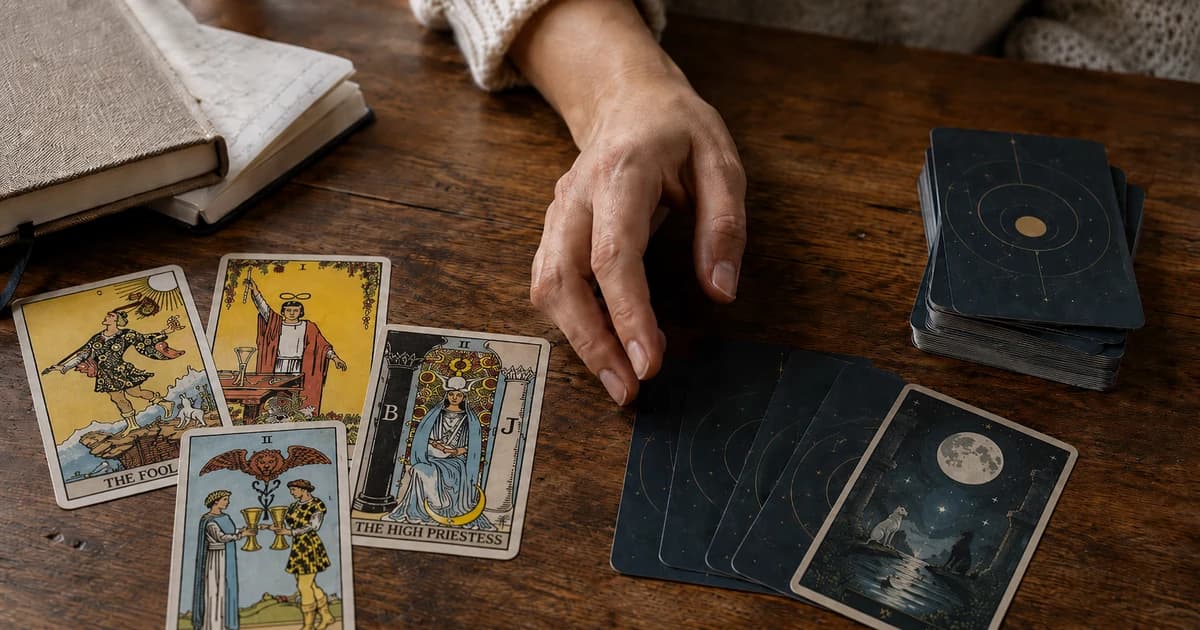
If you are stuck on rider waite vs modern tarot decks, you are probably not really asking which one is objectively better.
You are asking which deck will actually help you read, reflect, and keep practicing after the novelty wears off.
The Rider-Waite-Smith tradition matters for a practical reason: most books, tutorials, apps, and card meanings still assume that visual system. But that does not automatically mean it is the best deck for every reader. If your goal is a personal reflective practice rather than formal study, a modern deck with imagery you genuinely connect with may serve you better.
The choice is less about tradition versus trend than about what kind of support you need.
Why the Rider-Waite-Smith system still matters so much
When people say "Rider-Waite," they usually mean a deck based on the Rider-Waite-Smith visual structure.
That structure became the reference language for a huge amount of tarot education. Many guidebooks explain the cards through those exact scenes. Many articles assume you can picture the same symbolism. That creates one big advantage: compatibility.
If you are learning from books, comparing interpretations, or using digital tools alongside your physical deck, an RWS deck removes friction. You do not have to mentally translate what the Three of Swords "means" if the image already resembles the one every resource is describing.
That is why beginners often feel steadier with an RWS-based deck even when they do not love the art.
Try this: think about how you actually plan to learn. If you expect to rely on books, online card guides, or app-based interpretation support, compatibility should matter more than aesthetics alone.
What modern decks often do better
A modern deck is not automatically better because it is newer. But modern decks often solve a real problem: some readers do not feel at home inside traditional imagery.
Maybe the symbolism feels visually crowded. Maybe the historical style creates distance. Maybe you understand the card intellectually but do not feel anything when you look at it.
For reflective practice, that matters.
Tarot becomes more useful when the imagery invites an honest reaction. A strong modern tarot deck comparison is not really about which deck has the prettiest art. It is about whether the deck helps you notice your own thoughts faster, write more honestly, and return to the cards without resistance.
Try this: look at five cards from any deck you are considering — not just The Fool or The Lovers. Check a quieter card too, like the Four of Pentacles or Eight of Cups. Ask whether the imagery makes you curious enough to pause and reflect.
Rider-Waite vs. modern tarot decks: compatibility vs resonance
Here is the simplest way to think about the decision.
Choose Rider-Waite-Smith or a close clone if you want:
- the easiest path for learning card meanings
- smooth alignment with books, courses, and card libraries
- less translation when using digital interpretation tools
- a deck that functions like the reference model most resources were built around
Choose a modern deck if you want:
- imagery that feels emotionally alive to you
- a deck that fits your taste and reflective style
- less resistance to pulling cards regularly
- a stronger felt sense of "this is my practice"
The biggest mistake is assuming that study needs and practice needs are identical. They are not.
Someone learning the structure of tarot from scratch may benefit from standard imagery first. Someone who already understands the basics but wants a sustainable daily relationship with the cards may do better with the best rider waite alternative for their own sensibility.
Which is better for beginners?
This depends on what kind of beginner you are.
There is the beginner who wants to learn tarot as a symbolic system. And there is the beginner who wants a reflective ritual that helps them think more clearly about life.
If you want to study tarot methodically, Rider-Waite-Smith is usually the easier entry point. You will spend less energy decoding the art and more energy learning the cards.
If you want to start reading for yourself right away and keep a journaling habit around it, a modern deck may be the better first purchase if the imagery genuinely lands.
For example, imagine two new readers:
One buys a classic RWS deck, reads with a guidebook every night, and likes having a stable reference system. Great fit.
Another buys the same deck, finds the art emotionally flat, and stops using it after two weeks. Poor fit, even though the deck was "correct."
That is why our guide to the best tarot decks for beginners starts with use case, not prestige. The right first deck is the one you will actually build a practice around.
Try this: ask whether you want your first deck to teach you tarot, accompany you through reflection, or do both. That answer narrows the field fast.
What if you use an app, journal, or physical-deck workflow?
This is where the decision gets more practical.
If part of your reading flow involves logging readings, checking card meanings, or using interpretation support while pulling your own physical cards, RWS compatibility becomes more valuable. The closer your deck stays to the shared visual language, the less friction you will feel.
A good rule: the more external support you plan to use, the more useful a familiar symbolic structure becomes. The more self-directed and intuitive your practice is, the more freedom you have to choose a deck based on resonance.
If you want to browse options across both styles, our tarot decks guide is a good place to compare them side by side.
So which should you choose?
Choose Rider-Waite-Smith if you want the clearest learning path.
Choose modern if you want the strongest emotional connection.
Choose an RWS-inspired modern deck if you want a middle path: familiar structure, but artwork that feels more like you.
That middle category is often the sweet spot. You keep enough symbolic continuity to learn easily, while still getting a deck you want to return to.
In other words, the answer to rider waite vs modern tarot decks is usually not "pick a side forever." It is "pick the kind of support your current practice needs most."
If you are buying your first deck, prioritize usability over identity. If you are buying your second, prioritize the gap your first deck left unfilled.
If you want help narrowing your options, explore our deck guide and begin with the decks that match how you actually read, not how you think you are supposed to.