The Single Card Pull: Why Less Is Sometimes More in Tarot
Explore the single card tarot pull, when one card is enough, and how to turn a quick draw into a grounded daily practice. Try it free.
Aurora @ Liminal Tarot
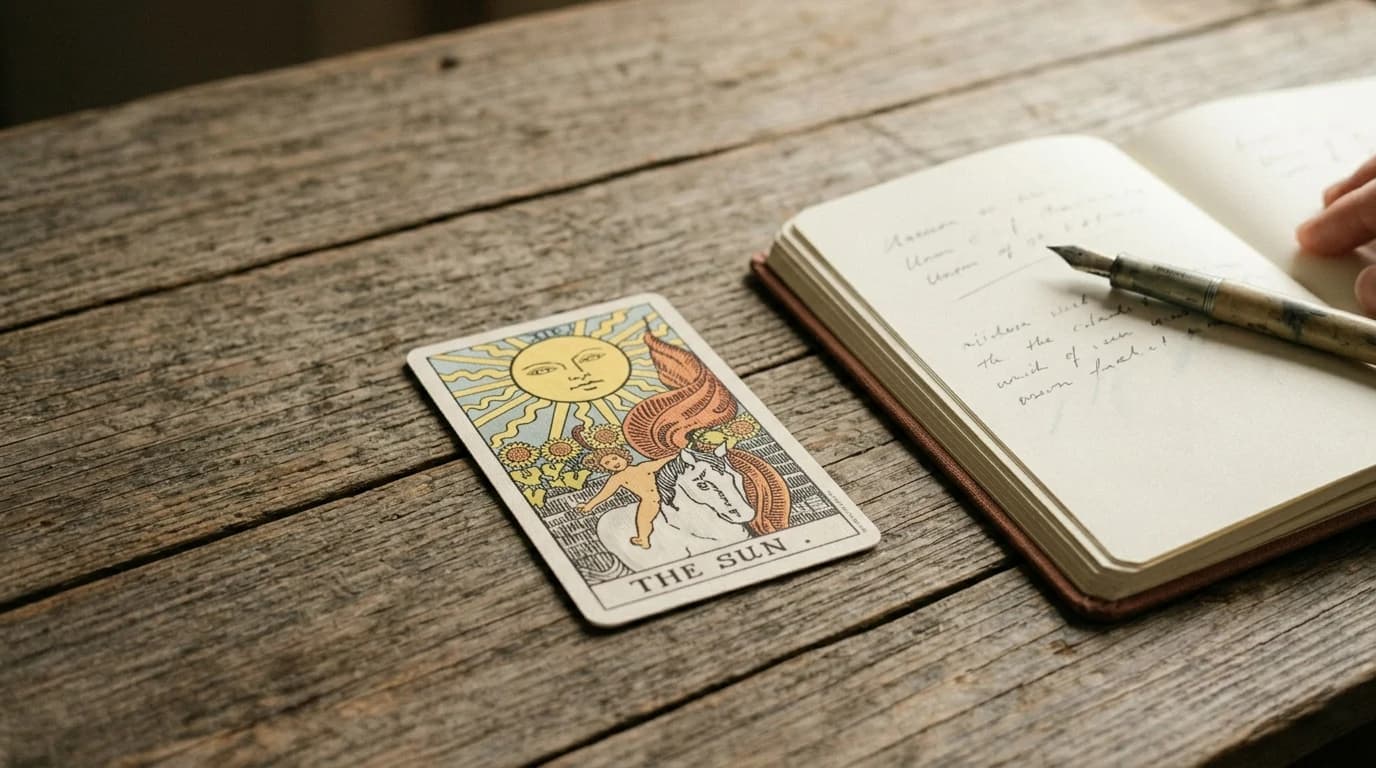
Some questions do not need a ten-card spread. They need one honest pause.
That is the quiet power of a single card tarot pull. When your mind is crowded, when you are tempted to over-read, or when you want a daily reflective touchpoint instead of a full ritual, one card can do more than a complicated layout ever could. Not because it predicts your day, but because it gives your attention somewhere precise to land.
A lot of people assume more cards mean more insight. Sometimes that is true. But sometimes more cards just create more noise, more interpretation, and more ways to avoid the real question. In this guide, we will look at when a one-card reading is the right choice, how to do it well, what to write down afterward, and how to turn a small draw into a meaningful practice over time.
If you have ever wanted tarot to feel simpler, steadier, and easier to return to, this is where to start.
Why one card can be enough
A one-card reading works because constraint creates clarity. When you pull a single card, you are not trying to explain your entire life. You are choosing one theme, one lens, or one invitation to sit with.
That makes the practice especially useful when you are tired, overwhelmed, or just trying to stay in conversation with yourself. Instead of asking tarot to solve everything, you let it illuminate one corner of the room.
This is also why a single card pull is often better for daily practice than a larger spread. A short ritual is easier to repeat. A repeatable practice is easier to trust. And trust in tarot usually grows through consistency, not intensity.
Try this prompt before you pull:
- What is the one thing I need to pay attention to today?
- What energy am I bringing into this situation?
- What am I avoiding naming clearly?
The key is specificity. Not prediction. Not "tell me what happens next." Just one clean question that your mind can actually work with.
If you are brand new to tarot, starting with the one-card spread guide can help you build that muscle without making the process feel overly technical.
When a single card pull is better than a full spread
A full spread is useful when the question genuinely has multiple moving parts. But many readings become complicated only because the reader is anxious, impatient, or hoping that more cards will produce certainty.
A single card is often the better choice when:
- you want a daily reflection anchor
- your question is broad and emotionally charged
- you feel tempted to keep pulling until you like the answer
- you need perspective, not exhaustive analysis
- you want to notice patterns over time
For example, imagine you are in a stressful week at work. A ten-card spread might produce nuance, but it can also feed the urge to interpret every email, meeting, and mood swing as symbolic drama. One card, on the other hand, might simply show you a theme like patience, boundaries, grief, momentum, or self-trust. That is often more usable.
A helpful rule: if you cannot state your question in one sentence, simplify before you expand. A one-card reading forces that simplification.
Try this decision check:
Use one card when you need orientation
Ask, "Do I need direction for this moment, or analysis of the whole situation?"
If the honest answer is direction for this moment, one card is enough.
Use a larger spread when you need structure
If you need to compare options, map a dynamic between people, or explore past-present-future movement, a larger spread may serve you better. But it should earn its complexity.
In other words, choose the spread that respects the question. Do not choose the biggest one by default.
How to do a one card tarot reading without rushing it
The simplicity of a one-card pull is exactly what makes it easy to rush. You pull, glance, label it, and move on. But the value comes from staying with the card long enough for it to become useful.
Here is a grounded way to approach it.
1. Name the context
Before you pull, write one line about what is happening. It can be as simple as: "I am feeling scattered about work," or "I keep circling the same relationship question."
This matters because tarot becomes more useful when the reflection is anchored in a real context.
2. Ask one question only
Keep it narrow. Good one-card questions sound like:
- What should I hold in mind today?
- What am I being invited to notice?
- What is the deeper lesson in this tension?
Questions that usually create frustration sound like: "What exactly will happen?" or "Will everything work out?"
3. Read for reflection, not verdict
When the card appears, resist the urge to flatten it into a slogan. The goal is not to decide that a card is "good" or "bad." The goal is to notice what it brings up.
Ask yourself:
- What part of this card feels immediately true?
- What part do I resist?
- If this card were a mirror, what would it be reflecting back to me?
4. Record one sentence
You do not need a long journal entry every time. One honest sentence is enough.
Examples:
- "Today this card feels like a reminder not to confuse urgency with importance."
- "This card makes me realize I am more tired than I have admitted."
- "I do know what I want, but I keep waiting for permission."
That one sentence is what turns a one card tarot reading into a practice instead of a fleeting moment.
How a single card tarot pull builds real insight
A single daily card is deceptively small. But repeated over weeks, it becomes a record of attention.
This is where the practice starts to compound. One card on one day may feel modest. Thirty cards across a month can reveal recurring emotional weather, familiar tensions, and the kinds of questions you bring to yourself when life gets complicated.
That is why the daily pull matters. Not because every card contains a revelation, but because consistency creates pattern recognition.
A simple daily structure looks like this:
- Pull one card in the morning or at the same quiet point each day.
- Write one line about the question or mood you are bringing.
- Write one line about what the card seems to emphasize.
- Return at the end of the day and add one line: "How did this show up?"
That last step is where insight deepens. It moves the practice away from abstract symbolism and back into lived experience.
If you are new to tarot entirely, beginning with a daily one-card draw is often the easiest way to understand what tarot is in practice. You stop asking whether you are "doing it right" and start noticing what the cards help you articulate.
Try this seven-day exercise:
The one-theme week
For seven days, ask the same question: "What do I need to pay attention to today?"
At the end of the week, read your notes together and look for repetition. Did the cards keep returning you to rest, honesty, boundaries, fear, hope, or self-trust? Did your reactions to certain cards tell you more than the cards themselves?
That is the kind of insight a small ritual can produce.
What to do when one card feels too vague
Sometimes a single card feels immediate and precise. Sometimes it feels slippery. That does not mean the practice failed.
Usually, vagueness comes from one of three things: the question was too broad, you are trying to force a definitive meaning too quickly, or the card is touching something you do not yet have language for.
When that happens, do not immediately pull clarifiers. First, try these moves:
- rewrite the question in a more grounded way
- describe the image before interpreting it
- connect the card to one concrete part of your day
- notice your emotional reaction before you reach for reference meanings
You can also ask, "What is the most practical interpretation of this card right now?" That question often cuts through the fog.
A one-card pull is not supposed to explain everything. It is supposed to give you something workable. Sometimes the best reading is not dramatic. It is simply accurate enough to help you move through the day with a little more awareness.
And if the card still feels flat, let it stay unresolved for a while. Tarot is often more useful when you revisit it than when you force an answer on the spot.
One card is not less serious tarot
There is a quiet misconception in tarot that bigger readings are more advanced, more legitimate, or more insightful. But simplicity is not a compromise. Often, it is discipline.
A single card pull asks you to slow down, choose a real question, and listen without drowning yourself in interpretation. It is one of the clearest ways to make tarot sustainable as a daily practice, especially when life is already full.
So if you have been waiting for the "right" moment to build a tarot habit, start smaller than you think. Pull one card. Write one honest sentence. Return tomorrow.
That is enough to begin.
If you want a low-friction way to do that, Liminal Tarot's daily card pull gives you a simple ritual you can come back to regularly, with space to reflect instead of overcomplicate. Sometimes less really is more.