Death & The Tower
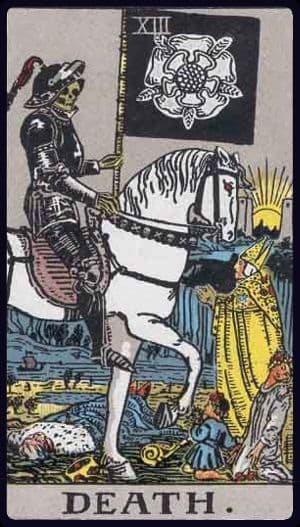
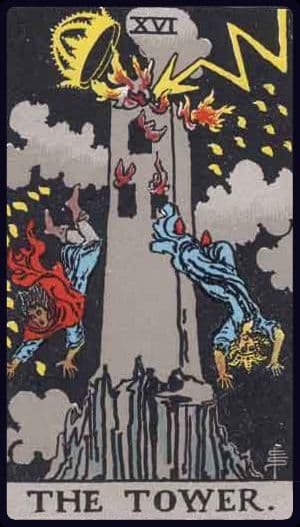
What Death and The Tower Mean Together
Death and The Tower put transition beside disruption. Death represents release from an old form; The Tower represents a challenge to the structures or assumptions that held it in place. When change is already part of your circumstances, this pairing can help you examine what is ending and what has become difficult to rely on. It does not forecast a breakup, collapse, revelation, or crisis. A difficult change need not have a hidden purpose to deserve attention.
What This Pair Reflects
You may be in the middle of a change that feels catastrophic partly because it is happening faster and louder than your mind can process. This combination invites you to notice which changes you can actually observe and which feared endings remain possibilities.
Begin your practice
Your readings, notes, and questions in one private place.
Start a readingIn Different Situations
Relationships
When a relationship changes, it can unsettle much more than the bond itself. Death reflects an old version of the connection coming to an end; The Tower questions the assumptions that made it feel secure or familiar. Together they speak to the shock of realizing that the way you understood the relationship may no longer hold. This does not predict betrayal or a breakup. The change could concern expectations, roles, or what each person is able to offer. The important distinction is between what has truly altered and everything you fear might fall with it.
Career
A change at work can challenge both your role and the story you've built around it. Death points to a way of working that is ending; The Tower exposes the structures or expectations you assumed would stay in place. Together they can capture why a reorganization, lost opportunity, or shift in direction feels personal even when it is not a verdict on your ability. They are not evidence that you are about to lose your job. They invite a more exact reckoning with what has actually changed, what you can still rely on, and what no longer fits.
Decisions
Once a plan's foundation stops feeling reliable, the pressure is often to replace the whole plan at once. Death and The Tower reflect different parts of that upheaval: a former way of doing things no longer fits, and the assumptions propping it up have been shaken. The immediate decision may concern what is still workable, not what your entire future should look like. Some commitments are pressing; others may be left open while you understand what changed. One disrupted part of life does not have to become a verdict on every remaining possibility.
Burnout
Exhaustion can become more frightening when the routine that once kept you functioning starts to give way. Death marks the possible end of a way of living at this pace; The Tower exposes how much that pace relied on supports or assumptions that are no longer holding. You may be tired of trying to rebuild the same day each morning. This is not proof that everything is about to collapse. It makes room to acknowledge an unsustainable pattern without treating every strained part of your life as ruined.
Feeling Stuck
After a major shift, standing still may have little to do with lacking courage. Death marks the old path losing its meaning; The Tower removes the assumptions that used to make the next step obvious. You can be ready to leave something behind and still have no trustworthy map for what follows. That gap can feel like failure when nothing outwardly moves. It may be more accurate to call it disorientation: you are no longer working from the same foundations. There is no requirement to turn the disruption into an inspiring turning point.
New Beginnings
Not every beginning arrives with an open door and a clean floor. Death marks what has ended; The Tower unsettles the beliefs or structures you expected to carry into what comes next. The new part may feel exposed rather than exciting, especially if it was not entirely your choice. These cards do not promise a catastrophe or a liberating transformation. They acknowledge the difficulty of building a different life while still finding out what the old one took with it. Starting again can involve uncertainty without needing to call the disruption a gift.
Grief and Loss
Loss can take more than the thing or person you are missing. Death marks the ending itself; The Tower reflects the shock of finding that ordinary assumptions, routines or parts of your identity no longer feel secure around it. You might be grieving what is gone and the familiar life in which it had a place. The two are related, but they need not move together. These cards do not claim another loss is coming or that the upheaval has a purpose. They leave room for the disorientation without turning it into a story of necessary growth.
Reversed Variations
Both reversed
The ending and the breakdown may both be partially contained, but not resolved. You may hold things together outwardly while inwardly living through a long, resistant dismantling.
Death reversed
Death reversed clings to what the rupture is trying to clear away. The Tower still breaks through, but the refusal to release can make the fallout more jagged and prolonged.
The Tower reversed
The Tower reversed slows the collapse around the ending. Transformation remains necessary, yet it may come through erosion, repeated stress, or contained crisis rather than one explosive break.