Wheel of Fortune & Death
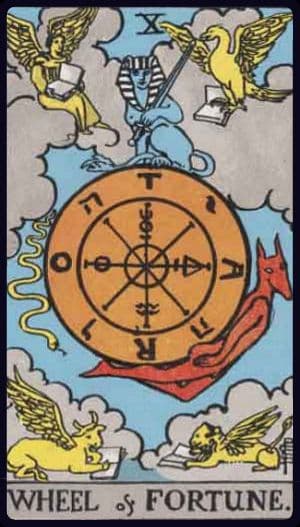
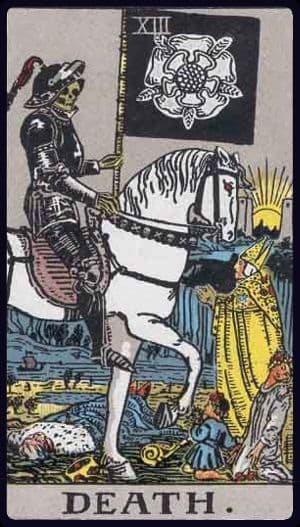
What Wheel of Fortune and Death Mean Together
Some changes are cyclical. Others are final enough to change the cycle itself. Wheel of Fortune marks turning points and recurring patterns; Death marks the irreversible release that makes real transition possible. Together, they often reflect a major life shift where the old repetition is breaking at last, whether through grief, departure, a career ending, or the loss of an identity that kept reproducing the same outcomes. This pair can feel stark, but it often carries relief inside the upheaval.
What This Pair Reflects
Consider whether what is happening is simply another phase of a familiar loop or the point where the loop itself is ending. This combination invites you to notice where change now depends on letting something die rather than merely waiting for a better phase.
Begin your practice
Your readings, notes, and questions in one private place.
Start a readingIn Different Situations
Relationships
You might be tired of having the same conversation in a slightly different form. The Wheel of Fortune captures the sense that the relationship keeps returning to a familiar place; Death asks what would actually have to end for that pattern to change. That could be the bond itself, but it might be an old way of relating, a hope that no longer fits, or a role you've kept playing. The point isn't that a breakup is destined. It's that another turn of the wheel is not the same as a new beginning.
Career
Sometimes changing teams or waiting for the next opportunity leaves the same frustration intact. The Wheel of Fortune shows the recurring movement: another cycle, another opening, another setback. Death brings a sharper possibility, that the professional identity or expectation sustaining the cycle may be finished. There can be relief in admitting that, even alongside fear about what replaces it. This pair doesn't tell you when change will arrive. It distinguishes hoping circumstances turn in your favor from recognizing what you're ready to stop repeating.
Decisions
If every option feels like a return to an old problem, the choice may be bigger than which path looks best today. The Wheel of Fortune describes the changing circumstances you cannot fully control; Death asks what part of the old pattern you can no longer carry forward. An ending may close off familiar comforts as well as familiar frustrations. This combination doesn't make a clean break automatically wise. It asks whether you are choosing another variation of what you know, or accepting the cost of something genuinely different.
Burnout
A short break can leave you rested for a day and then right back in the same exhaustion. Wheel of Fortune captures that recurring rise and fall; Death raises the harder possibility that part of the pattern has reached its limit. What keeps returning may be a pace, a role you inhabit, or the belief that the next quiet stretch will make the strain manageable. This doesn't mean everything must end or change at once. It gives weight to the difference between recovering briefly inside an unchanged cycle and recognizing that something about the cycle itself no longer fits.
Feeling Stuck
Things keep changing, yet somehow you find yourself in the same place. The Wheel captures the familiar return of circumstances and reactions; Death points toward the part of that repetition that may already be over, even if you still relate to it as ongoing. The unsettling possibility is that movement alone cannot loosen an identity, expectation or habit that has outlived its purpose. But not every return is proof you've failed to change. These cards help distinguish a pattern you are observing again from one you are still quietly preserving.
New Beginnings
Some beginnings arrive while the old life is still ending. Wheel of Fortune reflects a change in circumstances and timing you may not have chosen; Death makes clear that certain familiar patterns cannot simply be carried intact into the next phase. Excitement might share space with reluctance, even grief. It would be too simple to call that resistance to change. You may be responding to a real loss of continuity while also sensing an opening. These cards hold both truths: the turn is happening, and part of what came before deserves to be recognized as finished.
Grief and Loss
Grief returns in ways that can feel like starting over. Wheel of Fortune reflects those shifts and repetitions, while Death acknowledges that something has genuinely ended. The return of feeling does not undo that ending, and an ending does not make the feeling neatly settle. There may be days when ordinary routines resume and others when the absence feels newly visible. Neither is a measure of how well you're handling the loss. Together the cards distinguish the permanence of what changed from the unpredictable movement of living with it.
Reversed Variations
Both reversed
You may remain caught in a pattern that is clearly exhausted but still somehow active. Resistance to ending can make the same lesson repeat in duller, heavier, more frustrating forms.
Wheel of Fortune reversed
Wheel of Fortune reversed makes the ending feel less cleanly timed. The transformation is real, yet it may arrive through setbacks, repetition, or the sense of leaving only after staying too long.
Death reversed
Death reversed prolongs what the cycle is trying to close. Change still comes, but you may keep reviving an old chapter that needs full release to stop repeating.