The Fool & Judgement

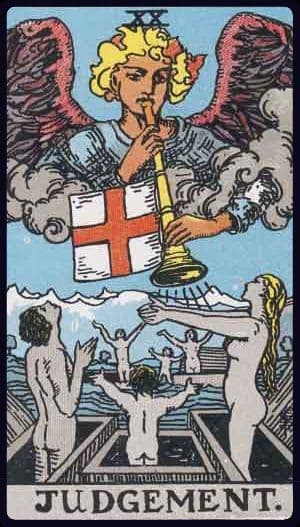
What The Fool and Judgement Mean Together
This is the moment after the reckoning, when insight stops being theory and starts demanding movement. Judgement brings review, wakefulness, and the sense that you can no longer keep living on autopilot; The Fool opens the next step, however unfamiliar. Together, they often reflect the decision to stop repeating yourself — to answer the call of your own life rather than another round of delay. There may be relief here, but also grief for how long you've known.
What This Pair Reflects
Ask what truth has become too loud to dismiss. This pair invites you to act from the clarity that comes after self-confrontation, not before it. Sometimes the fresh start is less about reinvention and more about finally cooperating with what you already know.
Begin your practice
Your readings, notes, and questions in one private place.
Start a readingIn Different Situations
Relationships
A relationship can reach the point where repeating the old version of it feels harder than facing something new. Judgement brings an honest look at what has happened and the part you've played. The Fool adds the vulnerability of beginning without knowing how that beginning will unfold.
This needn't mean a breakup or a new romance. It might be a different way of showing up in the same relationship. The hope in this pair has some history behind it: a fresh start means more when you haven't brushed aside what the past taught you.
Career
Starting over at work can feel embarrassing when you've spent years becoming good at something. Judgement takes seriously what your experience has taught you, including the parts of your career you can no longer defend to yourself. The Fool makes room for being a beginner again. Together they describe a new direction grounded in an old realization, rather than a sudden urge to escape. This pair doesn't promise that a leap will pay off, and it doesn't insist on a dramatic resignation. It asks whether the next attempt could reflect what you now know better than the path you've learned to keep following.
Decisions
A new beginning can feel both obvious and unreasonable after a long stretch of second-guessing. Judgement gathers what you've learned from earlier choices; The Fool is willing to take a first step without a complete picture of the outcome. Together they hold the moment when reflection has done real work and uncertainty still remains. There's no promise that the unfamiliar path will be better. Nor does caution automatically mean wisdom. The distinction here is between what still needs to be understood and what simply cannot be known before you begin. A decision can be considered without being fully guaranteed.
Burnout
The urge to wipe the slate clean can arrive when you have almost nothing left to give. The Fool carries the appeal of a fresh start, but Judgement brings forward what this exhaustion has revealed instead of treating a new setting as an automatic cure. You don't have to turn being worn down into a grand revelation to take it seriously. Perhaps the old pace depended on a version of you who could always stretch further. A different beginning has room to be uncertain while still taking that knowledge seriously.
Feeling Stuck
There's a peculiar kind of stuckness in knowing an old chapter no longer fits while feeling unready to live the next one. Judgement keeps the past visible, including things you can't unlearn; the Fool stands at a threshold without a complete plan. The pull between them can make another round of reflection feel safer than trying something small and unfinished. This doesn't demand a dramatic leap. Understanding what happened is real work. Guaranteeing that an unfamiliar beginning won't feel awkward or uncertain is something else entirely.
New Beginnings
A beginning can feel oddly heavy when you know exactly why the old way stopped fitting. Judgement holds that knowledge; the Fool is still willing to meet something unfamiliar without all the answers. You might feel excitement beside embarrassment at being new, or relief beside sadness for what you're leaving. Neither feeling cancels the other. These cards don't promise a clean break or demand that your history become a lesson. They leave room for a first attempt that is genuinely new precisely because you are no longer pretending you haven't been here before.
Grief and Loss
Beginning anything after a loss can feel disloyal, even when the change is small. Judgement acknowledges the life and meaning that came before; the Fool is the part of you encountering a day you haven't lived yet. Neither card asks you to turn grief into a lesson or declare the old chapter closed. There may be sorrow in discovering that new experiences are still possible, because possibility does not restore what is missing. Moving into unfamiliar time can happen alongside remembrance, without resolving its ache.
Reversed Variations
Both reversed
Avoidance and hesitation reinforce each other. You may sense the need for change while shrinking from the exposure and responsibility that real change would bring.
The Fool reversed
The Fool reversed keeps the awakening from becoming action. You see the threshold, but fear of misstepping makes insight feel heavy instead of liberating.
Judgement reversed
Judgement reversed muddies the call itself. You may crave a new beginning while still avoiding the self-honesty that would make it meaningful.