The Hierophant & Judgement
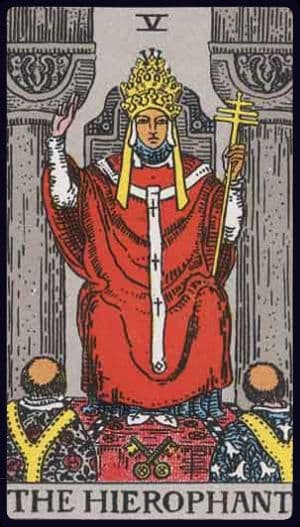
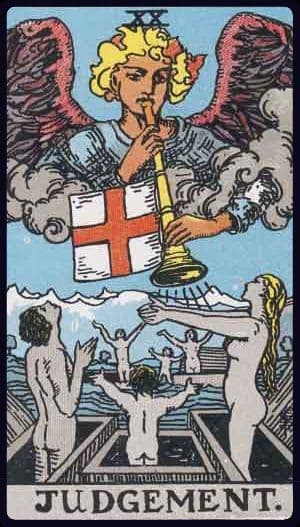
What The Hierophant and Judgement Mean Together
At some point, inherited values stop being background and become something you must consciously answer to. The Hierophant represents shared doctrine, moral structure, and collective meaning; Judgement introduces reckoning, awakening, and the call to examine whether the life you are living still aligns with what you believe. Together, they often reflect moral crossroads, vocational clarity, or the moment a role within a system becomes a question of conscience. This pair is not mainly about rule-following. It is about answering honestly to what your life has become.
What This Pair Reflects
You may be hearing a deeper summons inside a familiar framework — or discovering that the framework itself needs to be re-evaluated. This combination invites you to consider whether you are living by your values or merely repeating them.
Begin your practice
Your readings, notes, and questions in one private place.
Start a readingIn Different Situations
Relationships
The promises that once made a relationship feel secure can become difficult when the people involved have changed. The Hierophant holds shared commitments, family expectations and ideas about what a relationship should be. Judgement asks whether those beliefs still match the way you live and love. Perhaps a commitment deserves renewing; perhaps a rule you've followed out of loyalty no longer feels honest. This pair doesn't dismiss tradition or tell you to stay. It brings the quiet difference between choosing a bond today and remaining in it because that is what you were taught to do.
Career
A career can look respectable from the outside and still raise a difficult question about what you're being asked to stand for. The Hierophant represents professional standards, mentors and the systems that gave your work its shape. Judgement makes those inherited expectations personal: do you still believe in them, or have you been following them because they once gave you belonging? This can be a moment to recommit to the work with clearer convictions, not only to leave. The tension is between being good at playing a role and being able to answer for the choices it requires.
Decisions
The 'right' choice may sound familiar because someone else defined it long before you faced it yourself. The Hierophant brings the rules, values and loyalties you have inherited; Judgement asks which of them you can still answer for in your own voice. Breaking with expectations is not automatically brave, and following them is not automatically a failure of independence. Some commitments become more meaningful when consciously renewed. Others may be keeping you in a decision you no longer believe in. This combination invites a distinction between the advice you respect and the authority you have quietly given away.
Burnout
You can believe in what you are doing and still be exhausted by the way you have learned to do it. The Hierophant holds the routines, duties and standards that once gave your effort meaning. Judgement brings those familiar rules into sharper focus: which still reflect your convictions, and which have become impossible to question without guilt? This is not a verdict against discipline or belonging. It is a reckoning with the cost of always being the dependable one. A value may remain worth keeping even when the demands attached to it need a different shape.
Feeling Stuck
The rules that once helped you find your place may now make every change feel like a breach of trust. The Hierophant represents that familiar structure; Judgement brings your own voice into it, asking whether you still believe what you've been repeating. Feeling stuck here can look surprisingly orderly: you keep doing what makes sense on paper, yet feel less present in it. There may be real reasons to preserve a commitment, and real reasons to question its current form. Movement does not have to mean rejecting the people or principles that shaped you.
New Beginnings
Entering something new often means encountering rules that other people already know by heart. The Hierophant can make those shared practices reassuring, giving you a language and a place to begin. Judgement adds the question of how consciously you want to belong. You may find that some traditions express what you believe more clearly than you could alone, while others feel less convincing once you live with them. This is a beginning shaped by learning, not automatic obedience or automatic rebellion. Finding your feet can include respecting a structure and noticing where your own conscience meets it.
Grief and Loss
After a loss, shared rituals and familiar beliefs can offer words when your own are hard to find. The Hierophant holds that communal language, including its comfort and its expectations. Judgement brings forward the difference between what others say this experience should mean and what you can truthfully say about it. A tradition may help you remember, gather with others or mark an absence; it may also feel too certain for what you're living through. You are not required to reject it or fit your grief inside it. Belonging and private truth can remain in conversation without becoming identical.
Reversed Variations
Both reversed
The reckoning can get buried under guilt, avoidance, or stale obligation. You may remain loyal to a system while postponing the self-examination that would reveal whether that loyalty is still sincere.
The Hierophant reversed
The Hierophant reversed weakens the inherited framework around the call. Judgement remains strong, which can make the awakening feel more personal, disruptive, and less buffered by tradition.
Judgement reversed
Judgement reversed delays the moral or existential wake-up. The rules remain, but your deeper response to them stays suspended in self-doubt or avoidance.