Major Arcana
The Hierophant
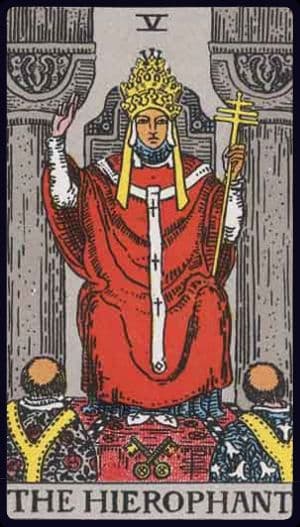
The Hierophant is the card of inherited form — tradition, learning, and what has been taught.
Upright
Reversed
The Hierophant Meaning
Upright
The Hierophant points to tradition and the systems that shape how people learn to live. This can involve spiritual wisdom, but just as often it reflects institutions, family codes, moral expectations, or the habits of conformity that tell you what is acceptable before you have decided what is true. Ethics matter here, as does the question of what guidance is worth receiving. In a reading, this card often names the structures you were given, the communities you answer to, and the comfort or pressure that comes from following an established path.
Reversed
Reversed, The Hierophant often marks the point where inherited rules stop fitting. Rebellion may be part of the story, but the more interesting shift is usually toward new approaches that better match lived experience than borrowed doctrine does. Nonconformity here is not rebellion for its own sake; it is the recognition that some forms of obedience cost too much. This card can reflect subversiveness in thought, belief, or behavior, especially when morality has become performance and the old framework no longer explains the life in front of you.
The Hierophant as a Daily Card
The Hierophant asks about belonging. Today, reflect on the communities and structures that hold you — and whether they still fit.
Lean toward
The routine that keeps its word.
Watch for
Mistaking repetition for meaning.
Where do you feel most at home in your current communities?
In Different Situations
Relationships
Some of what we expect from love was taught to us long before we chose anyone. The Hierophant draws attention to the rules around commitment, loyalty, family and what a relationship is supposed to look like. Shared customs can give people a language for staying close. They can also make a connection feel wrong simply because it takes an unfamiliar shape.
A useful question here is whose standards are being upheld. Agreement can be genuine, or it can come from trying not to disappoint people outside the relationship. The card doesn't decide which traditions deserve keeping; it makes their influence easier to see.
Career
Every field has its accepted route: qualifications, mentors, professional customs, the steps that supposedly come before the next step. The Hierophant gives those routes their due. Learning from experience and entering a tradition can provide real skill and a sense of belonging.
Still, an established path can become difficult to question once you have invested years in it. A role may look respectable from the outside while no longer matching the work you want to do. This card invites a closer look at what the rules are teaching you, and which ones you follow mainly because they are familiar.
Decisions
A choice can feel difficult because it goes against what you were taught a sensible person would do. The Hierophant makes the inherited advice visible: the approved path, the trusted expert, the family expectation, the belief that some options are simply not for people like you.
That advice is not automatically wrong. There may be wisdom in a rule that has survived many people making similar choices. But following it without examination is also a decision. The card asks you to separate guidance you genuinely respect from compliance that keeps other people comfortable.
Burnout
Exhaustion can be tied to the rules you believe a good person must follow. Keep going. Be grateful. Don't let anyone down. The Hierophant points toward those learned expectations, especially when they come wrapped in duty, respectability or belonging.
There may be genuine commitments worth honoring. The harder part is noticing when obedience has become so automatic that you no longer ask whether the demand is reasonable. Burnout through this card is less about a single busy week than the pressure of living by a standard that never seems to allow enough. An inherited rule can be questioned without dismissing everything it once gave you.
Feeling Stuck
There is a particular kind of stuckness that comes from knowing the next approved step but not wanting to take it. The Hierophant speaks to paths laid out by other people: the way to qualify, advance, settle down or be seen as doing well.
You may have followed that path faithfully and still feel oddly detached from it. Or perhaps you need the support of a teacher or community, rather than another attempt to work everything out alone. The question is where guidance ends and habit begins. Being unsure of your own direction can feel safer when the rules decide for you.
New Beginnings
Beginning something new often means becoming a beginner again. The Hierophant recognizes the relief of learning from people who have already traveled part of the way. A practice, tradition or community can give an unfamiliar experience a language and a rhythm.
There is also a quieter question about belonging. How much do you need to imitate before you find your own way of taking part? The card honors guidance without requiring you to surrender judgment. An established form may become a place to grow, or one you eventually need to adapt. Neither outcome has to be decided on the first day.
Grief and Loss
Rituals can give loss a place to be acknowledged when ordinary language falls short. The Hierophant points to inherited ways of mourning: gatherings, anniversaries, beliefs, gestures repeated because others have carried them before you. Such forms may offer company when grief feels private.
They can also bring expectations about how you should remember someone, or how long sadness is supposed to remain visible. The comfort of tradition and the pressure of conformity can live side by side. This card makes room to notice which forms support your connection to what was lost, and which feel borrowed rather than true.
Recurring appearance
What does it mean when The Hierophant keeps appearing?
Someone else's way still carries weight. Tradition or guidance keeps entering the frame.
Spreads that work well with The Hierophant
Past, Present, Future
3 cardsThe classic three-card arc. Where you've been, where you are, and where the energy is heading.
View spread →New Chapter
5 cardsDesigned for life transitions — starting something new, ending something familiar, or standing in the space between. This spread is Liminal Tarot's signature.
View spread →The Threshold
5 cardsFor moments when you know something needs to change but you can't yet see what comes next. This spread sits with you in the doorway — not rushing you through it, not pulling you back.
View spread →Pairs with The Hierophant
Begin your practice
Draw The Hierophant in a reading
Context transforms a card's meaning. A full reading weaves your question, your spread, and your cards into a coherent reflection.