The Hermit & Justice
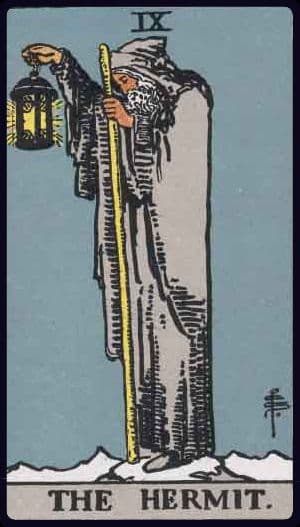
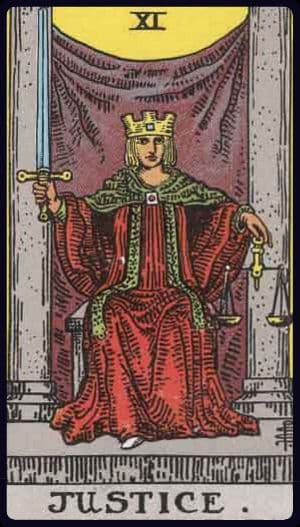
What The Hermit and Justice Mean Together
Some truths are easier to state than to live with. Justice asks for accuracy, fairness, and the willingness to face consequences; The Hermit takes that demand inward, where the issue is no longer merely what happened, but what it means about you and the life you are making. Together, they often reflect ethical solitude, the sober mood that follows a difficult realization, conversation, or decision. This pair can feel austere, but it is not empty. It is what integrity looks like when no audience is present.
What This Pair Reflects
You may need less outside validation than you think. This combination invites you to ask what feels true once the arguments quiet down, especially if you are trying to distinguish being right from being honest.
Begin your practice
Your readings, notes, and questions in one private place.
Start a readingIn Different Situations
Relationships
You can know why you were hurt and still wonder whether you've been fair. Justice brings the facts, the promises made, and the consequences of what happened; The Hermit asks what remains true when there is no one to persuade. Together, they turn a relationship dispute into a quieter examination of honesty, including your own part in it. This doesn't mean splitting blame evenly or excusing harm. It means distinguishing a convincing account of events from one you can live with, while leaving room for the other person's account to exist.
Career
A work decision can be defensible on paper and still sit uneasily with you. Justice asks what is fair, evidenced, and owed to the people affected; The Hermit makes you examine your reasons when there is no meeting to win or reputation to protect. Together, they point toward professional integrity beyond appearing correct. This may concern recognition, a difficult boundary, or a choice about speaking up. Your private judgment matters, but it should be tested against facts and other perspectives rather than used as a reason to disappear from the discussion.
Decisions
Some choices are difficult because every honest option has a cost. You may feel clear in private about what you need, yet still see that acting on it changes something for other people. The Hermit's solitude helps you hear that private conviction; Justice brings it into the harder light of fairness and consequence. One path could protect your own integrity while placing a burden elsewhere. Another could seem fair to others while asking you to ignore something important. The pair offers no clean verdict. It asks you to see the costs of each option without disguising them as proof that either choice is simple.
Burnout
When you are depleted, you may still be quietly arguing a case for why you should be able to cope. Justice brings questions of fairness and what is actually owed; The Hermit turns the examination inward, where your own standards can be harder to challenge than anyone else's. Are you carrying a fair share, or treating every limit as evidence that you have fallen short? This isn't a verdict on your resilience. It is a more accurate accounting of the strain, including demands you chose, demands placed on you, and the possibility that your private rules have become unforgiving.
Feeling Stuck
The more carefully you examine your reasons, the less permission you may feel to move. Justice wants a fair, accurate account; The Hermit keeps returning to the question in private, checking every doubt against your conscience. That seriousness has value, but it can make ordinary uncertainty feel like an ethical failure. You might be waiting for an explanation that would satisfy everyone, including the part of you that keeps revising the rules. The standstill deserves an honest look, not another prosecution of yourself. Facts, responsibilities and private convictions can matter without arranging themselves into one flawless answer.
New Beginnings
A fresh start does not erase the questions you have about how you arrived here. Justice asks for a clear view of consequences, responsibilities and the people affected; The Hermit asks which reasons still ring true when nobody is asking you to justify yourself. Together, they give a beginning a sober kind of freedom. You can carry accountability without making your past the only story available, and you can value your own judgment without treating it as beyond question. The new chapter may be unfamiliar precisely because you want to live by standards you have examined rather than simply inherited.
Grief and Loss
After a loss, the mind can keep returning to what was fair, what could have been different, or whether you did enough. Justice seeks a truthful account; The Hermit carries those questions into a private space where they can become especially heavy. Some losses do involve real harm or unanswered responsibility, and those facts need not be smoothed away. But uncertainty is not automatically evidence of personal failure. Together, these cards make room for careful honesty without turning grief into a trial that must reach a verdict. There may be things worth understanding and things no explanation can restore.
Reversed Variations
Both reversed
Isolation and rationalization can start feeding each other. You may withdraw with your version of the story intact while avoiding the fuller accountability or self-examination the situation actually requires.
The Hermit reversed
The Hermit reversed weakens the reflective depth of the pair. The facts may still be clear, yet you could avoid the solitude needed to integrate them honestly.
Justice reversed
Justice reversed distorts the clarity of the inward search. Solitude remains, but it may become biased, overly self-protective, or shaped by selective truth.