Major Arcana
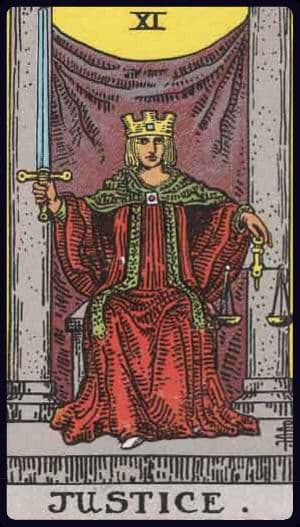
Justice
Justice is the card of clear reckoning — truth, consequence, and the balance created when things are named accurately.
Upright
Reversed
Justice Meaning
Upright
Justice points to fairness, truth, and the clean logic of cause and effect. It appears when accountability matters more than narrative, and when clarity depends on seeing what happened without padding, denial, or selective memory. This card can involve law in the literal sense, but more often it reflects moral balance: actions carrying consequences, choices returning with weight, and a need to assess a situation on its actual terms. In relationships, work, or personal conflict, Justice asks what is true here, and what follows from that truth once it is faced.
Reversed
Reversed, Justice often appears when truth has been bent by convenience or defended too selectively to remain trustworthy. Unfairness may come from outside, but this card also points to dishonesty, evasion, or a lack of accountability closer to home. Retribution can become part of the atmosphere when the desire to be right overtakes the harder work of being honest. In readings, reversed Justice often names a distorted balance: someone avoiding consequence, someone rewriting events, or a situation where the facts have been made to serve whoever speaks first and loudest.
Justice as a Daily Card
Justice holds the scales steady. Today, seek balance between competing demands. Not everything can be equal, but everything deserves consideration.
Lean toward
The detail that changes the whole account.
Watch for
Editing the facts to spare yourself.
Where do you need to restore balance in your life?
In Different Situations
Relationships
When trust feels unsettled, affection alone may not settle what happened. Justice brings the conversation back to facts, responsibility and whether each person's account is being heard fairly. Fairness does not mean keeping an exact score of who has given more; relationships rarely divide so neatly. It does mean that harm cannot be erased just because naming it is uncomfortable. This card can also expose the temptation to build a case against someone instead of understanding the whole situation. Accountability is different from winning an argument, and both people deserve to be seen as more than their strongest defense.
Career
Recognition at work can feel out of step with the effort behind it. Justice looks closely at how decisions are made, what standards are applied and whose contribution counts. It speaks to fair treatment, but also to your own responsibilities: promises made, expectations understood, and the consequences of choices taken. A feeling of being wronged deserves attention without becoming automatic proof that every other person acted unfairly. Equally, the wish to seem reasonable need not make you dismiss a real imbalance. Clear records and honest comparison matter more here than a polished story about who deserves what.
Decisions
Justice puts the scales on the table. One preference may feel compelling, but what evidence supports it? Which consequences would you be willing to own, and whose interests might be missing from the picture? This is not a demand to make a perfectly neutral decision; important choices often involve values that cannot be measured on the same scale. The card's shadow is selective accounting, giving extra weight to facts that make a favored option easier to defend. Its strength is the willingness to look at the costs and benefits without rewriting them to win your own argument.
Burnout
Burnout often contains a quiet question about fairness: who is carrying the work, who can put it down, and what counts as enough? Justice examines the arrangement as it actually operates, including expectations nobody has said aloud. It can be tempting to judge yourself by an impossible standard and call the result a lack of discipline. It can also be tempting to overlook commitments that genuinely need renegotiating. The scales here are not a productivity scorecard. They show the gap between what is being asked, what is being given and what is sustainable.
Feeling Stuck
Sometimes you remain where you are because no option feels entirely fair: to you, to someone else, or to the version of yourself who made an earlier promise. Justice brings those loyalties into view. Its scales can help distinguish a real responsibility from a standard so exacting that nothing would ever qualify as acceptable. The difficult side of this card is the inner courtroom, where every tentative step is retried and found wanting. Clarity may depend less on reaching a flawless verdict than on naming what each choice would actually ask of you.
New Beginnings
Fresh starts can carry old expectations quietly into the room. Justice asks what agreements, boundaries and responsibilities deserve to be clear from the outset. That can sound severe beside the excitement of beginning, but fairness is easier to recognize when the terms have been spoken rather than guessed. The card also allows for a clean assessment of what came before without turning the past into a permanent sentence. You can take responsibility for earlier choices without making every new opportunity a trial of whether you deserve it. A sound beginning has room for both honesty and change.
Grief and Loss
There may be no fair explanation for a loss. Justice can sharpen that uncomfortable truth rather than offering a comforting story about why it happened. Its concern with accountability may matter when there are unfinished words, unequal burdens or decisions still to be faced. But not every sorrow has someone to blame, and grief cannot be settled by finding a verdict.
The scales also turn toward the harsh judgments people place on themselves: what they said, what they failed to see, what they think they should have done. Facts deserve care; so does the difference between responsibility and impossible hindsight.
Recurring appearance
What does it mean when Justice keeps appearing?
A decision may rest on what holds up plainly. Something keeps returning to consequence and truth.
Spreads that work well with Justice
Past, Present, Future
3 cardsThe classic three-card arc. Where you've been, where you are, and where the energy is heading.
View spread →New Chapter
5 cardsDesigned for life transitions — starting something new, ending something familiar, or standing in the space between. This spread is Liminal Tarot's signature.
View spread →The Threshold
5 cardsFor moments when you know something needs to change but you can't yet see what comes next. This spread sits with you in the doorway — not rushing you through it, not pulling you back.
View spread →Pairs with Justice
Begin your practice
Draw Justice in a reading
Context transforms a card's meaning. A full reading weaves your question, your spread, and your cards into a coherent reflection.