The High Priestess & Justice
What The High Priestess and Justice Mean Together
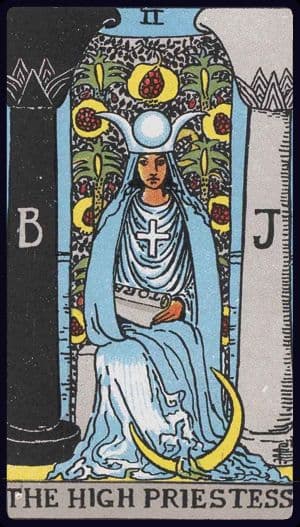
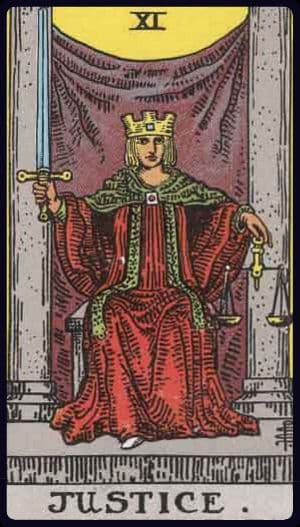
This pair asks what happens when inner knowing meets objective scrutiny. The High Priestess represents felt impressions and subtle signals; Justice brings evidence, accountability, and the discipline to name things plainly. Together, they can help you examine a sensed imbalance or moral discomfort without treating intuition as proof of a hidden motive. The challenge is neither to dismiss intuition nor to let it become an excuse for vagueness.
What This Pair Reflects
Consider where a felt impression needs clearer language and what evidence would support or challenge it. This combination invites careful honesty rather than easy certainty.
Begin your practice
Your readings, notes, and questions in one private place.
Start a readingIn Different Situations
Relationships
It's possible to sense that something is unequal in a relationship before you can point to one clear incident. The High Priestess gives that discomfort attention; Justice asks what has actually happened, whose needs carry weight and whether the same standards apply to both people. Together they resist two easy mistakes: ignoring your feelings because they're hard to prove, and treating a feeling as proof of someone else's intent. Fairness becomes clearer through patterns of action and honest conversation, not through guessing what the other person secretly thinks.
Career
Something about how work is judged may feel off, even if you can't yet explain why. The High Priestess notices the uneasy discrepancy; Justice wants a fair standard, evidence and a clear account of what happened. This isn't an invitation to assume bad intent behind every disappointing decision. It is a way to take your impression seriously enough to test it. When expectations are vague, asking how decisions are made can reveal more than either silent resentment or a rushed accusation.
Decisions
An option can look fair on paper and still leave you uneasy; another can feel right while having consequences you would rather not examine. Justice insists on reasons, responsibility and the effects on others. The High Priestess gives weight to the hesitation that a tidy list of pros and cons might miss. Together they ask for both: a decision you can explain and one you aren't privately trying to talk yourself into. Intuition isn't evidence, but it can point toward a question that deserves a more honest answer.
Burnout
Sometimes the exhaustion isn't only from doing too much. It's from repeatedly making room for demands that don't seem to be shared fairly. The High Priestess registers that discomfort before you have a neat account of it; Justice asks which expectations, responsibilities or exceptions actually support the feeling. This isn't proof that someone has treated you badly, and it doesn't reduce every limit to a question of fairness. But if you keep explaining away the same imbalance, you may also be discounting its cost. The pairing makes an unspoken strain worth examining in concrete terms, rather than enduring it indefinitely or turning it into an accusation.
Feeling Stuck
When something feels wrong but you can't quite explain what, you can spend a long time going over the same ground. The High Priestess holds the uneasy impression; Justice looks for the observable difference between what was said, what happened and what you expected. That careful comparison can matter more than another round of self-questioning. The feeling doesn't have to become a verdict, and a lack of proof doesn't make it meaningless. Here, stuckness may come from trying to settle an unresolved account entirely in your head, where neither feeling nor evidence is being given a fair hearing.
New Beginnings
Starting again doesn't always clear up the questions left by what came before. The High Priestess carries a lingering sense of what felt unresolved; Justice asks what can be named plainly, including the expectations and responsibilities you are bringing into the new situation. A beginning can feel promising while still calling for discernment. These cards don't require you to distrust an opportunity or to settle every old grievance first. They suggest that a quieter unease deserves more than being brushed aside in the excitement of a fresh page. What is fair and workable matters alongside what feels possible.
Grief and Loss
Loss can leave behind questions that sound almost like an accounting: what was given, what was withheld, what should have happened differently. Justice takes those questions seriously, while the High Priestess makes space for feelings that no tidy explanation can settle. You may have clear reasons for anger or regret and still be unsure what to do with them. This combination isn't a demand to assign blame, forgive or reach a final verdict. It recognizes that the wish for a fair explanation can coexist with grief that remains personal, complicated and resistant to any single answer.
Reversed Variations
Both reversed
Bias and confusion can feed each other here. You may mistrust your instincts while also distorting the facts, leaving you unable to rest in either feeling or logic.
The High Priestess reversed
The High Priestess reversed clouds the subtle truth trying to enter the conversation. Justice stays upright, but the process may become overly dry, literal, or cut off from the emotional reality underneath.
Justice reversed
Justice reversed destabilizes fairness and clear judgment. Your intuition may still be active, but the surrounding framework is warped by denial, rationalization, or unequal standards.