The Magician & Justice
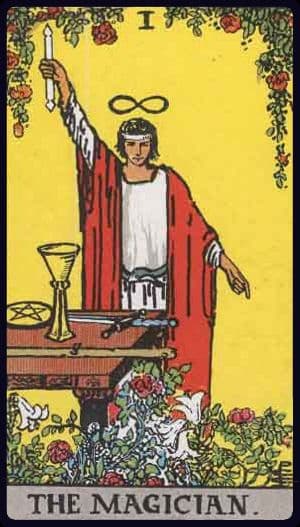
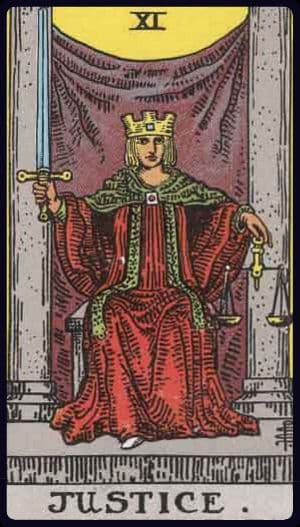
What The Magician and Justice Mean Together
What you can do is not the same as what you should do. The Magician brings influence, language, and the ability to shape outcomes; Justice asks whether that influence is grounded in truth, fairness, and accountability. This pair often appears around contracts, negotiations, difficult conversations, or moments when sharp thinking could easily become rationalization. The tension is ethical rather than practical. You may be fully capable of making your case and still need to ask whether the case itself is clean.
What This Pair Reflects
Consider whether you're seeking a clever solution when a more honest one is needed. This combination invites you to examine how you're using your intelligence, especially where the facts, the impact, and your own motives do not perfectly align.
Begin your practice
Your readings, notes, and questions in one private place.
Start a readingIn Different Situations
Relationships
You can make a convincing case for what you want in a relationship and still leave the harder truth unsaid. Justice alongside The Magician brings that difference into focus: the ability to shape a conversation meets the responsibility to be fair within it. This can be about explaining yourself beautifully while barely hearing the other person, or about finally finding words that make an honest exchange possible. The question is not who can argue better. It is whether both people's experience can remain real when one person is especially good with words.
Career
Being articulate and capable can open doors at work, but those strengths also make it easier to defend a decision you haven't examined closely. The Magician brings initiative and persuasive skill; Justice asks what is fair, accurate, and accountable beneath the presentation. You may be advocating for your contribution, negotiating a difficult boundary, or deciding how to describe a result that others helped create. This isn't a warning against ambition. It is a reminder that professional credibility grows when the story you tell can withstand the facts, including the less flattering ones.
Decisions
The most ingenious option isn't always the one you can comfortably stand behind. The Magician sees ways to make a decision work; Justice weighs the evidence, the consequences, and what would be fair to people affected by it. Together they expose a subtle temptation: once you know how to get the outcome you prefer, you may start treating that ability as a reason to choose it. This pair invites a clearer distinction between what is possible and what is defensible. A sound decision can use all your resourcefulness without asking you to bend the truth to justify it.
Burnout
You may be very good at explaining why you can keep going, even when the cost is showing. The Magician can find a way through almost any demand; Justice asks for an accurate account of what that way through requires. Fatigue can get left out of the calculation because it is harder to measure than what has been accomplished. This pairing brings fairness into the picture without turning rest into a reward you have to earn. Your skill is real. So is the effort behind it. An honest assessment makes room for both, rather than letting the most convincing argument win.
Feeling Stuck
Sometimes the explanation for why nothing can change becomes so polished that it's difficult to see past it. The Magician can assemble a persuasive account of the situation; Justice asks which parts still hold up when you look at them plainly. You might have good reasons for staying where you are, alongside assumptions that have not been checked in a while. Feeling stuck needn't be evidence of dishonesty or poor judgment. But an argument that once protected something important can keep running after the facts shift. A fairer view includes what is genuinely constrained and what has become a familiar story.
New Beginnings
Starting again can be hopeful and complicated when the previous chapter still has consequences. The Magician brings the ability to give the new phase form; Justice keeps the facts, commitments and people affected from disappearing beneath a compelling fresh story. That does not mean you owe everyone a perfect explanation before you're allowed to begin. It means an honest beginning can include what remains unresolved. Your resourcefulness matters most when it isn't being used to edit out the uncomfortable parts of the past. Something new has room to grow without requiring you to rewrite what came before.
Grief and Loss
After a loss, the mind can become remarkably skilled at making a case about what should have happened. The Magician gathers explanations and possible alternatives; Justice brings the wish for a fair account of something that may not feel fair at all. Facts matter, but grief does not always yield to a verdict. You might be revisiting what you said, did or could have done, looking for an answer exact enough to settle the feeling. This pairing leaves room for honest responsibility where it belongs without treating every painful uncertainty as evidence against you. Some questions remain difficult even when the story is told truthfully.
Reversed Variations
Both reversed
Distortion becomes easier to justify here. You may be dealing with selective honesty, self-serving narratives, or skill used to sidestep accountability rather than face it.
The Magician reversed
The Magician reversed skews the expression of truth. Justice remains upright, but communication may become manipulative, incomplete, or overly polished in a way that weakens trust.
Justice reversed
Justice reversed destabilizes the moral center of the pair. You may be persuasive and capable, but the situation becomes warped by bias, avoidance, or an unwillingness to face consequences clearly.