The Empress & Temperance
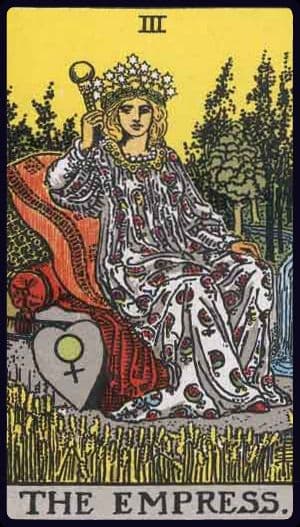

What The Empress and Temperance Mean Together
This pair is interested in enoughness. The Empress delights in richness, embodiment, and the capacity to receive; Temperance brings moderation, pacing, and the subtle art of not tipping from abundance into excess. Together, they often reflect a healthier relationship to pleasure, creativity, caregiving, or growth — learning how to enjoy what is available without trying to fill every ache with more. There is generosity here, but it is measured in a way that protects the source rather than draining it.
What This Pair Reflects
Ask where your life is asking for a more sustainable form of nourishment. This combination invites you to notice whether you are feeding yourself, your work, or your relationships in a way that can actually last.
Begin your practice
Your readings, notes, and questions in one private place.
Start a readingIn Different Situations
Relationships
Being close can feel generous and easy, yet even good care needs room to breathe. The Empress gives this pairing affection, pleasure and a wish to make the other person feel held; Temperance asks how that warmth can remain steady without one person continually giving more. It may reflect a relationship finding a calmer pace after intensity, or the discomfort of receiving less attention than you are used to without assuming something is wrong. The connection does not have to become smaller to become more balanced. The question is whether affection has space for two people's different rhythms.
Career
Good work can be satisfying enough that you keep giving it more time than it needs. The Empress brings fertile ideas, generosity and the pleasure of making something well; Temperance asks what pace lets that quality continue. In a career reading, this pair may reflect learning to protect creative energy rather than proving commitment through constant availability. It is not an argument for smaller ambitions. It points to the difference between nurturing work and exhausting yourself to keep it thriving. A sustainable rhythm can leave more room for the part of the work you actually care about.
Decisions
Sometimes the appealing option is also the one you are tempted to take too far. The Empress brings the wish for more life, pleasure or room to grow; Temperance puts the choice in the context of what you can keep sustaining. This is not a warning against wanting something good. It asks you to notice the pace and trade-offs involved: how much care an opportunity will need, what else it leaves room for, and whether excitement survives a less intense version of the plan. Enough can be generous rather than limiting, especially when it still feels good over time.
Burnout
You can be good at making room for everyone else and still have no room left for yourself. The Empress is the part that keeps tending, making and comforting; Temperance notices when even generous care has lost its rhythm. Exhaustion here need not come from a single demand. It may come from never letting anything be merely enough: one more adjustment, one more kindness, one more thing grown from your attention. Replenishment is not an extra task to perform well. The distinction is between care that has a source and care that quietly spends it.
Feeling Stuck
Nothing may be plainly wrong. There is a familiar rhythm, perhaps even comfort, yet the days feel strangely interchangeable. The Empress shows what has been cultivated; Temperance, the careful balance that keeps it steady. Together they can describe a life so well maintained that there is little room for something unfinished or unfamiliar. The stillness is not necessarily failure or laziness. Some routines are sustaining; others have become too complete to admit change. What feels stuck may be the difference between being nourished by what exists and only preserving it.
New Beginnings
A fresh start does not have to arrive as a dramatic break. The Empress brings the impulse to make something liveable and personally meaningful; Temperance asks what can be woven into the life already in motion. You may want everything to feel settled before you call it a beginning, especially if the new thing matters deeply. But nurture and adjustment happen together here, not in separate stages. There is room to be hopeful without filling every empty space at once. This kind of beginning needs a rhythm more than a rush.
Grief and Loss
After a loss, even ordinary comforts can feel complicated: a familiar meal, a place you used to go, the small routines that still carry someone's presence or a former version of your life. The Empress holds the tenderness of what was grown and cared for; Temperance makes room for uneven days, when comfort helps and when it does not. Their meeting does not turn grief into a lesson about balance. It allows warmth and absence to exist in the same day. You can value what remains without asking it to replace what has gone.
Reversed Variations
Both reversed
The flow becomes imbalanced. You may alternate between indulgence and depletion, overgiving and withdrawal, making it hard to trust your own rhythm of care.
The Empress reversed
The Empress reversed weakens the abundance the pair depends on. Balance may still be attempted, but it can feel like management of scarcity rather than true replenishment.
Temperance reversed
Temperance reversed disrupts the pacing around the care and pleasure. The richness is there, yet it may turn into excess, impatience, or poor integration.