The High Priestess & The Chariot
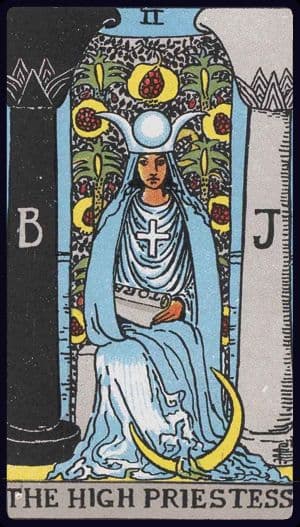
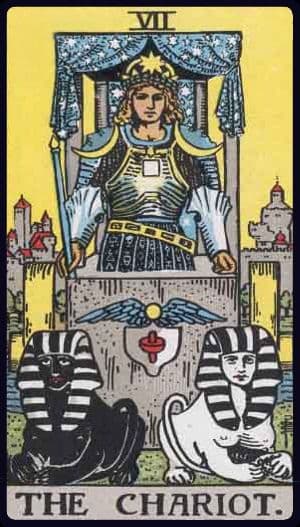
What The High Priestess and The Chariot Mean Together
One part of you wants forward motion; another knows that forcing clarity can ruin it. The High Priestess listens for what is hidden, implied, or not yet ripe; The Chariot prefers trajectory, focus, and decisive movement. Together, they often reflect the strain of trying to act while still in contact with uncertainty — pushing a plan forward while your intuition keeps asking for more time, or sensing that determination alone cannot solve what remains emotionally unclear. Discipline matters here, but so does timing.
What This Pair Reflects
You may be trying to steer too quickly through a situation that still contains missing information. This combination invites you to ask whether the urgency is real or whether stillness feels threatening because it leaves you alone with what you suspect.
Begin your practice
Your readings, notes, and questions in one private place.
Start a readingIn Different Situations
Relationships
Wanting to know where a relationship is going can make every pause feel like a delay. The Chariot wants direction and a decision; the High Priestess notices what is still difficult to name between two people. Together they capture the tension between moving closer and needing time to understand what closeness means. Silence is not automatically rejection, just as momentum is not proof of trust. The useful distinction is whether a next step comes from shared readiness or from discomfort with not knowing.
Career
Getting things moving at work can feel satisfying, especially when uncertainty has lasted too long. The Chariot brings drive, focus and the willingness to take charge. The High Priestess is the pause in which you notice what a timeline or target doesn't show: an unanswered question, a shift in morale, a reason the plan feels premature. Their friction is useful. Progress matters, but pushing harder is not the same as understanding what you're pushing through. A deliberate next move can be ambitious without pretending every unknown has disappeared.
Decisions
The longer a choice stays open, the more tempting it is to decide simply to be moving. The Chariot wants a direction you can commit to; the High Priestess notices the part of the picture you still haven't understood. Together they make urgency worth examining without automatically treating delay as wisdom. Some uncertainty will remain no matter how long you wait. What matters is whether you have enough to take the next honest step, rather than forcing a final answer to escape the discomfort of not knowing.
Burnout
You can keep moving long after you've lost a clear sense of why you're pushing. The Chariot knows how to hold a course; the High Priestess notices the quieter signs that the course is costing more than you admit. Exhaustion here may be hidden behind competence, especially when stopping would mean facing questions that have gone unanswered. Neither card makes effort a mistake. Together they draw a distinction between commitment that still has meaning and momentum that has become a substitute for listening to yourself. A full schedule can conceal that difference for a long time.
Feeling Stuck
You may be busy, making plans and even meeting goals, yet feel as though the part that matters hasn't moved. The Chariot measures progress through direction and effort. The High Priestess attends to the uncertain feeling that the direction itself doesn't quite fit. More activity could make the distance between those two experiences harder to see. This is different from simply being unable to choose: you might already be moving, just not toward something you can fully stand behind. The standstill is partly internal, and it won't necessarily show up on anyone else's measure of progress.
New Beginnings
A fresh start can make you want to prove, quickly, that you've chosen the right direction. The Chariot gives that urge energy and purpose; the High Priestess keeps part of your attention on what you still don't know. Their tension isn't an argument against beginning. It is a reminder that early momentum and real understanding grow at different speeds. You can take a purposeful step while admitting that some details, including your own response to the change, are still taking shape. Moving deliberately leaves room to notice where the new path fits and where it needs adjustment.
Grief and Loss
After a loss, there may still be things to arrange, people to answer and ordinary days to get through. The Chariot can carry that practical movement; the High Priestess holds what has not found words or a place in the schedule. Together they describe the strange coexistence of functioning and feeling unsteady. Getting through what needs doing is not evidence that the loss has become small, nor does private sadness cancel the effort it takes to continue. There may be no single moment when the outer pace and inner experience finally match. Both deserve to be recognized as real.
Reversed Variations
Both reversed
The dynamic can become both stalled and overcontrolled. You may mistrust your inner signal while trying to compensate with force, creating friction instead of movement.
The High Priestess reversed
The High Priestess reversed interrupts the deeper guidance of the pair. Determination remains, but it may start moving in the wrong direction because the subtler data is being ignored or misread.
The Chariot reversed
The Chariot reversed removes coherence from the push forward. Intuition may still be active, but without direction, resolve, or steadiness it becomes harder to translate into progress.