Wheel of Fortune & The Devil
What Wheel of Fortune and The Devil Mean Together
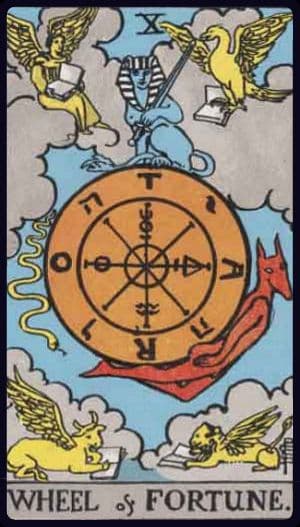
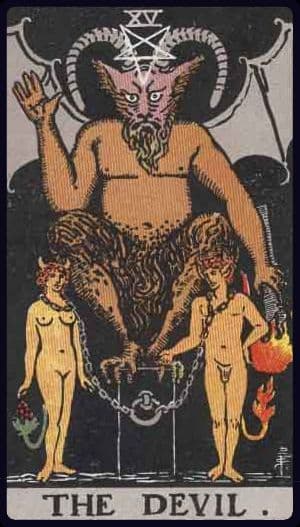
Some patterns persist not because they are fated, but because they are reinforced. Wheel of Fortune points to recurring cycles and turning points; The Devil exposes the attachment, fear, or craving that keeps a particular loop emotionally sticky. Together, they often reflect repetitive dynamics that feel bigger than you until you notice how participation is part of the mechanism, addictive relationships, financial patterns, shame spirals, or familiar forms of self-sabotage that keep coming back in different clothes. The tension here is brutal and useful. What repeats may not be random.
What This Pair Reflects
Consider what part of the cycle has become strangely familiar, even comforting, despite the damage it does. This combination invites you to notice where a pattern keeps returning because it is still feeding something in you that has not been named honestly.
Begin your practice
Your readings, notes, and questions in one private place.
Start a readingIn Different Situations
Relationships
It can be unsettling to recognize the same relationship pattern again, especially when the pull toward it still feels real. Wheel of Fortune brings the sense of a cycle returning; The Devil asks what keeps you tied to it, whether that's desire, fear of being alone, or the relief of knowing what to expect. This doesn't mean a relationship is doomed or that every difficulty is your doing. It does make a distinction between what keeps happening around you and the familiar response you might have some room to change.
Career
Does work keep changing while the same pressure follows you? Wheel of Fortune reflects shifting circumstances: a new role, another busy season, a different manager. The Devil points to the hook that can survive those changes, perhaps needing to prove your worth, fearing lost income, or finding it hard to say no. Not all of that pressure is self-created; workplaces can impose real limits. The pair is useful because it separates the cycle you can't fully control from the response that has become automatic. A different title may help, but it may not change the whole pattern.
Decisions
When a choice feels strangely familiar, it can be hard to tell bad timing from a pattern you're helping repeat. Wheel of Fortune reflects circumstances that change and return in cycles; The Devil draws attention to the reward or fear that keeps one option so compelling. Maybe the choice promises relief now at a cost you've met before. That doesn't make every risk a mistake, and it doesn't mean you're trapped. This combination helps distinguish what has genuinely changed this time from what merely feels new because the surroundings are different. The pull of an option is information, not proof it's right.
Burnout
The same cycle may keep returning: a stretch of overextension, a brief easing, then the pressure gathering again. Wheel of Fortune reflects the changing demands around you; The Devil draws attention to what makes it difficult to step outside that rhythm, perhaps the relief of feeling useful or the fear of disappointing someone. Not every demand is yours to control, and depletion is not proof of a personal flaw. The useful distinction is between a hard season that passes and a pattern whose familiar rewards help it restart before you've regained your strength.
Feeling Stuck
Every time circumstances shift, you may expect to feel different, only to find yourself in a familiar place again. Wheel of Fortune describes the turns that happen around you; The Devil highlights the pull of a response you know well, even if it keeps you small. Familiarity can feel safer than uncertainty without feeling good. This doesn't turn your stuckness into a fault or deny real barriers. It asks you to notice which parts of the repetition belong to circumstance and which parts have become hard to imagine doing differently. A cycle isn't a verdict about your future.
New Beginnings
New circumstances can feel like a clean break, especially when the old ones held a pattern you wanted to leave. Wheel of Fortune reflects the genuine change in your surroundings; The Devil brings attention to familiar pulls that may not vanish with a change of scene. That isn't a prediction that you'll repeat the past. It is a reminder that excitement and old habits can travel together for a while. The difference may become visible in moments when what feels immediately reassuring isn't quite the same as what you want to make room for now.
Grief and Loss
A loss may return to your attention in waves, sometimes when you thought the day would be ordinary. Wheel of Fortune reflects that recurrence; it does not mean you're trapped or failing to move forward. The Devil adds a more specific possibility: alongside the sorrow, there may be a painful loop of blame, bargaining, or replaying what could have been different. Those thoughts can be difficult to loosen without being the whole of your grief. The loss itself isn't a bad habit to break. These cards make space to distinguish remembering what mattered from feeling bound to punish yourself for it.
Reversed Variations
Both reversed
The loop may be loosening, but not without discomfort. You might see the pattern more clearly while still feeling pulled by the charge, fear, or gratification that made it so repeatable.
Wheel of Fortune reversed
Wheel of Fortune reversed makes the pattern feel stuck, unlucky, or harder to turn. The attachment remains active, and repetition may intensify until something changes consciously.
The Devil reversed
The Devil reversed weakens the grip of the attachment. The cycle may still exist, but it becomes easier to interrupt once the emotional hook loses some of its force.