The High Priestess & The Hanged Man
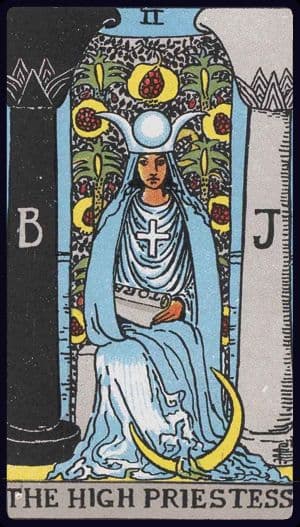
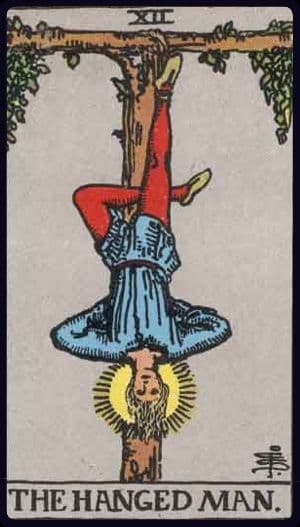
What The High Priestess and The Hanged Man Mean Together
Some situations do not become clear through effort; they become clear through stillness. The High Priestess already senses what sits beneath the surface, while The Hanged Man suspends the usual urge to act, solve, or define. Together, they often reflect a period of charged uncertainty — a relationship waiting to reveal its actual shape, a life decision that cannot be rushed without distorting it, an intuition that needs time rather than proof. The discomfort here comes from knowing something is happening and not yet knowing what to do with it.
What This Pair Reflects
Consider whether your frustration with the pause is making it harder to hear what the pause is showing you. This pair invites you to ask what becomes visible when you stop trying to force an answer before it has fully formed.
Begin your practice
Your readings, notes, and questions in one private place.
Start a readingIn Different Situations
Relationships
It can be hard to tell the difference between giving a relationship time and waiting for someone else to decide what happens. The Hanged Man holds the impulse to push for an answer; The High Priestess gives weight to what you've been quietly noticing. Together, they make room for a pause that reveals something, rather than one that simply continues. Silence by itself doesn't prove depth or avoidance. What matters is whether time is bringing a clearer sense of the connection, or whether the same uncertainty keeps being passed back to you.
Career
A slow period at work can feel like proof that you're falling behind, even when you're still learning what the situation requires. The Hanged Man interrupts the drive to produce an immediate move; The High Priestess directs attention to patterns you may have sensed but not yet understood. Perhaps the role is changing, or what used to motivate you no longer fits as neatly. This isn't a reason to stay inactive indefinitely. The useful pause has a purpose: it helps you distinguish an emerging insight from the pressure to do something simply so the uncertainty will end.
Decisions
You may be ready to choose simply because you're tired of being undecided. The Hanged Man slows that urgency, while The High Priestess draws attention to the understanding that's forming before you can fully explain it. Together, they suggest a useful difference between delaying out of fear and allowing a perspective to change. A pause isn't automatically wise; sometimes it protects an answer you don't want to face. But when the choice still looks different each time you examine it, forcing a final position may only make the uncertainty harder to understand.
Burnout
When you're exhausted, being unable to move can feel like a failure to try hard enough. The Hanged Man gives that enforced pause a different frame, while The High Priestess turns attention to what has gone unspoken beneath all the effort. The two don't make exhaustion a source of secret wisdom. Sometimes you're simply too depleted to hear yourself clearly. But there may be a difference between the demands still waiting for you and the demands you've come to believe you must answer. A pause can expose that difference without requiring you to solve it immediately.
Feeling Stuck
Waiting has become familiar enough that you may no longer know what you're waiting for. The Hanged Man makes stillness visible; The High Priestess asks whether anything in that stillness is becoming clearer. Sometimes a change of perspective is happening beneath the surface. Sometimes silence has become a place to hide the fact that you feel no closer to yourself. This pair doesn't equate movement with progress, but it doesn't flatter endless suspension either. The telling detail is whether your understanding has shifted, even slightly, or whether each day simply repeats the same unanswered feeling.
New Beginnings
A beginning can feel oddly motionless. Something has ended or opened, but you haven't yet found a way to inhabit what comes next. The Hanged Man holds the unfamiliar pause; The High Priestess attends to what you sense before you can explain it. Together, they suggest that the first part of a new chapter may be learning what no longer fits, rather than announcing a new identity. The uncertainty is not evidence that you've started badly. Still, you needn't treat every hesitation as meaningful. Some questions clarify in time; others stay vague because the experience itself is still new.
Grief and Loss
Loss can alter your sense of time. Ordinary life goes on, yet some part of you remains suspended around what has changed. The Hanged Man reflects that unfamiliar stillness; The High Priestess holds feelings that may not have words, or may change each time you approach them. Neither card asks you to turn the loss into insight. There may be moments when quiet allows a real feeling to surface, and others when quiet only makes the absence louder. Both belong here. The experience doesn't need a clear explanation or a visible sign of movement to be taken seriously.
Reversed Variations
Both reversed
The waiting turns stagnant and the intuition turns muddy. You may be trapped between passivity and confusion, unable to move forward and unable to trust what you're sensing.
The High Priestess reversed
The High Priestess reversed makes the pause less illuminating. The suspension remains, but it may be filled with projection, repressed feeling, or second-guessing instead of genuine insight.
The Hanged Man reversed
The Hanged Man reversed resists the surrender this pair needs. You may sense a deeper truth, yet keep pushing for movement in ways that prevent it from clarifying.