The High Priestess & The Hierophant
What The High Priestess and The Hierophant Mean Together
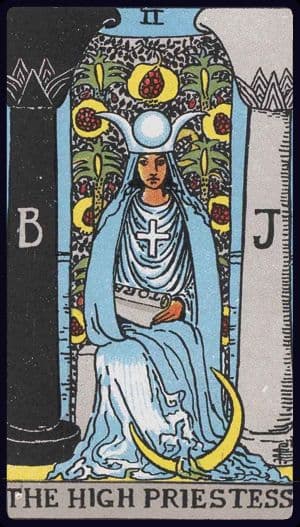
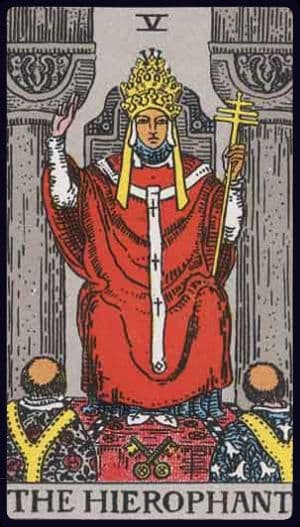
This pair often shows up when inherited wisdom and private knowing are in conversation, or in conflict. The Hierophant represents teachings, traditions, and established meaning-making systems; The High Priestess holds the quieter truths that do not arrive through authority. Together, they can reflect spiritual ambivalence, intellectual skepticism, or the discomfort of sensing that the official explanation is not the whole story. The deeper question is not whether rules matter. It is whether you can tell the difference between guidance and conformity.
What This Pair Reflects
Consider where you have learned to trust a system more than your own perception, or where you've dismissed every system too quickly. This combination invites a more nuanced relationship to authority — one that neither obeys blindly nor rejects reflexively.
Begin your practice
Your readings, notes, and questions in one private place.
Start a readingIn Different Situations
Relationships
Someone else's idea of a good relationship can be hard to separate from what you actually feel in one. A bond might look right by every familiar standard while something private remains unsettled, or it might matter deeply despite not fitting the script. The Hierophant brings shared values, commitments and expectations; the High Priestess holds what hasn't been said clearly yet. Neither automatically cancels the other. This pairing leaves room to respect what a commitment means while asking whether its rules make space for your own experience.
Career
Maybe the path that earns respect isn't the one that feels like yours anymore. The Hierophant carries qualifications, mentors and familiar definitions of a good career; the High Priestess registers a quieter mismatch that may be hard to defend on paper. Their meeting doesn't dismiss training or experience. It asks what those structures are helping you learn and what they keep you from noticing about your work. You can value a profession's standards without making them the only measure of whether the work still fits.
Decisions
Advice can be sound and still not answer the question that matters most to you. The Hierophant brings established knowledge and the comfort of a path others recognize; the High Priestess holds an unease or conviction that hasn't yet found a convincing explanation. Together they don't demand obedience or rebellion. They invite a harder distinction: which guidance reflects experience you can use, and which expectations you're following because disagreement feels risky? A choice can be informed by tradition without being decided by it.
Burnout
You might be tired of meeting a standard you no longer remember choosing. The Hierophant carries the familiar rules about being dependable, useful or committed; The High Priestess holds a private sense that following them has begun to cost too much. These are not automatically bad standards. Some give work and care their meaning. But exhaustion can make it difficult to notice when a value has hardened into an obligation that never ends. This combination makes room for respect without unquestioning compliance, especially where your own limits have had little say in what counts as enough.
Feeling Stuck
Doing what has always been done can make a standstill look like steadiness. The Hierophant offers a known sequence, trusted advice and the comfort of belonging to something established. The High Priestess holds the less public question of whether that sequence still means what it once did to you. Sometimes repetition is the practice that keeps you grounded; sometimes it lets an old answer stand in for a new understanding. The cards leave that distinction open. You can keep what is genuinely useful in a tradition without requiring your private experience to match it exactly.
New Beginnings
Entering unfamiliar territory often brings old advice back into your mind. The Hierophant holds the lessons, rituals and examples that have helped people begin before you; The High Priestess marks the part of this beginning that does not quite fit anyone else's script. There is comfort in having a form to follow, especially when everything feels new. There is also room to notice what that form cannot account for. You need not reject what you inherited to make a beginning your own, and you need not mistake a familiar route for the only possible one.
Grief and Loss
People often have words and rituals for loss before you have words of your own. The Hierophant holds the comfort and pressure of shared customs: the things others say, remember or expect. The High Priestess represents the private experience that may not fit those forms. A ritual can offer company without capturing everything you feel. It can also feel distant when your loss does not match the recognized story. You are not required to grieve according to someone else's sequence, nor to face everything alone. What is shared and what remains yours may need different kinds of space.
Reversed Variations
Both reversed
Confusion deepens when both institutional guidance and inner guidance feel unavailable. You may feel spiritually cynical, emotionally cut off, or overly dependent on borrowed certainty.
The High Priestess reversed
The High Priestess reversed weakens trust in your own deeper sense of things. Tradition stays intact, which can make external frameworks feel safer than they actually are.
The Hierophant reversed
The Hierophant reversed loosens the formal structure of belief. Your intuition may become easier to hear, but also less buffered by shared language, ritual, or trusted containers.