Justice & Death
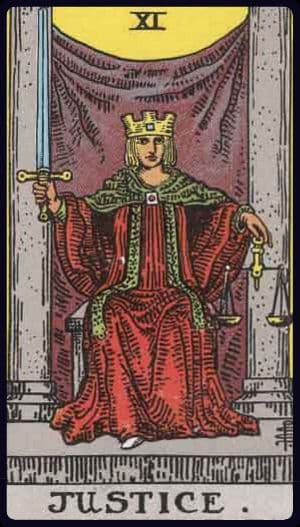
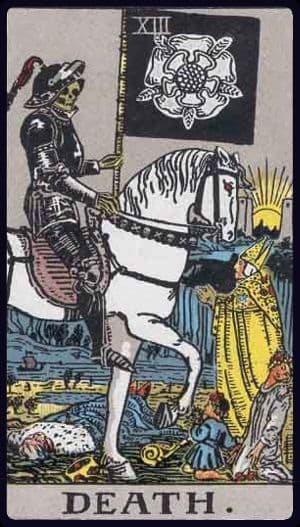
What Justice and Death Mean Together
Not every ending is chaotic. Some arrive with the cold precision of realizing exactly what can no longer continue. Justice brings truth, consequences, and clear-eyed accountability; Death brings transition, release, and the irreversible shift that follows honest recognition. Together, they often reflect a necessary ending shaped by facts rather than fantasy, signing papers, naming a betrayal plainly, accepting that a role or relationship has reached its limit. This pair can feel severe, but it is rarely vague. The truth here has weight and finality.
What This Pair Reflects
You may be dealing with a decision that hurts partly because it is so hard to argue with. This combination invites you to consider whether the ending in front of you is not a punishment, but the natural consequence of seeing the situation clearly at last.
Begin your practice
Your readings, notes, and questions in one private place.
Start a readingIn Different Situations
Relationships
Sometimes you can still care about someone and know that something between you cannot carry on as it has. Justice brings the facts into focus: what happened, what was fair, what each person has taken responsibility for. Death gives that recognition its emotional weight, because seeing clearly may mean losing a version of the relationship you hoped to keep. This pair does not declare a breakup. It may describe the end of denial, an old pattern, or the relationship itself. The difficult part is that understanding the reasons doesn't necessarily make the loss easier.
Career
A work situation may have reached the point where the facts are harder to set aside than your wish for things to improve. Justice makes the imbalance, consequences or limits plain; Death reflects the change that follows when the old arrangement can no longer be defended. This could concern leaving a role, changing a working relationship or ending a way of operating, rather than a job loss imposed from outside. There is a difference between reacting in anger and recognizing a conclusion that has taken time to form. Clarity can be painful without being impulsive.
Decisions
There are decisions where you have already understood the facts but still wish they pointed somewhere else. Justice makes the reasons and consequences difficult to evade; Death brings the knowledge that one possibility may need to be released for another to become real. The pair can feel final without predicting a particular outcome. It asks for an honest view of what continuing would cost, alongside what ending would take away. Being fair to everyone involved may not produce a painless answer. Sometimes the clearest choice is still one you need time to mourn.
Burnout
There may be a point when tiredness stops feeling like a passing inconvenience and becomes a fact you can no longer explain away. Justice asks for an accurate account of what is being asked, what is possible, and where the burden actually falls. Death gives weight to the possibility that an old way of carrying it has reached its limit. Neither card turns exhaustion into a verdict or orders a dramatic exit. Together they make it difficult to call an arrangement sustainable simply because you've managed it before. The cost belongs in the accounting too.
Feeling Stuck
Sometimes the hardest place to move from is the space after a conclusion. You know a chapter has changed, but your days still run on its old rules. Justice reflects what you've already had to acknowledge; Death reflects the ending that has not yet found a place in ordinary life. That can leave you feeling stalled even without a fresh decision to make. The facts may be settled while your habits, expectations, or sense of yourself lag behind. Clarity and movement do not always arrive together, and neither has to be faked for the other to be real.
New Beginnings
A beginning can feel unusually serious when it follows an ending you've had to look at clearly. Justice brings the facts and consequences that can't simply be left outside the door. Death marks the change in what is possible once an old form of life has ended. That doesn't mean the new chapter is a reward for doing the right thing, or that every part of the past is settled. You may be entering something open while still carrying the weight of what was lost. There is room for possibility without pretending the threshold was easy to cross.
Grief and Loss
Something can be undeniably over without feeling fair, comprehensible, or even fully real. Justice reflects the mind's search for reasons, responsibility, and a truthful account of what happened. Death brings the finality or deep alteration that those explanations cannot undo. If there was unfairness, naming it matters; if there is no clear person to blame, a verdict may never come. Neither card says the loss was deserved. Together they hold a difficult fact: understanding the circumstances and living with their absence are different kinds of work, neither on a fixed schedule.
Reversed Variations
Both reversed
You may resist an ending while also avoiding full accountability for why it is needed. The result can be prolonged conflict, stale negotiations, or a transition that stays emotionally and practically unfinished.
Justice reversed
Justice reversed muddies the clean edge of the ending. Change is still necessary, but bias, denial, or unfairness can complicate how the transition is understood and handled.
Death reversed
Death reversed prolongs what Justice has already clarified. The facts may be unmistakable, yet you may keep trying to preserve a form that has already reached its end.