Death & Temperance
What Death and Temperance Mean Together
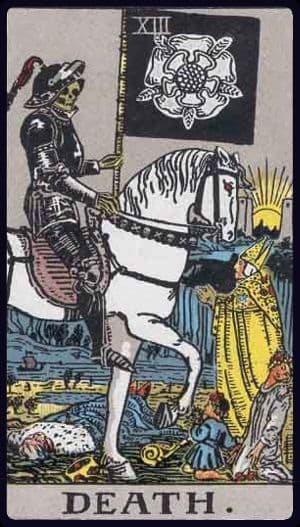
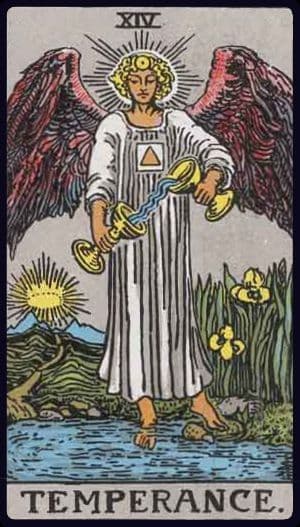
Change does not always need to arrive as a dramatic severing. Sometimes it asks for a slower chemistry, the careful blending that lets one life dissolve while another takes shape. Death brings endings, release, and transition; Temperance brings pacing, moderation, and the ability to integrate change without fragmenting. Together, they often reflect recovery after loss, identity shifts that need regulation, or the emotionally intelligent handling of a major transition. This pair does not deny grief. It simply refuses to let grief become the only pace available.
What This Pair Reflects
You may be in a transition that asks as much from your nervous system as from your beliefs. This combination invites you to consider what helps the ending move through you cleanly instead of turning into shock, numbness, or overcorrection.
Begin your practice
Your readings, notes, and questions in one private place.
Start a readingIn Different Situations
Relationships
A relationship can be changing in ways that don't fit neatly into 'stay' or 'leave.' Death acknowledges that some part of how you relate cannot continue as it was. Temperance asks how that truth can be lived with rather than turned into a sudden verdict. You might still love someone while grieving the shape the relationship used to have. The combination allows for a careful new rhythm, including a respectful ending if that's what is real. Patience helps you absorb change; it isn't a reason to pretend nothing has changed.
Career
When a job or professional identity stops fitting, there can be pressure to replace it immediately. Death marks a genuine ending, while Temperance makes room for the awkward period of adjustment: learning what still belongs, what doesn't, and what can be carried into different work. This pair can speak to a slow career change without treating slowness as failure. But there's a difference between giving yourself time and continuing to maintain a role you've already outgrown. A measured transition can still be decisive.
Decisions
An ending may be necessary even if the next step can't be settled all at once. Death makes it difficult to keep calling a completed chapter temporary. Temperance looks for a way to carry change through your daily life, not just announce it. In a decision, these cards can separate the truth of what needs to stop from the pace at which you act. A gradual exit may be more workable than a dramatic break; it becomes avoidance only when each small delay is used to keep the old situation intact.
Burnout
The pace that used to get you through may have stopped being sustainable, even if nothing around you has slowed down. Death marks a real limit to that old way of living; Temperance is concerned with how change can be absorbed in ordinary days. A complete overhaul may feel impossible when you're already depleted, while small adjustments can seem too slight to matter. These cards hold both truths. The important distinction is between gradually changing the conditions that drain you and making the same exhausting routine a little easier to survive.
Feeling Stuck
Things can remain still because you have become very skilled at keeping them balanced. Temperance helps you manage the tension, smooth the edges, and make an uneasy situation workable. Death raises the harder possibility that what you're managing has already changed beyond its old shape. There is a difference between giving a transition enough time and spending that time restoring a version of life that no longer fits. This combination doesn't call for a sudden break. It makes the quiet maintenance of the status quo visible, along with the discomfort that meaningful adjustment might bring.
New Beginnings
A beginning can be real long before it feels natural. Death marks the loss of an old structure or identity; Temperance gives the unfamiliar one time to settle into your actual life. You may still reach for habits that belonged to the previous chapter, even while knowing it has ended. That does not make the new beginning false. Nor does patience mean keeping everything unchanged. This is the less visible work of transition: noticing what can carry over, what cannot, and how a different rhythm takes shape without needing a triumphant first day.
Grief and Loss
Loss can alter the shape of an ordinary day in a hundred small ways. Death recognizes that the old arrangement of life is no longer available; Temperance concerns the slow, uneven adjustments made around that absence. Some days may feel almost familiar, others newly strange. There is no required pace and no promise that careful adjustment will make the loss smaller. These cards describe living alongside a change you did not necessarily choose, finding where the old and the present can meet without demanding that what is gone be replaced.
Reversed Variations
Both reversed
The transition can become jagged and poorly regulated. You may resist what is ending while also struggling to pace yourself well enough to adapt to what is replacing it.
Death reversed
Death reversed prolongs the transformation Temperance is trying to smooth and integrate. Balance matters, but it may be used to maintain the old chapter rather than metabolize its ending.
Temperance reversed
Temperance reversed destabilizes the handling of the transition. The ending is still real, yet impatience, excess, or poor regulation can make the process feel harsher and less coherent.