Death & The Devil
What Death and The Devil Mean Together
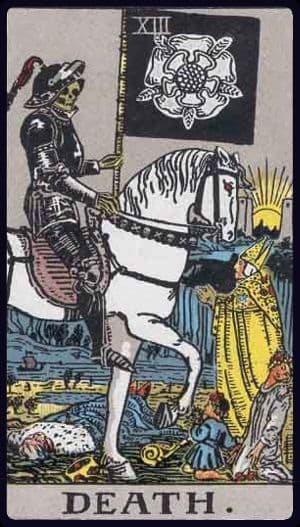
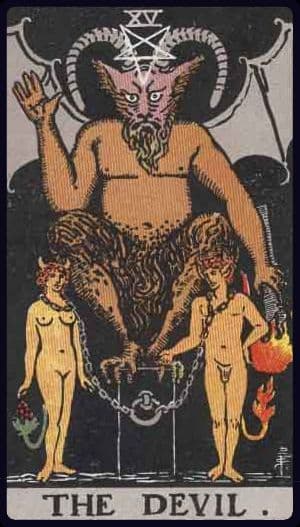
Death and The Devil can frame a question about release from an attachment that feels costly. Death brings release, finality, and the refusal to keep animating what has run its course; The Devil brings attachment, compulsion, shame, and all the ways a person can remain bound to something harmful simply because it feels familiar. Together, they can offer a symbolic lens on changing a persistent habit, reassessing a harmful relationship, or leaving an identity organized around fear. The pairing does not establish addiction or decide whether a bond must end. This pair can feel brutal. It can also feel like oxygen.
What This Pair Reflects
You may be at the point where letting go no longer looks like deprivation, but like the only honest route back to yourself. This combination invites you to notice whether an attachment is costing you more than it gives, and what change is actually available.
Begin your practice
Your readings, notes, and questions in one private place.
Start a readingIn Different Situations
Relationships
Missing a connection does not always mean it was good for you. The Devil captures the hold of chemistry, habit, or fear of being alone; Death introduces the possibility that the familiar pattern no longer has to continue unchanged. The difficult part may be grieving something you still want, while recognizing what it has been costing you. Feeling drawn back and freely wanting to stay are different experiences, though they can look identical from the outside. The cost of the familiar pattern deserves as much attention as the connection you still miss.
Career
You might know a working pattern is wearing you down and still feel strangely loyal to it. The Devil reflects the grip of status, overwork, comparison, or the fear of losing security; Death brings the possibility of ending a role those pressures have played in your identity. Money and stability may be real reasons to stay for now; being unable to imagine yourself without the role is a different kind of tie. It asks whether every reason you give for staying is a present necessity, or whether some belong to an older idea of success that no longer deserves quite so much power.
Decisions
A decision can feel impossible when one option means giving up something that has become part of how you see yourself. The Devil names the pull of familiarity, fear, or a reward you keep chasing; Death asks what would remain if that hold began to loosen. Not every attachment is harmful, and practical limits are real. Still, the feeling that you have no choice deserves a closer look. One path may involve a genuine loss, while another keeps repeating a cost you have learned to treat as unavoidable.
Burnout
When slowing down feels almost forbidden, exhaustion can become part of a pattern that keeps renewing itself. The Devil captures the grip of urgency, guilt, or feeling valuable only while you are useful. Death brings the uncomfortable possibility that this way of measuring yourself has reached its limit. There may be practical demands you cannot simply put aside; naming the hold they have on you is not the same as blaming yourself for it. Rest alone may feel difficult while the old rule about what you must keep giving remains intact.
Feeling Stuck
You may know exactly what keeps happening and still find yourself back in the same place. The Devil describes the pull of a familiar reward, fear, or identity; Death marks the part of the pattern that has already lost its usefulness. That is why insight alone may not feel like movement: the familiar can remain reassuring even when it makes life smaller. Some constraints are real, and change may be gradual rather than clean. The point is not to prove you can walk away overnight, but to recognize what keeps drawing you back to a version of life you no longer want to repeat.
New Beginnings
The old pattern does not necessarily lose its pull when something new becomes possible. Death marks a genuine ending or change of shape; The Devil catches the familiar bargain that may tempt you to rebuild the very pressure you hoped to leave behind. That could be a habit, an expectation, or a story about who you have to be, not necessarily a person or a harmful dependency. A beginning can hold freedom and unease at once. You may have more room than before without yet knowing how to live in it, and that uncertainty is not failure.
Grief and Loss
You can grieve something and also feel relieved that its hold on you has changed. The Devil brings the attachment, shame, or familiar pull that may linger around a loss; Death gives weight to the fact that something has ended, even if feelings have not caught up. This need not mean what you lost was bad for you. Familiarity can be difficult to release for reasons that do not fit neatly into gratitude or regret. Missing it is not proof that you should return, and relief does not erase its importance. Both feelings can have a place without canceling each other.
Reversed Variations
Both reversed
You may see the pattern clearly while still failing to sever it. The attachment weakens unevenly, and the ending can stay half-formed, emotionally charged, and easy to backslide from.
Death reversed
Death reversed prolongs the unhealthy bond. The Devil remains strong, and what should be an ending may instead become a long negotiation with something that keeps taking too much.
The Devil reversed
The Devil reversed loosens the grip of the attachment. Death then becomes cleaner, because the ending no longer has to fight the same level of shame, compulsion, or dependency.