The Chariot & Justice

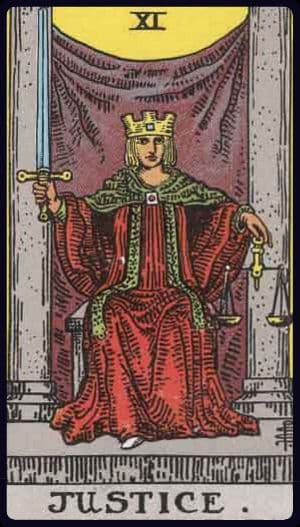
What The Chariot and Justice Mean Together
Action is under scrutiny here, and not only by other people. The Chariot wants movement, victory, and the satisfaction of getting somewhere; Justice asks whether the route, the motive, and the consequences can withstand an honest look. Together, they often reflect high-stakes decisions — legal matters, career assertions, relationship boundaries, or moments when ambition has to answer to ethics. This pair is sharp. It asks whether your forward motion is clean, or merely effective.
What This Pair Reflects
You may be trying to move something along that also requires fairness, accuracy, or accountability. This combination invites you to consider whether your certainty comes from moral clarity or from momentum that has not yet been properly examined.
Begin your practice
Your readings, notes, and questions in one private place.
Start a readingIn Different Situations
Relationships
Wanting a clear answer in a relationship can become tangled with wanting to be proved right. The Chariot pushes for movement, resolution, or a firm boundary; Justice asks whether each person's experience and the consequences of your actions are being weighed fairly. Sometimes moving forward means naming an imbalance. Sometimes it means admitting that winning the argument would leave the underlying issue untouched. This pair doesn't decide who is at fault. It sharpens the difference between taking a principled stand and pushing for the outcome that feels most satisfying in the moment.
Career
The pressure to get ahead can make a questionable shortcut look like the practical choice. The Chariot is intent on results; Justice brings the methods, evidence, and consequences of those results into focus. You may need to advocate firmly for your work, challenge an unfair decision, or admit when your own position needs scrutiny. This isn't an argument against ambition. It's about whether the way you pursue a win can stand up to a fair account of what happened. A strong career move should not depend on looking away from its cost to others.
Decisions
A quick decision may promise relief, but speed can hide whose interests you're protecting. The Chariot wants an outcome and the confidence to move; Justice insists on looking at the evidence, the balance of responsibility, and what follows from the choice. This pair is especially sharp when you feel certain you're right. Conviction is useful, but it doesn't make the process fair by itself. You may still choose firmly after weighing the consequences. The distinction is between a decision you can explain honestly and one that only feels convincing while you're rushing toward it.
Burnout
When you're exhausted, fairness can become a question you barely have the energy to ask. The Chariot keeps you carrying things through because stopping would feel irresponsible. Justice looks at the balance: what is genuinely yours to carry, what has been placed on you, and whose needs keep counting first. This isn't a verdict against dedication. It brings the cost of unequal responsibility into view, including the expectations you place on yourself. Being able to keep going does not, by itself, make the burden fair.
Feeling Stuck
A situation can stand still while you keep replaying who was right, who owed what, or why the balance never felt fair. Justice gives those concerns weight; The Chariot grows restless when the accounting never leads anywhere. Moving past an impasse isn't the same as pretending the imbalance did not matter. But repeating the case in your head can hold you in the moment of judgment long after the facts are familiar. There may be something important to name without making every next step depend on securing a final verdict.
New Beginnings
Starting something new can bring relief and an unexpected sense of responsibility at the same time. The Chariot is ready to move; Justice keeps the past from disappearing simply because you've chosen a different direction. That doesn't mean every fresh start has to become a trial of what you got wrong. It may mean being clear about what you can stand behind, what needs an honest acknowledgment, and what no longer needs to be argued. Forward movement feels different when it rests on a fair account rather than the need to prove you were right all along.
Grief and Loss
Loss can leave an unfinished argument inside you: what was fair, what should have happened, what could have been done differently. Justice gives that need for an honest account its seriousness. The Chariot wants to get through the day and find some direction again, perhaps before the questions have quieted. There may be facts worth facing and responsibilities worth naming, but grief doesn't always offer a ruling that settles everything. Continuing with life needn't require you to declare the past fair, or to keep putting yourself on trial.
Reversed Variations
Both reversed
The urge to win can distort judgment. You may push ahead while minimizing fairness, or become so defensive about being right that the actual truth gets harder to face.
The Chariot reversed
The Chariot reversed weakens clean execution. Justice remains, but the lack of direction or emotional control may complicate what could otherwise be a clear decision.
Justice reversed
Justice reversed distorts the ethical frame around the action. The drive is still strong, but it may become biased, self-serving, or too invested in outcome to stay fully honest.