The Emperor & Justice

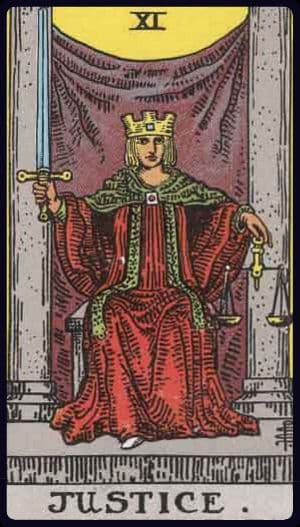
What The Emperor and Justice Mean Together
This pair cares about order, but not exactly in the same way. The Emperor focuses on rule, structure, and authority; Justice focuses on truth, fairness, and accountability regardless of rank. Together, they often reflect formal decisions with ethical weight — contracts, leadership choices, legal matters, or the question of whether the person in charge is also the person being held to account. At their best, they suggest principled structure. At their worst, they expose the gap between power and fairness.
What This Pair Reflects
You may be dealing with a decision where clean systems are not enough unless they are also just. This combination invites you to examine whether authority is being exercised responsibly or simply protected because it already exists.
Begin your practice
Your readings, notes, and questions in one private place.
Start a readingIn Different Situations
Relationships
Clear rules in a relationship can feel reassuring, until you notice that one person seems to make them. The Emperor brings order and firm expectations; Justice asks whether those expectations apply equally, especially when someone makes a mistake or needs something different. A boundary can be reasonable and still be enforced unfairly. This pair brings attention to who gets heard, who takes responsibility and whether being 'right' has become more important than being accountable. It does not demand that every need be identical. It asks for a kind of stability that both people have a real part in shaping.
Career
A workplace can have clear procedures and still leave people wondering whether decisions are fair. The Emperor represents management, policy and the power to set expectations; Justice brings the harder test of consistent reasons and accountability. Together, they draw attention to how authority is used, not simply whether someone has it. You might be deciding how to treat a colleague, questioning an evaluation, or weighing whether to speak up about an uneven standard. There may be real limits to your influence, but this pairing asks you to distinguish a rule that is convenient for those in charge from one that can be defended openly.
Decisions
You may have the power to make a choice and still feel uneasy about whether it is the fair one. The Emperor asks who has authority and what will keep the decision workable; Justice examines the reasons, consequences and standards you would apply if the roles were reversed. Together, they make the distinction between being entitled to decide and being accountable for how you decide. Sometimes the clearest rule protects everyone. Sometimes it protects the person who wrote it. The weight of this pair lies in being able to explain your choice without relying only on your position.
Burnout
Being the person who keeps everything in order can hide how much that order costs you. The Emperor values dependable standards, while Justice asks who is carrying the weight of meeting them and whether the expectations are fair. You may be following rules you would never impose on someone else. The exhaustion here is not proof that you lack discipline. It may reflect a gap between what the system calls reasonable and what a person can actually sustain. Accountability includes looking at the demands themselves, not only how well you have met them.
Feeling Stuck
Everything may be functioning as it is supposed to, yet you feel trapped inside the rules. The Emperor preserves an established order; Justice asks whether that order still makes sense when its effects are examined honestly. The stuckness may come from treating an old agreement, role or expectation as permanent simply because it was once reasonable. Equally, there may be a boundary worth keeping even if it slows change. These cards draw a line between stability that protects something important and rigidity that survives only because nobody has revisited its terms.
New Beginnings
At the start of something, clear expectations can feel like a relief. The Emperor wants a dependable foundation; Justice makes sure that the rules taking shape are ones you could defend as fair, including when you are the person affected by them. There is a temptation to settle every term early so uncertainty disappears. But a beginning is also when you learn what people actually need and what you did not anticipate. Structure has value here when it leaves a way to correct mistakes and share responsibility, rather than treating the first arrangement as final.
Grief and Loss
Loss can leave practical responsibilities beside feelings that have no clear order. The Emperor attends to what must be held together; Justice brings a concern for fairness, especially when expectations fall unevenly or someone feels they have to be the reasonable one. It can be hard to tell whether a rule is helping you through the day or leaving too little room for what has changed. Grief cannot be divided into equal portions or judged by how well someone manages it. These cards make space to examine the arrangements around loss without making anyone's sorrow a case to be proved.
Reversed Variations
Both reversed
Power can become defensive and biased at once. You may be facing rigid authority that avoids accountability, or your own need for control may be distorting what is actually fair.
The Emperor reversed
The Emperor reversed distorts the use of authority. Justice remains upright and sharpens the question of whether control, leadership, or rules are being applied in an honest and proportionate way.
Justice reversed
Justice reversed weakens the ethical clarity of the structure. Order may still exist, but it risks becoming unequal, self-serving, or more invested in procedure than truth.