Major Arcana
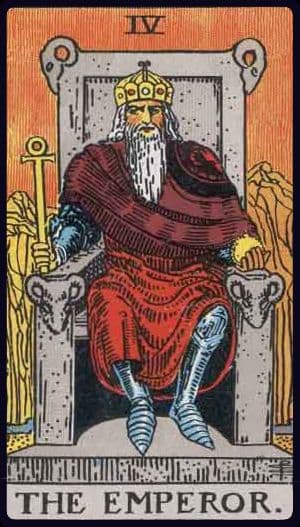
The Emperor
The Emperor is the card of order — structure, responsibility, and the steadiness that keeps things standing.
Upright
Reversed
The Emperor Meaning
Upright
The Emperor points to authority grounded in structure rather than display. It often appears when stability, leadership, and clear boundaries are needed — the kind that makes decisions possible and keeps things from collapsing into mood or confusion. This card values systems, responsibility, and follow-through; it asks what holds when emotion passes and pressure rises. In work, family, or personal discipline, The Emperor can reflect someone building something durable, or a situation that improves once expectations become clearer and less negotiable.
Reversed
Reversed, The Emperor shows what happens when structure hardens into control. Tyranny may appear in overt forms, but rigidity is often the more common problem: a refusal to adapt, listen, or loosen the grip even when the current approach is failing. Loss of control can sit underneath that posture, making domination a compensation for private instability. In readings, this card often points to power being used defensively — not to create order, but to avoid vulnerability, complexity, or the fact that other people cannot be managed into trust.
The Emperor as a Daily Card
Authority isn't about control — it's about responsibility. Today, The Emperor asks where you need to step into your own authority.
Lean toward
The version of care that looks like clarity.
Watch for
Mistaking authority for intimacy.
Where have you been deferring a decision that only you can make?
In Different Situations
Relationships
Being dependable can feel like a form of love. The Emperor brings attention to the agreements and boundaries that make closeness feel secure: showing up, taking responsibility, saying clearly what is and isn't possible. There is comfort in knowing where someone stands.
But steadiness can become a demand that everything happen on one person's terms. If care has started to look like managing another person, this card raises a harder distinction between protection and control. Trust needs something solid to rest on, but it also needs room for another person to remain their own.
Career
There is a difference between being given responsibility and having the authority to carry it well. The Emperor speaks to the structures that make good work possible: clear expectations, decisions that hold, and people who follow through. It can describe the satisfaction of building something others can rely on.
It also brings the use of power into view. A rigid hierarchy may look orderly while leaving no room for judgment or initiative. If you are taking on a larger role, this card asks what sort of steadiness you want to create. Competence is more durable when it makes others capable, rather than keeping everything under one person's control.
Decisions
When the options are messy, The Emperor looks for a framework sturdy enough to make a choice within. What has to remain reliable? Which responsibilities cannot simply be set aside? Naming those boundaries can bring order to a decision that otherwise keeps expanding.
The risk is mistaking control for certainty. Rules help when they clarify the real stakes; they restrict when they leave no room for new information or human complexity. This card may be useful when you are trying to decide without being ruled by the mood of the moment, while remembering that a sound plan still has to bend where life does.
Burnout
Sometimes the person who keeps everything together becomes the part of the system nobody thinks to support. The Emperor can reflect the weight of always being reliable, setting the rules, settling problems and making sure nothing slips. That kind of steadiness has value, but it can quietly turn into a job without edges.
The card also asks whether the structure itself is doing enough work. If order depends on your constant vigilance, it may not be as stable as it looks. Control can protect what matters; carried too tightly, it leaves little room for your own limits.
Feeling Stuck
The routines that once gave your life shape may now leave very little space for anything unexpected. The Emperor can appear when you are doing what works, meeting expectations and keeping things orderly, yet no longer feeling that much is moving.
The problem may not be a missing plan. It may be that the plan has become difficult to alter. Structure is useful when it supports movement; it becomes a wall when every unfamiliar possibility looks like a threat to stability. This card asks what is being protected by staying exactly where you are, without assuming that stability itself is a mistake.
New Beginnings
A fresh start can feel more possible once it has a little shape. The Emperor speaks to the early decisions that create room for something new: what matters, what you can commit to, and what needs to be dependable before enthusiasm fades.
That doesn't mean every detail must be fixed from the beginning. The same desire for stability can tempt you to build rules around a life you have barely begun living. This card values a foundation strong enough to support change, not a plan so rigid that the new experience has nowhere to surprise you.
Grief and Loss
Loss can unsettle the ordinary structures of a life: who handled what, which routines held the day together, what you counted on being there. The Emperor draws attention to that practical kind of absence. Rebuilding some order may matter, even while nothing about the loss itself can be made orderly.
There can be pressure to be the steady person for everyone else, too. Responsibility may offer something to hold, but it cannot replace what has changed. This card allows both the need for structure and the places where structure simply cannot make the grief smaller.
Recurring appearance
What does it mean when The Emperor keeps appearing?
Control can harden before it feels like control. A boundary or decision needs clearer edges.
Spreads that work well with The Emperor
Past, Present, Future
3 cardsThe classic three-card arc. Where you've been, where you are, and where the energy is heading.
View spread →New Chapter
5 cardsDesigned for life transitions — starting something new, ending something familiar, or standing in the space between. This spread is Liminal Tarot's signature.
View spread →The Threshold
5 cardsFor moments when you know something needs to change but you can't yet see what comes next. This spread sits with you in the doorway — not rushing you through it, not pulling you back.
View spread →Pairs with The Emperor
Begin your practice
Draw The Emperor in a reading
Context transforms a card's meaning. A full reading weaves your question, your spread, and your cards into a coherent reflection.