The Fool & Justice

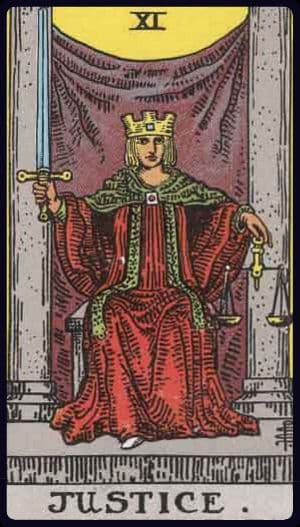
What The Fool and Justice Mean Together
Freedom is part of this pair, but so is consequence. The Fool wants to move without overburdening the moment; Justice asks what your choices cost, reveal, and commit you to. This often appears when you're tempted to treat something lightly that actually carries real weight — a contract, a breakup, a truth you've delayed speaking. The deeper tension is between innocence and accountability: can you begin honestly without pretending your actions exist outside a larger moral landscape.
What This Pair Reflects
You may need to look at whether your desire for a fresh start includes responsibility for what came before. This pair invites clean honesty, especially where rationalization has crept in. A beginning that ignores impact is rarely as clean as it first appears.
Begin your practice
Your readings, notes, and questions in one private place.
Start a readingIn Different Situations
Relationships
Wanting a fresh start doesn't always settle what happened before it. The Fool brings a genuine wish to begin without carrying every old mistake; Justice brings the harder question of what fairness and honesty still require. In a relationship, this might be about rebuilding trust, changing an agreement or moving on without rewriting the past. The pair doesn't insist that anyone stay or leave. It asks whether the freedom you're reaching for makes room for the other person's experience as well as your own.
Career
A new professional opportunity may feel like a welcome escape from old expectations. The Fool sees the freedom to try; Justice asks what you are agreeing to, what you owe others and whether the terms are fair. Together, they temper excitement with clear-eyed responsibility without making caution the whole story. You can choose a different path and still be honest about the effects of leaving or changing course. The useful distinction is between a risk you understand and one whose consequences you've barely allowed yourself to consider.
Decisions
A fresh choice can feel liberating precisely because it breaks with what you've done before. The Fool is willing to take that unfamiliar step; Justice asks you to look directly at the facts, responsibilities and people affected. Their tension is especially sharp when you want a clean slate but the decision carries consequences that won't vanish with a new beginning. Fairness doesn't require choosing the safest option, and freedom doesn't excuse ignoring the cost. The choice becomes more honest when both the possibility and its impact stay in view.
Burnout
You may be so used to measuring what you owe that even rest feels like something to justify. Justice makes fairness part of exhaustion: whose time gets protected, whose needs stay negotiable, and who is allowed to step away? The Fool introduces the unfamiliar possibility of doing something simply because you have room for it, not because you've earned it. That openness can feel irresponsible when responsibility has become your whole measure of yourself. A more honest balance includes your limits, not just a record of what you have delivered.
Feeling Stuck
You may have made such a careful case for every option that nothing feels permissible anymore. Justice asks you to take the facts and consequences seriously; the Fool questions the belief that a step is only legitimate when it is beyond reproach. Stuckness here can come from treating uncertainty as evidence you're not being responsible enough. Some obligations are real, and the pair doesn't brush them aside. But a fair assessment of where you are includes the cost of remaining motionless, not only the risk of trying something unfamiliar.
New Beginnings
A new start can be exciting and still carry unfinished business. The Fool sees an open road; Justice makes room for the history that doesn't disappear simply because the setting has changed. You may want to arrive as someone who owes nothing to the past, especially if an old situation felt unfair or complicated. Yet honesty about what you learned, what you regret and what was never yours to carry need not spoil the beginning. A clean slate doesn't have to mean a blank memory. The point is to enter freely, with your eyes open.
Grief and Loss
Loss can leave you taking inventory: what was fair, what you could have done, what should never have happened. Justice gives that need for an honest account its due. The Fool sits beside it as the unexpected return of curiosity or lightness, which can feel disloyal when there is still so much unresolved. One does not cancel the other. You don't have to call a loss fair to live another day differently, and a moment of openness doesn't erase what mattered. Some questions deserve to remain questions without becoming a sentence against yourself.
Reversed Variations
Both reversed
Avoidance can hide behind spontaneity here. You may be minimizing serious consequences or telling yourself a messy choice is simply freedom.
The Fool reversed
The Fool reversed turns the new beginning cautious, sometimes because you know the stakes are real. Justice remains upright and asks for clarity rather than self-protective vagueness.
Justice reversed
Justice reversed distorts the ethical center of the pair. You may want to start fresh while sidestepping accountability, fairness, or the facts of what happened.