The Hierophant & Justice

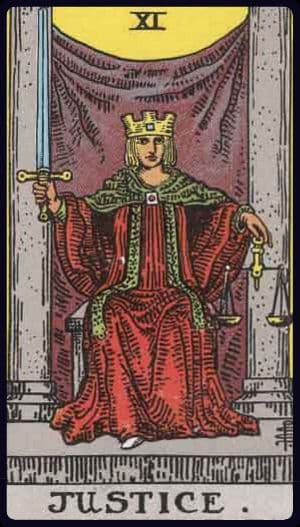
What The Hierophant and Justice Mean Together
Rules are not always the same thing as fairness, and this pair makes that distinction hard to ignore. The Hierophant brings tradition, institutions, and accepted standards; Justice asks whether those standards are actually being applied with integrity. Together, they often reflect moments when you are weighing obedience against conscience — a workplace policy, a family expectation, a moral framework you once trusted without question. This combination can affirm principled structure, but it can also expose how easily legitimacy gets confused with truth.
What This Pair Reflects
You may be dealing with a situation where the official line sounds reasonable but still feels ethically off. This pair invites you to consider whether the rules in play are serving fairness or merely protecting the comfort of the system.
Begin your practice
Your readings, notes, and questions in one private place.
Start a readingIn Different Situations
Relationships
A relationship can follow all the expected rules and still leave someone feeling unheard. The Hierophant brings the weight of family beliefs, commitment, custom, or the idea of what a partnership should look like. Justice asks whether those expectations are fair to the people actually living with them. The pair can affirm a shared promise that both people freely uphold, but it can also expose a quiet imbalance hidden behind that's just how it's done. Commitment may matter deeply. The question is whether the standard being defended is one both people have had a real say in.
Career
A policy can be consistently enforced and still be unfair. The Hierophant represents the practices a workplace treats as normal; Justice examines who those practices protect, who bears the cost, and whether the same standard holds for everyone. You might respect the structure of a profession and still feel uneasy about what it asks you to overlook. This pairing doesn't automatically cast rules as oppressive or rebellion as principled. It distinguishes a workplace earning trust through accountability from one asking for trust simply because its authority is established.
Decisions
It can be hard to make your own choice when the people you respect have a clear view of the right one. The Hierophant carries inherited beliefs and respected advice; Justice asks you to weigh them against the facts and your own sense of fairness. Sometimes tradition gives a decision needed structure. Sometimes it asks you to preserve a rule whose purpose no longer holds. These cards together make the difference important: following a standard is not the same as judging whether it deserves to guide this particular choice. Responsibility involves looking at both.
Burnout
Some expectations are so familiar that their cost barely gets questioned. The Hierophant represents the rule that everyone is supposed to keep going, show up, or be dependable; Justice asks who carries that rule's weight and whether it is fair. Exhaustion can be compounded by the belief that needing less is somehow failing a duty. These cards don't dismiss commitment or the value of shared standards. They leave room to examine a standard that may be respected in principle but uneven in practice, especially when your limits have become invisible to others or to yourself.
Feeling Stuck
There may be a rule you've followed for so long that it no longer feels like a choice. The Hierophant holds the accepted path and the reassurance of doing things properly. Justice asks whether that path is still fair to the person living it. This isn't necessarily a call to reject tradition; some commitments are worth keeping precisely because they are considered and mutual. But stagnation can deepen when loyalty to an inherited standard prevents you from naming what isn't working. Respect for a rule and an honest assessment of its effect can exist together.
New Beginnings
Entering something new often means meeting its unwritten rules before you know which ones you believe in. The Hierophant offers continuity, guidance, and a way to belong; Justice asks whether the expectations attached to that belonging are fair and openly shared. You might welcome structure while still needing to form your own judgment. These cards leave room for both. A fresh start needn't require rejecting everything established, but neither must you accept a standard simply to prove you belong. The values you carry into a new chapter can matter as much as the customs you encounter there.
Grief and Loss
Other people may have clear ideas about how a loss should be marked, spoken about, or eventually put behind you. The Hierophant holds shared rituals and inherited ways of making sense of absence. Justice asks whether those customs are making fair room for your actual experience. A familiar ceremony can offer real steadiness; an expectation to grieve in the accepted way can also feel lonely. These cards don't place private feeling above every communal practice. They simply distinguish support freely received from a standard you're being measured against when no such measure can capture the loss.
Reversed Variations
Both reversed
Bias and institutional pressure can reinforce each other here. You may feel trapped in a framework that claims moral authority while quietly excusing unfairness, dishonesty, or selective accountability.
The Hierophant reversed
The Hierophant reversed loosens trust in the established framework. Justice stays clear, which can make your own ethical judgment feel more trustworthy than inherited rules.
Justice reversed
Justice reversed distorts the fairness within the system. Tradition may remain intact, but it starts to look self-serving, inconsistent, or more invested in order than in truth.