Justice & The World
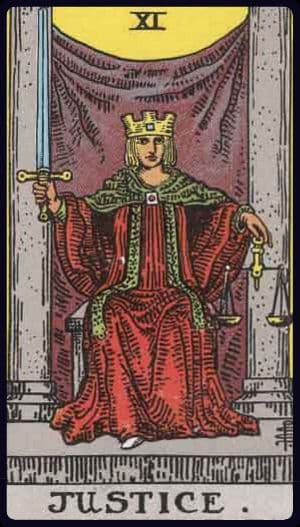
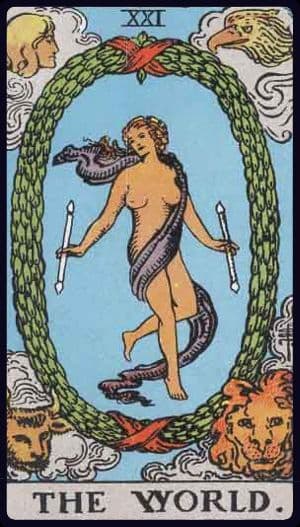
What Justice and The World Mean Together
Completion feels different when it is not just finished, but settled fairly. Justice brings balance, accountability, and the need for things to make ethical as well as practical sense; The World brings closure, integration, and the satisfaction of a cycle reaching full form. Together, they often reflect contracts concluding properly, hard conversations ending in clean mutual understanding, or the relief of bringing a long process to a conclusion that feels proportionate and whole. This pair is crisp. It values closure with integrity.
What This Pair Reflects
You may be nearing the end of something that will not feel complete unless it also feels clean. This combination invites you to notice whether you are trying to finish quickly or finish in a way you can actually live with afterward.
Begin your practice
Your readings, notes, and questions in one private place.
Start a readingIn Different Situations
Relationships
When something between you is ending or changing shape, fairness can matter as much as closure. Justice asks for honesty and accountability; The World asks whether the experience can feel complete. That pairing gives weight to an ending or a new understanding that neither person has to keep disputing.
This is not necessarily a breakup. A relationship can reach a more settled stage through a difficult, fair conversation. And if it is ending, closure may mean being able to stand by your part in the story, even without perfect agreement.
Career
A finished project may still feel unfinished if the credit, terms, or accountability are unsettled. Justice brings questions of credit, responsibility, and honest terms to The World's sense of a completed cycle. Together, they can reflect a project ending, a role reaching its limit, or a transition that needs more than a neat handover to feel resolved. If you are wondering whether to move on, this pair does not promise recognition or a particular outcome. It asks you to see what you contributed, what is still owed or unresolved, and what a clean professional ending would actually require.
Decisions
A decision can be nearly made yet still not sit right with you. Justice examines fairness, responsibility, and the facts; The World considers what would bring the whole matter to a fitting close. Their combination asks for a choice that completes a chapter without leaving its most important questions unaddressed.
This does not mean every person will agree or every consequence will be pleasant. It distinguishes the relief of being finished from the steadier feeling of making a decision you can explain and stand behind.
Burnout
You may have reached the end of a demanding stretch without feeling any less responsible for it. The World brings the sense of a cycle completed, while Justice asks who carried the weight and whether the terms were fair. If rest keeps being postponed until everything is properly settled, the standard for being 'done' may have become part of the strain. Completion deserves acknowledgment, but it does not erase the cost of getting there. Your capacity belongs in any honest account of what this period has required.
Feeling Stuck
Nothing may be visibly unfinished, yet you keep returning to the sense that something has not been put right. The World gives you a view of a chapter that has run its course; Justice asks whether you can honestly account for what happened within it. Sometimes there is a difference between accepting that events are over and accepting how they were handled. That difference can keep an old story active without giving you a clear next step. You do not need to call an unfair experience fair in order to recognize that life has continued around it.
New Beginnings
A beginning may be real even when the previous chapter does not feel neatly settled. The World gives shape to what has been completed or left behind; Justice brings forward the question of what you want to carry differently this time. Perhaps you are more aware of uneven effort, promises made too quickly or responsibilities you took on without examining them. This is not a demand for a perfect ending before you start. It is a chance to enter unfamiliar ground with a clearer sense of what fairness, to yourself and others, would actually look like.
Grief and Loss
When a loss feels unfair, talk of closure can sound almost insulting. Justice gives weight to what cannot be justified or made even; The World holds the larger shape of a chapter that has changed. Together they do not ask you to call the loss right, or to be finished feeling it. An event can be over in the outer world while its meaning continues to unfold in you. You may want an honest account of what happened and still know that no explanation could restore what is missing. Those truths do not cancel each other.
Reversed Variations
Both reversed
The cycle may drag because resolution and closure are both incomplete. You might be technically near the end while still feeling ethically unsettled or unable to land the final integration.
Justice reversed
Justice reversed complicates the sense of earned completion. The chapter may be ending, but bias, unfairness, or unresolved accountability can keep it from feeling truly whole.
The World reversed
The World reversed leaves the fair outcome without full landing. The terms may be sound, yet loose ends or lack of integration keep closure from settling cleanly.