The Chariot & Strength
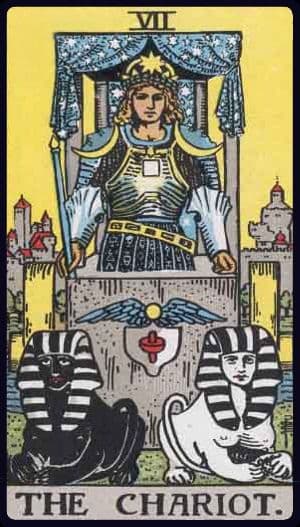
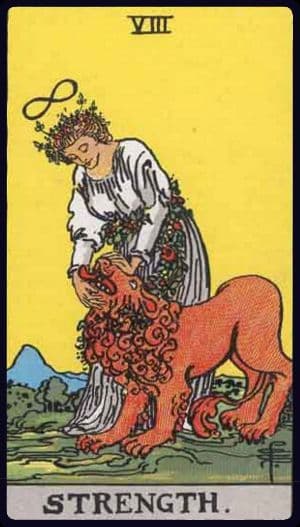
What The Chariot and Strength Mean Together
This pair often appears when force alone is not enough, but backing down is not an option either. The Chariot brings drive, will, and the need to move decisively; Strength brings patience, composure, and the ability to stay regulated under pressure. Together, they reflect disciplined momentum — ambition that does not need to become aggression in order to be real. The challenge is subtle: can you keep moving forward without turning urgency into a personality?
What This Pair Reflects
You may be in a situation that requires courage and control at the same time. This combination invites you to notice whether your determination is being strengthened by steadiness or distorted by the need to overpower what feels difficult.
Begin your practice
Your readings, notes, and questions in one private place.
Start a readingIn Different Situations
Relationships
You can be sure you want a relationship to move forward and still feel uneasy about how hard you're pushing. The Chariot gives the urge to settle where things are going; Strength asks whether that urgency leaves room for tenderness and an honest response. Holding back every feeling isn't strength, but neither is turning a difficult conversation into a contest. This pairing reflects the courage of saying what matters clearly while accepting that closeness can't be won through persistence alone.
Career
Ambition can become exhausting when every setback feels like a test of how much pressure you can bear. The Chariot brings the will to advance; Strength changes the method from force to steadiness. You might be capable of a hard push without needing to stay in fighting mode all the time. This pair matters when leadership, deadlines, or competition tempt you to mistake harshness for commitment. Progress is real, but the way you handle resistance is part of that progress too. Staying composed can protect your judgment without diminishing your drive.
Decisions
Part of you is ready to act; another part knows that acting from irritation could take you somewhere you don't want to go. The Chariot lends resolve, while Strength keeps that resolve from becoming a need to conquer doubt or silence emotion. This isn't a call to wait until you feel perfectly calm. It's a distinction between a choice made with courage and one made just to end the discomfort of uncertainty. You can be decisive without treating every hesitation as weakness, and careful without surrendering the direction that matters to you.
Burnout
Determination can keep you going long after your capacity has changed. The Chariot knows how to press forward; Strength knows how much care it takes to stay composed under strain. When they appear together around exhaustion, the question is whether composure has become a way to hide the cost of constant motion. Needing a slower pace does not cancel your resolve. You can still want progress while acknowledging that sheer control is not an endless source of energy. Courage here has as much to do with recognizing a limit as with overcoming resistance.
Feeling Stuck
You may be putting considerable effort into staying steady, with little sense of getting anywhere. Strength helps you hold difficult feelings without being ruled by them; The Chariot gives that steadiness somewhere to go. If all your energy is spent keeping yourself under control, forward motion can start to feel impossible. If you push only to escape the flatness, the movement may feel just as unsatisfying. These cards together make a distinction between enduring a standstill and having a direction that feels your own. Neither frantic speed nor perfect calm is the missing answer.
New Beginnings
At the start of something unfamiliar, it is tempting to prove you're ready by moving faster than you feel. The Chariot offers direction and initiative; Strength gives that movement an inner steadiness that can coexist with nerves. Together they describe courage without the performance of fearlessness. You may know the next small step while still feeling uncertain about the larger road. Neither doubt nor a slower adjustment means your resolve is weak. The beginning has room for both an active choice to move and the patience to learn how the new pace feels.
Grief and Loss
When something important is gone, daily life may still require movement that your feelings have not caught up with. The Chariot reflects the pressure or determination to carry on; Strength holds the quieter effort of remaining present to what hurts. The two do not have to keep the same pace. You might manage a necessary task and then have very little left, or appear composed while still missing what was there. Neither response measures the depth of your care. Moving through a day is different from having moved beyond a loss.
Reversed Variations
Both reversed
Push and restraint stop cooperating here. You may lurch between overcontrol and emotional reactivity, making progress feel exhausting rather than clean.
The Chariot reversed
The Chariot reversed weakens direction and momentum. Strength remains, but it may be spent on emotional management rather than actual forward movement.
Strength reversed
Strength reversed makes the drive harder to regulate. The will to move forward remains strong, but impatience, insecurity, or raw emotion can make the effort harsher and less effective.