The Fool & Temperance

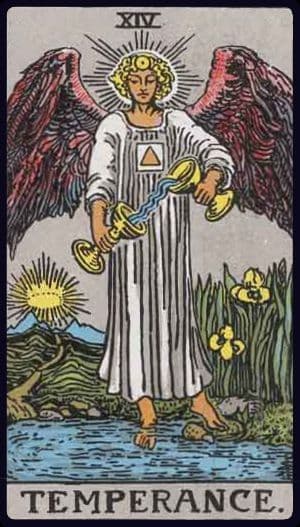
What The Fool and Temperance Mean Together
What begins here does not need to begin all at once. The Fool brings appetite for movement; Temperance brings pacing, proportion, and the ability to let opposites coexist without forcing resolution. This pair often appears when you're trying to build a healthier relationship to change itself — not swinging from restriction to excess, not mistaking urgency for truth. It reflects a new chapter that will matter more if it is integrated slowly enough to actually become part of your life.
What This Pair Reflects
You may be learning that enthusiasm and steadiness can belong in the same decision. This pair invites you to ask what a sustainable yes would look like. Big change does not have to come with dramatic self-abandonment.
Begin your practice
Your readings, notes, and questions in one private place.
Start a readingIn Different Situations
Relationships
You can want something new with someone and still need to move at a pace that feels safe. A strong connection may tempt you to skip the awkward stage of learning how you work together. The Fool makes room for an unfamiliar kind of closeness; Temperance asks whether it can hold ordinary differences, limits and pauses without losing its warmth. This is not a verdict on whether to commit. It draws attention to the space between enthusiasm and steadiness: enough openness to find out what is possible, enough patience to notice what is actually being built.
Career
A fresh opportunity can be right for you without requiring a dramatic break from everything you've learned. The Fool brings the pull of a new direction, while Temperance asks how that change could become workable in your everyday life. You may be excited by the role or project and unsettled by how much you would have to learn. Those feelings need not cancel each other. Rather than treating caution as disloyalty to your ambition, this pairing reflects the value of making room for both experimentation and the routines that let it last.
Decisions
If you keep alternating between 'just do it' and 'don't risk it,' this pair speaks to the exhausting swing itself. The Fool sees possibility before proof; Temperance looks for proportion without stripping away that possibility. Together they suggest a third kind of choice: one that lets you test what matters, learn, and adjust, rather than forcing a permanent yes or no before you know enough. There may still be uncertainty. The useful distinction is between a decision made from genuine curiosity and one made to end the discomfort of not deciding.
Burnout
Maybe the hardest part of being exhausted is that your only imagined exits are extremes: keep going exactly as you are, or change everything. The Fool leaves room to try something unfamiliar; Temperance resists the swing from total effort to total withdrawal. Together they point toward a different relationship with capacity, one where a little curiosity survives without becoming another demand. Moderation here isn't a prettier word for enduring too much. It includes noticing which demands cannot be made reasonable by better pacing. You don't have to turn a tired moment into a grand reinvention.
Feeling Stuck
If every attempt to change comes in a burst and then fades, you may start to believe that nothing works. The Fool offers fresh experiments; Temperance pays attention to what can be absorbed into an ordinary day. Their meeting makes the scale of movement matter. A shift may be real without feeling dramatic, and steady adjustment needn't mean settling for the same old limits. What keeps you stuck might be the expectation that progress should arrive as a completely different life, rather than an unfamiliar choice repeated until it fits.
New Beginnings
There is a quiet kind of courage in letting something new fit beside what already matters. The Fool welcomes the unfamiliar, while Temperance asks what happens when the initial excitement meets your existing habits, commitments and needs. You don't have to become a different person overnight to belong in a new chapter. Some parts of the past may still work; others may need adjusting as you learn. Here, a beginning has room for trial and error without becoming a test of how completely you can leave your old self behind.
Grief and Loss
You may notice a little interest in the world returning and wonder what that says about the person or life you've lost. The Fool makes room for that unfamiliar opening; Temperance lets conflicting loyalties share the same space. Missing something and finding moments of ease are not opposite verdicts on its importance. Nor does balance mean grief has to become neat or manageable. Some days the proportions shift without warning. The cards together allow your life to hold both attachment to what was and experiences that were never part of it.
Reversed Variations
Both reversed
The dynamic becomes erratic or self-canceling. You may lurch toward something new, then overcorrect, making it hard to trust your own rhythm.
The Fool reversed
The Fool reversed dampens the willingness to experiment. Temperance stays steady, but moderation can slide into overcontrol if fear is driving the caution.
Temperance reversed
Temperance reversed disrupts the balance of the beginning. You may be eager to start, but your pacing is off, making the leap harder to integrate.