How Tarot Reversals Actually Work (And Why There's No Right Answer)
Tarot reversals explained without dogma: learn the main reversal methods, when to use them, and how to choose an approach that fits your practice.
Aurora @ Liminal Tarot
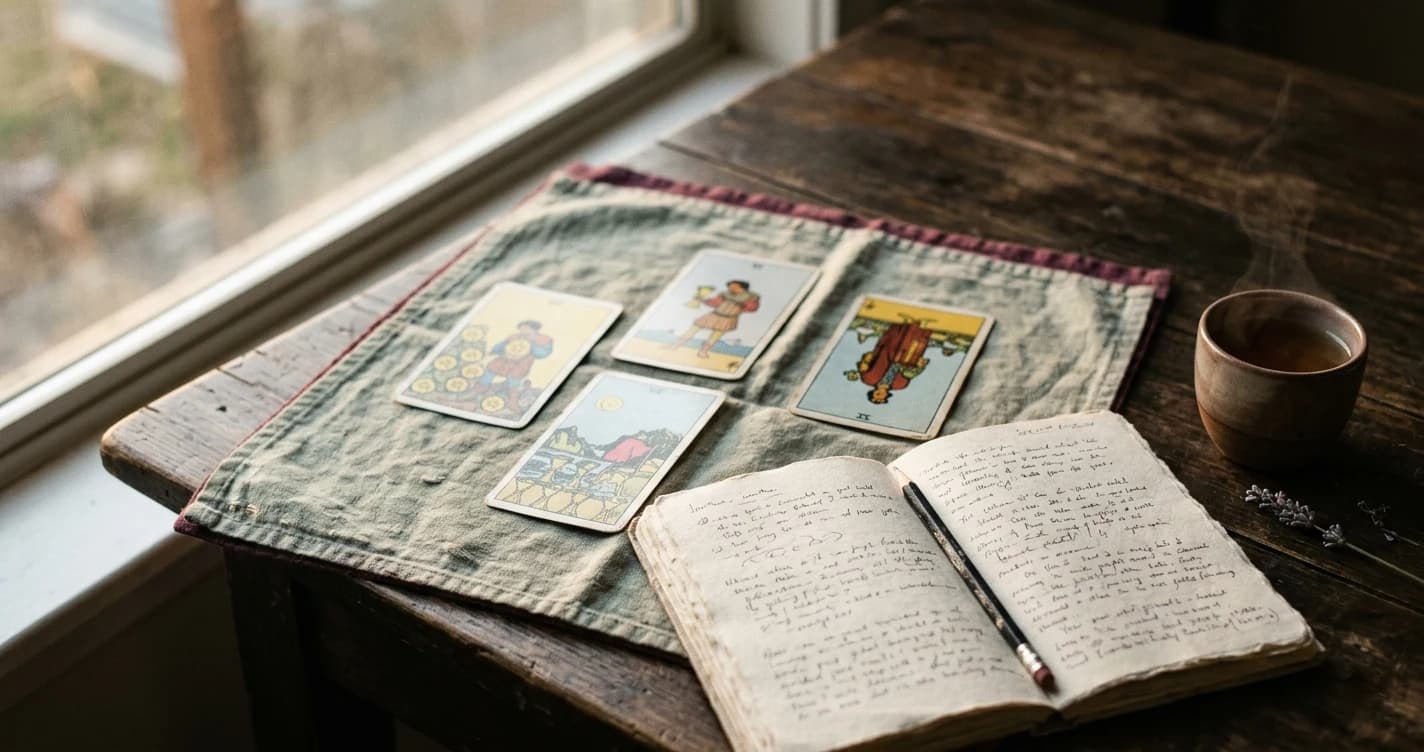
You pull a card, turn it over, and there it is upside down. Suddenly the reading feels less clear, not more. Are you supposed to flip it upright? Treat it as bad news? Read it as blocked energy? Ignore it entirely? This is usually the real moment people start searching for tarot reversals explained.
The frustrating answer is that reversal meanings are not standardized in the way beginners hope. Different readers use them differently, and plenty of experienced practitioners do not use them at all.
In this guide, tarot reversals explained means mapping the main approaches, showing how to choose one, and helping you stay consistent without getting trapped in tarot rule discourse. If you are still figuring out what tarot is actually for, this is one of those places where tarot makes more sense once you stop expecting one official answer.
Tarot reversals explained: what a reversed card is actually doing
Many beginners assume a reversed card must mean the opposite of the upright meaning. Sometimes readers do use it that way, but reversals are often more nuanced: delay, resistance, excess, avoidance, or internalization.
Take the Eight of Pentacles. Upright, it suggests focused work and skill-building. Reversed, one reader might see sloppy effort. Another might see perfectionism. Another might see someone working hard in the wrong direction. All three can fit the question.
That is why the better question is not “What does upside down mean?” It is “What kind of shift in emphasis does upside down create in this reading?”
A useful way to think about reversals
Instead of treating reversals like a secret extra dictionary, think of them as a modifier. The upright card gives you the core territory. The reversal changes how that territory is being lived.
That shift might be:
- turned inward rather than outward
- blocked rather than flowing
- excessive rather than balanced
- delayed rather than immediate
- misunderstood rather than embodied
Practice prompt: Pull one card you know reasonably well. Write the upright meaning in one sentence. Then write three possible “distortions” of that meaning: blocked, internal, or overdone. You are training flexibility, not hunting for the one perfect line.
The four most common ways readers interpret reversed tarot cards
This is where a lot of confusion comes from. When people discuss reversed tarot cards meaning, they are often talking past each other because they are using different systems.
1. Opposite or contrasting meaning
This is the simplest beginner model. If the upright card suggests movement, the reversal suggests stuckness. If the upright card suggests openness, the reversal suggests closure.
This method is useful when you want fast contrast and clean structure. Its weakness is that it can become too blunt. Some cards do not have neat opposites, and forcing them into that shape can flatten the reading.
Mini exercise: Choose The Chariot upright. Now write its reversal as “loss of direction” rather than inventing a whole new mythology. Notice how contrast can work without becoming dramatic.
2. Blocked or delayed energy
This is probably the most common contemporary approach. The card still points to the same theme, but something is obstructing its expression.
For example, the Star reversed may not mean hope disappears. It may mean hope is hard to access right now. The Queen of Cups reversed may point to emotional sensitivity flooding the system or getting turned against the self.
Scenario: Maya pulls the Chariot reversed while trying to decide whether to leave a draining job. “Failure” does not fit. “Blocked forward motion” does. That framing leads to a better question: what is making movement feel impossible even though the desire to move is real?
Reflection prompt: Ask, “What part of this card's energy is present but hard to express right now?”
3. Internalized or private expression
Some readers treat reversals as inward-facing versions of the upright card. Instead of an external event, the card points to an internal process.
This can be especially useful in journaling and self-inquiry. Strength reversed might suggest self-trust issues rather than obvious conflict. The Hermit reversed might point to avoidance of solitude, or to a private search that has gone too far inward and needs contact again.
This approach can appeal even to skeptical readers. You do not need to believe the card is magically changing meaning. You can use the reversal as a cue to ask whether the theme is happening internally instead of externally. That is part of why tarot can still be useful for skeptics: the value often comes from the question structure.
Practice prompt: For your next reversed card, write two short notes: “What would this look like externally?” and “What would this look like internally?” See which one lands.
4. Excess, deficiency, or imbalance
Some readers do not read reversals as opposite at all. They read them as imbalance.
Temperance reversed is the classic example. Upright, it suggests blending, moderation, and proportion. Reversed, it may point to extremes, poor pacing, or a system that has lost its center. The card is not negated. It is miscalibrated.
This method is especially strong when the question involves habits, relationships, boundaries, or emotional regulation. It asks not whether the energy exists, but whether it is in right relationship.
Scenario: Julian keeps pulling the Six of Pentacles reversed in friend dynamics. “Generosity becomes cruelty” is too simplistic. “Giving and receiving are out of balance” is far more useful, and it opens a concrete reflection on reciprocity.
Reflection prompt: Ask, “Is this energy missing, overcompensating, or out of proportion?”
How to decide whether you should read tarot reversals at all
A lot of beginners quietly want permission not to use reversals yet. Here it is: you do not have to.
Some readers include reversals from day one because they like the extra texture. Others keep everything upright while they learn the card structure. Others never use reversals and still read with depth and precision.
The real issue is not purity. It is consistency. If you are just learning, ignoring reversals for a while can reduce noise.
If you do decide to use reversals, choose one method first. Do not treat every upside-down card as a free-for-all. Otherwise the reading starts sounding clever without becoming clear.
Three good questions to ask yourself
- Do reversals make my readings more precise, or just more anxious?
- Am I using a clear reversal method, or improvising based on panic?
- Do I want more nuance right now, or more simplicity?
Often, the honest answer is less complexity, not more.
Practice exercise: For five readings in a row, choose one reversal approach only: blocked, internal, imbalance, or contrast. Keep notes. At the end, ask which method gave you the clearest insights without making the reading feel forced.
A simple method for how to read reversed tarot cards without spiraling
If you want a practical system, use this four-step check. It keeps the card anchored instead of letting your mind run wild.
Step 1: Read the upright card first
Before you do anything with the reversal, name the upright card's basic function in plain language. Keep it short.
For example: “The Hermit is about solitude, inner guidance, and stepping back to see clearly.”
Step 2: Ask what is shifted
Now ask what seems altered: blocked, inward, excessive, delayed, or misdirected. Do not use every option. Pick the one that best matches the question.
So the Hermit reversed might become: “solitude becoming isolation” or “inner guidance getting drowned out.”
Step 3: Tie it to the actual question
This is where readings either become useful or float away. The reversal has to connect to the situation being explored. If the question is about burnout, Hermit reversed might point to withdrawal that is no longer restorative. If the question is about dating, it might point to over-retreat or fear of being seen.
Step 4: End with a reflection question, not a verdict
A good reversal interpretation opens inquiry. It does not slam down a final sentence.
So instead of “This means you are failing,” try: “Where has reflection stopped being clarifying and started becoming avoidance?”
That one question will usually do more for the reading than a dramatic keyword list.
Quick spread exercise: Pull one reversed card and answer four lines only: upright theme, type of shift, link to the question, reflection question. Stop there. The limit keeps you honest.
There is no right answer — only a useful and consistent one
This is the part many tarot articles skip because it sounds less authoritative. But it is the most honest part.
No central tarot authority has settled the reversal debate. There is no final ruling coming. What matters is whether your chosen approach helps you read with more clarity, coherence, and self-honesty. That is really the end point of tarot reversals explained: not certainty, but a method you can trust yourself to use.
Many readers start with no reversals, experiment later, then settle into a style that feels natural. Others use reversals only in certain spreads.
The better goal is to be interpretable to yourself. When you come back to a reading later, can you still understand why you read that card the way you did? If yes, your method is working.
If you want a structured place to experiment, Liminal Tarot lets you choose your own reversal philosophy instead of forcing one. You can keep your practice upright-only, or turn reversals on when you want that extra layer. Start a reading on Liminal Tarot and see which approach actually helps you reflect more clearly.