Blog
Guides, reflections, and insights on tarot practice.
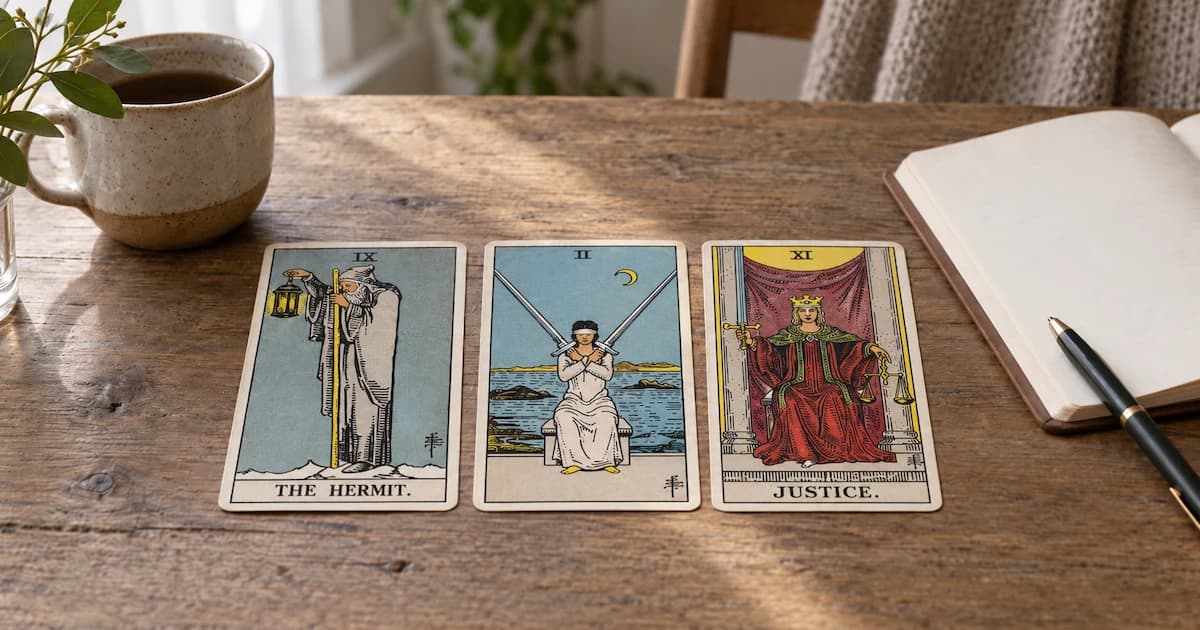
What to Do When Your Tarot Question Changes Mid-Reading
If your tarot question changes halfway through a reading, keep the original cards tied to their first frame. A practical way to decide whether to continue, pause, or start a separate follow-up.
Read article →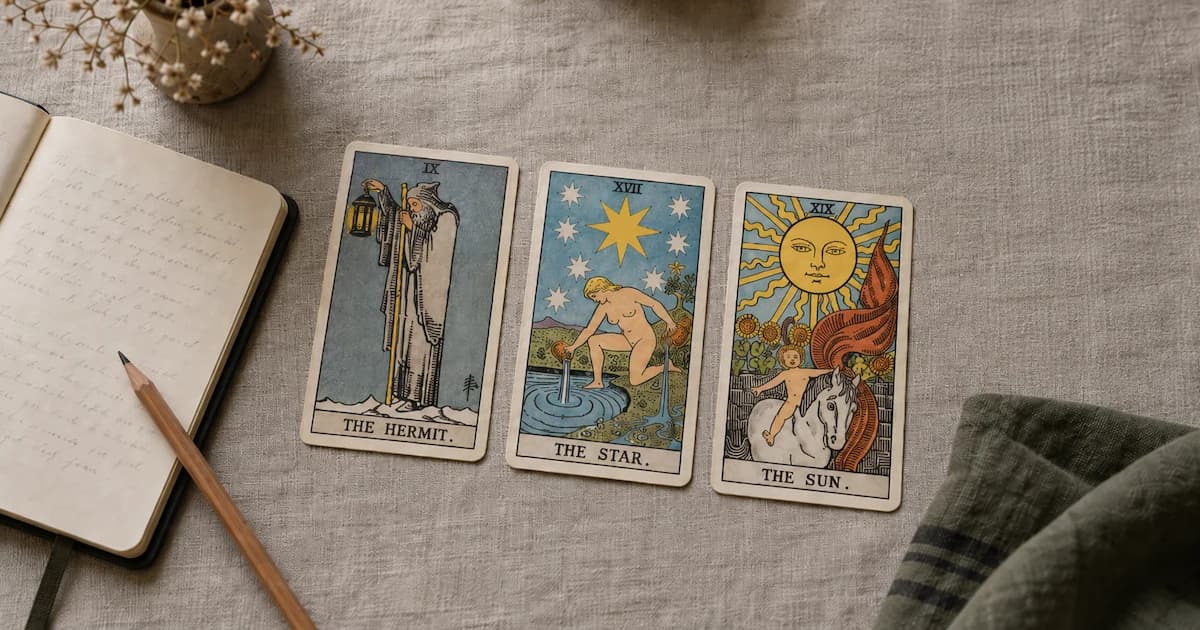
What to Do When a Tarot Reading Feels Wrong
When a tarot reading feels wrong, check the question, spread, strained interpretation, and known facts before deciding whether to revise it or stop.
Read article →
When Tarot Tells You Exactly What You Want to Hear
A hopeful tarot reading can be well supported without being certain. Use the original question, spread positions, surrounding cards, and one credible alternative to test what the reading actually says.
Read article →
Can You Redraw a Tarot Card? What to Do When You Want a Different One
Wanting a different tarot card does not always mean you should redraw. Use a practical rule to separate discomfort or confusion from a genuine drawing or recording error.
Read article →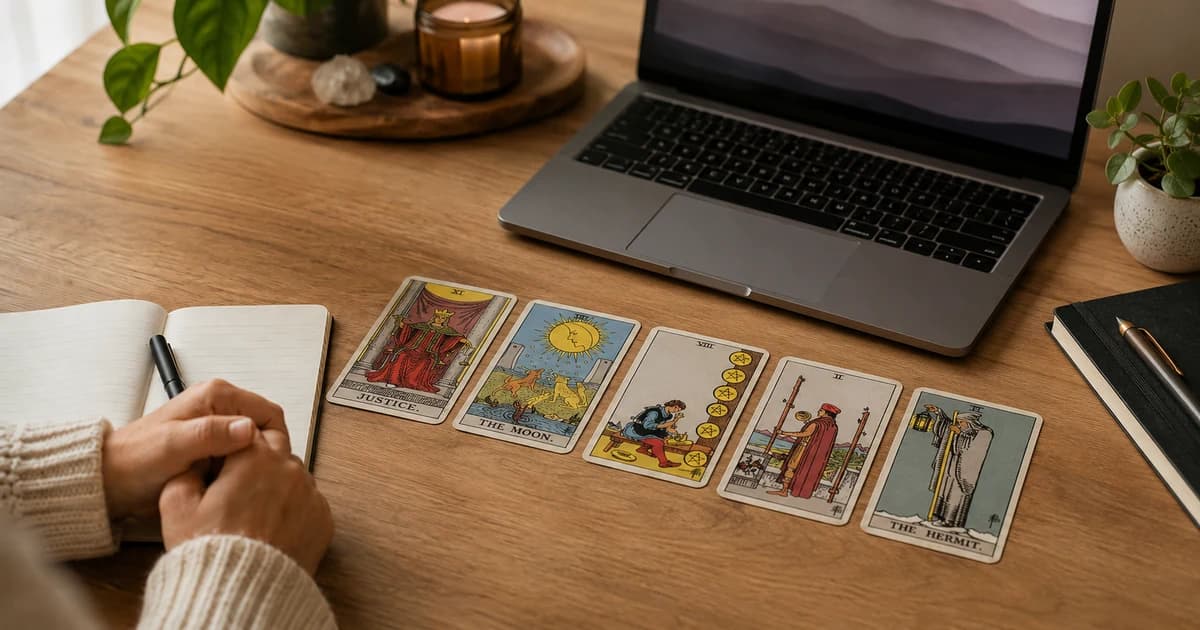
How to Read Tarot "As Feelings" Without Turning It Into Mind-Reading
A grounded way to read tarot "as feelings" as bounded possibilities, without treating a card as proof of another person's private thoughts or intentions.
Read article →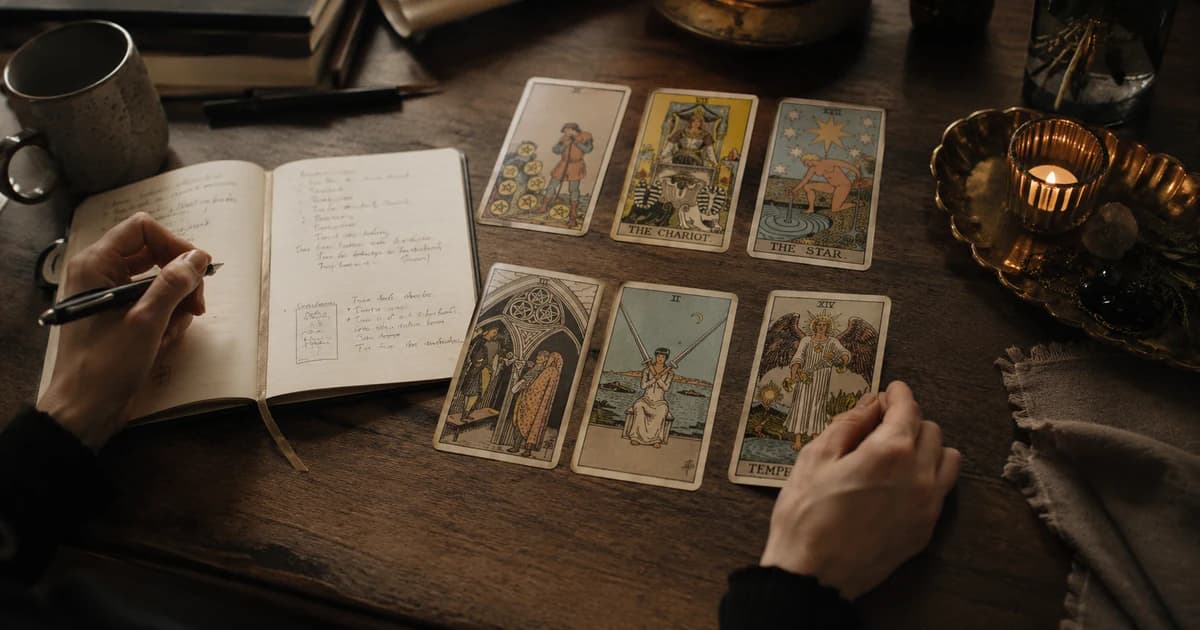
What to Do When a Tarot Reading Feels Obvious
An obvious tarot reading is not automatically useless. Use a practical contribution test to tell useful recognition from repetition and know when to stop.
Read article →