Blog
Guides, reflections, and insights on tarot practice.

How to Interpret Upright and Reversed Cards in the Same Tarot Spread
Learn how to combine upright and reversed tarot cards by reading each position, naming the relationship, and keeping uncertainty intact.
Read article →
How to Read Tarot Cards You Drew Without Assigned Spread Positions
Already drawn several tarot cards without choosing positions? Learn how to read them as a set, keep the original draw clear, and use later roles without rewriting what happened.
Read article →
How to Compare Two Tarot Spreads About the Same Situation Without Cherry-Picking
Compare two tarot spreads without cherry-picking: preserve each question, map equivalent position roles, and separate reinforcement from real tension.
Read article →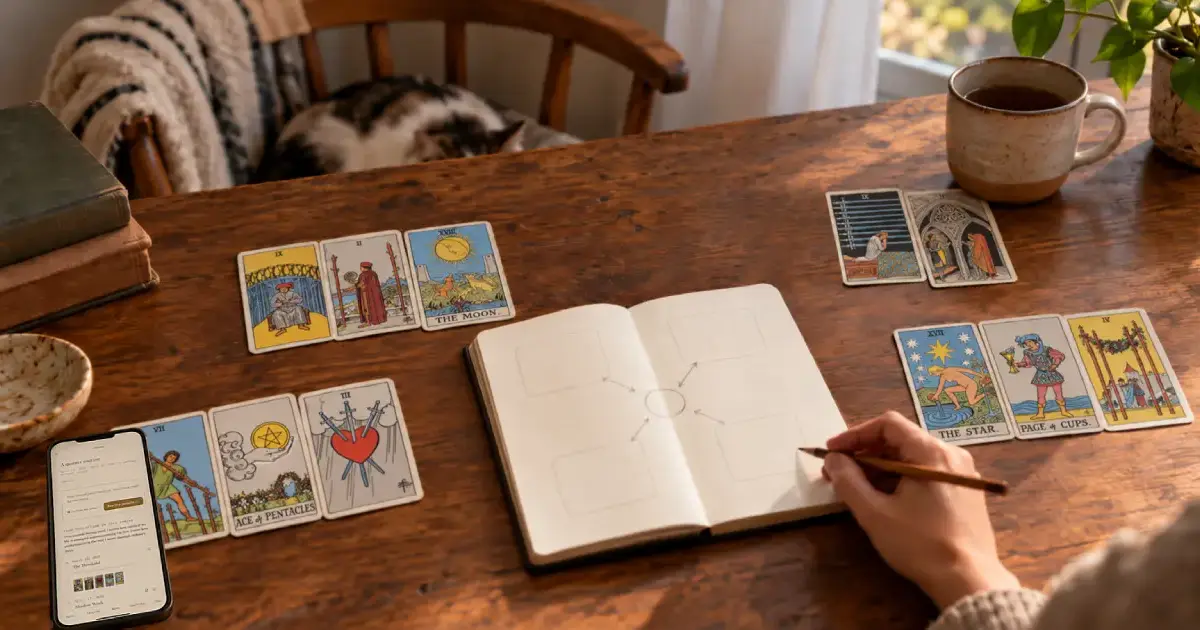
How to Read a Large Tarot Spread Without Losing the Thread
Read a large tarot spread without flattening or ignoring cards: group positions by function, compress each group, and drill back down only when needed.
Read article →
How to Know Which Card Matters Most in a Tarot Spread
A practical way to decide which tarot cards deserve more, less, or equal weight by starting with the question, spread positions, and relationships between cards.
Read article →
How to Design Your Own Tarot Spread Without Creating Vague or Redundant Positions
Design a custom tarot spread by giving each position one clear job, removing overlap, and keeping the reading grounded in the question you actually want to examine.
Read article →